Last updated October 31, 2026
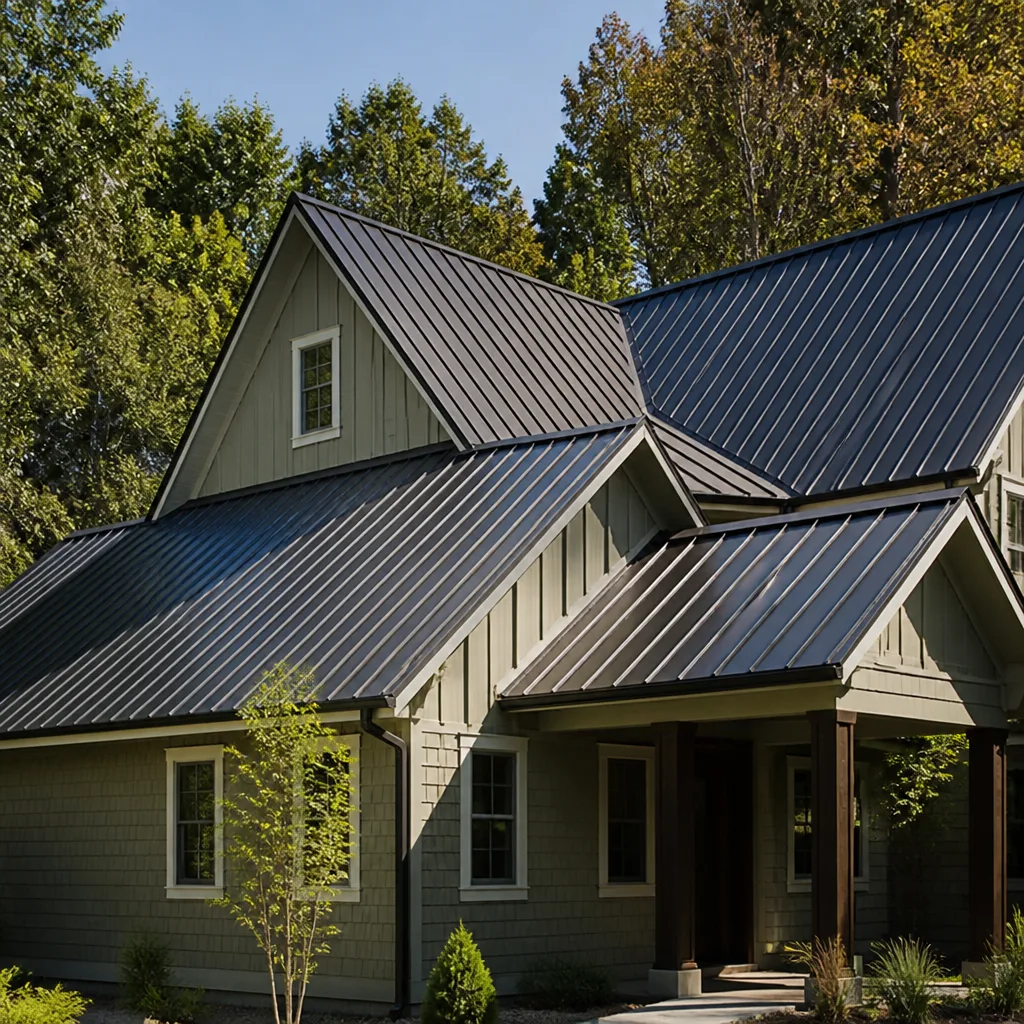 Metal roofing
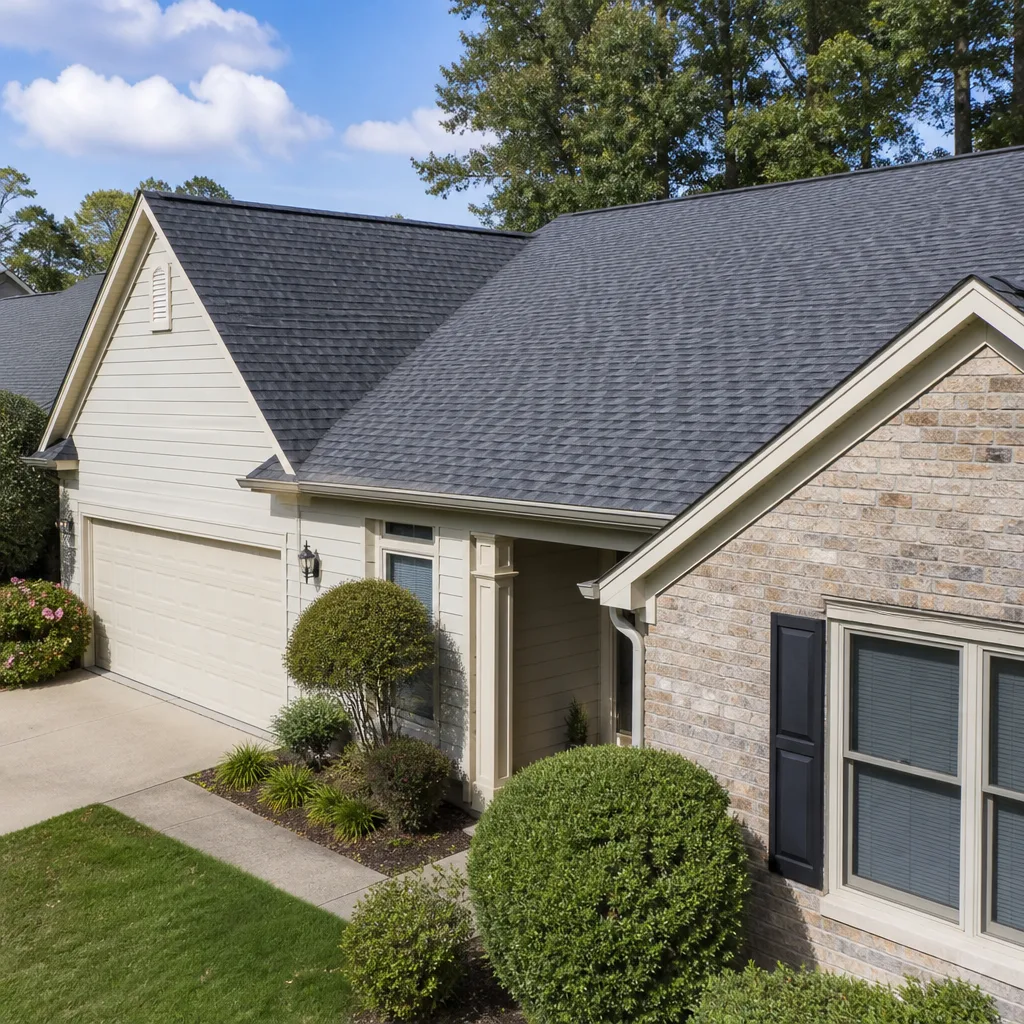
 Architectural shingles
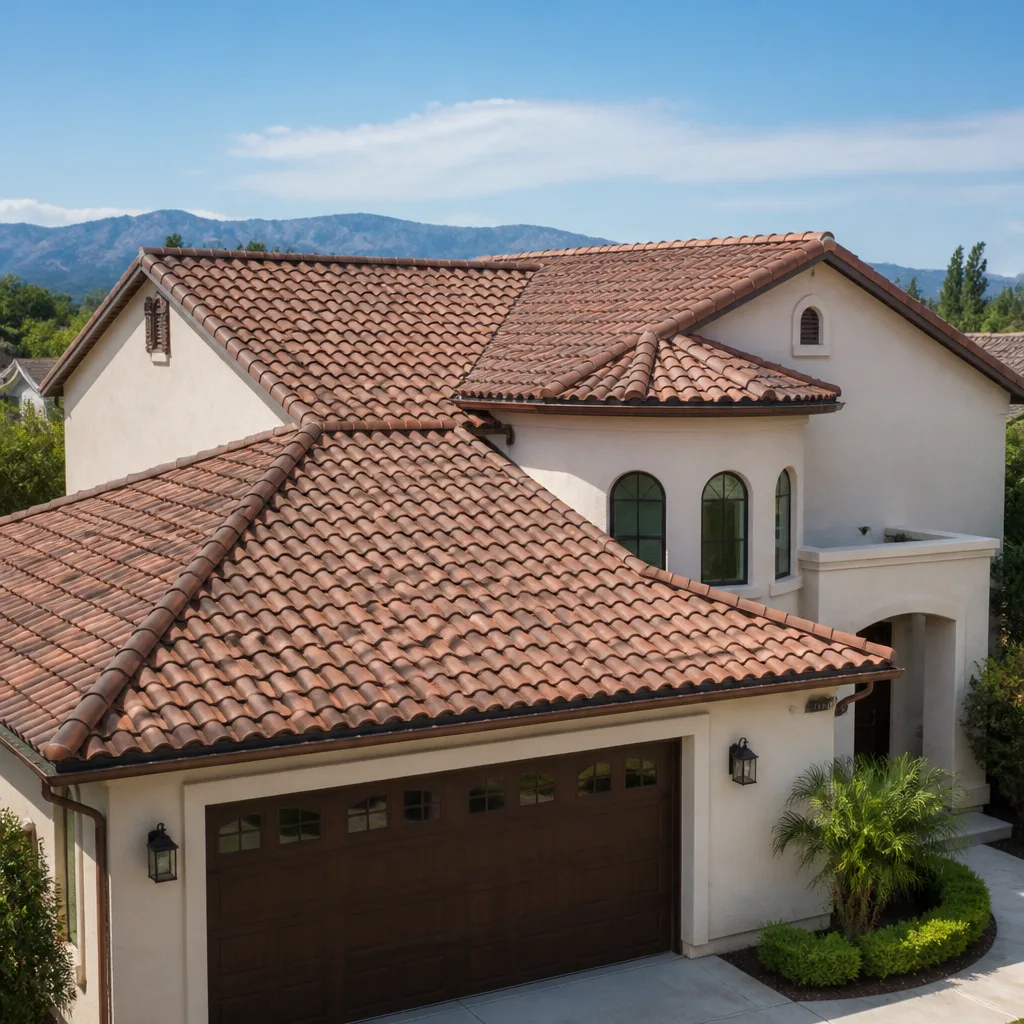 Tile roofing
 GAF
 Owens Corning
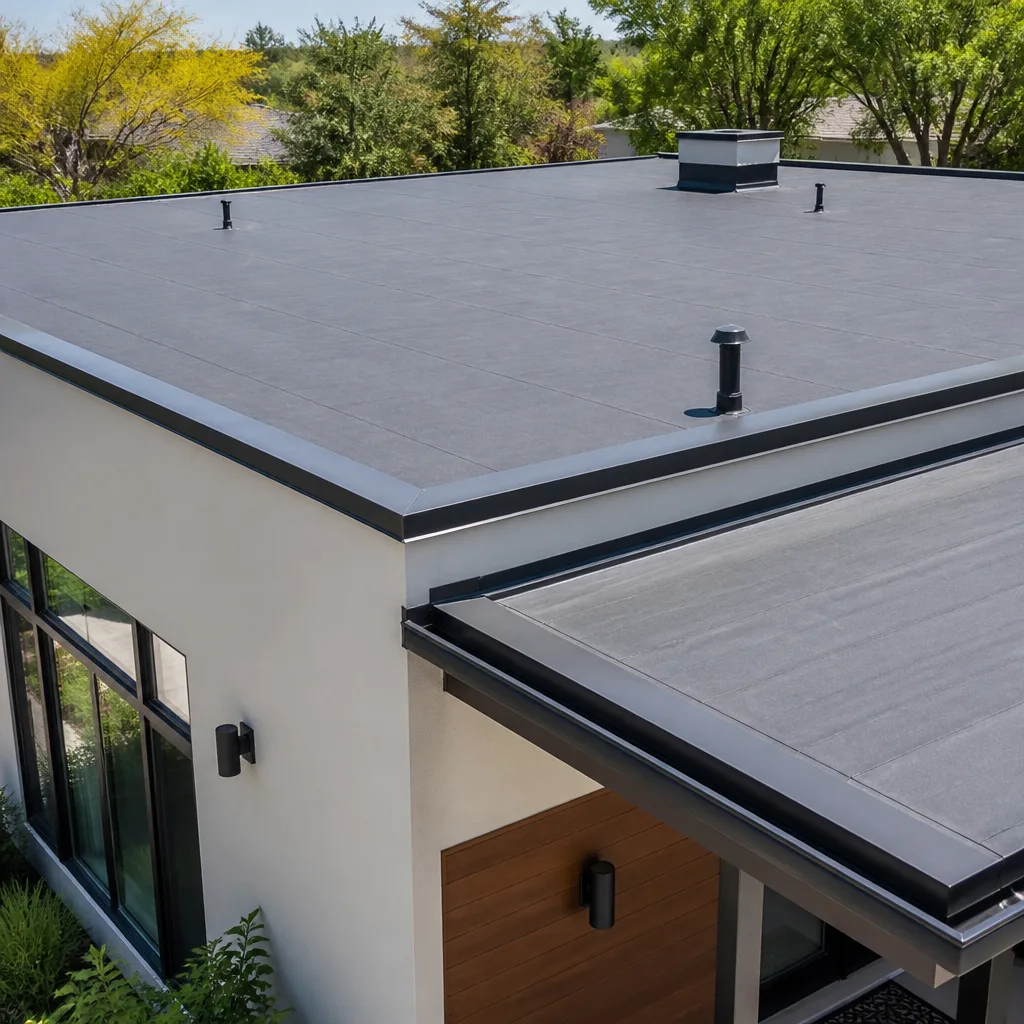 Flat & low-slope
Free roof inspection with deck photos before we talk money - GAF and Owens Corning certified installation
How to Hire a Roofing Contractor in Santa Ana: A Step-by-Step Guide
A contractor can be fully licensed, bonded, and insured in California and still recommend the wrong material for your roof pitch, your neighborhood’s wind exposure, and your existing deck condition. The paperwork is the floor, not the ceiling. Most Santa Ana homeowners discover this after the contract is signed, when a roofer who only stocks one brand of shingle explains why that brand is “the best” for every house on the block. This guide walks through the interview process step by step, so you can separate a contractor who understands material performance from one who simply installs whatever they buy in bulk, and points you to more guides & resources for every stage of roof ownership.
Styles & brands we work with
Quick Answer
Hiring a roofing contractor in Santa Ana starts with verifying a C-39 license through the CSLB, then moves to the part most homeowners skip: asking technical questions that reveal whether the contractor actually understands how different roofing materials perform on your specific roof. Get three written estimates that itemize deck condition contingencies, permit fees, and haul-off costs, and confirm the contractor has real partnerships with multiple manufacturers rather than a single-brand arrangement. The goal is a contractor who recommends the right material for your roof, not the material they happen to stock.
Table of Contents
- Step 1: Verify the C-39 License and What It Actually Means
- Step 2: The Five Technical Questions That Separate Real Roofers from Bulk-Buy Installers
- Step 3: What a Legitimate Written Estimate Must Include
- Step 4: How to Tell If Manufacturer Partnerships Give You Real Choice
- Step 5: Red Flags Specific to Post-Storm Solicitation in Santa Ana
- Step 6: How to Compare Bids Without Chasing the Lowest Number
- Step 7: Why Inspection Should Precede Every Recommendation
- Common Mistakes to Avoid
- When to Call a Professional
- Frequently Asked Questions
- The Bottom Line
Step 1: Verify the C-39 License and What It Actually Means
Every legitimate roofing contractor in Santa Ana carries a C-39 roofing classification from the California Contractors State License Board. The C-39 exists specifically because roofing is distinct from general construction: it covers tear-off, deck preparation, underlayment, and the installation of roofing materials on structures. A general contractor with a B license can legally pull a roof permit in some cases, but that doesn’t mean roofing is their trade. When you hire a generalist, you’re often hiring a project manager who will subcontract the actual roof work to someone else, and that someone else may or may not carry their own credentials.
To verify a license, you don’t need to make a phone call. The CSLB website has a license lookup tool that takes thirty seconds. You want to see three things: the license is active, the classification is C-39, and the license has no outstanding complaints or disciplinary actions. Santa Ana sits in Orange County, which has one of the highest concentrations of roofing contractors in California. The barrier to entry is real, and a suspended or expired license is more common than most homeowners assume.
Also confirm that the contractor’s workers’ compensation insurance is current. In California, roofing contractors must carry workers’ comp for every employee on your roof. If a roofer tells you his crew are “independent subcontractors” and can’t produce a workers’ comp certificate, walk away. If someone gets hurt on your property and the contractor doesn’t have coverage, your homeowner’s insurance becomes the target. This is not a hypothetical. It happens in Santa Ana every year, often after wind events bring out crews from outside the county.
Step 2: The Five Technical Questions That Separate Real Roofers from Bulk-Buy Installers
Most hiring guides tell you to ask for references and proof of insurance. Those matter, but they don’t tell you whether the contractor understands roofing or help with Roof Repair Troubleshooting: Common Problems and How to Fix Them. A roofer can have a spotless license and a dozen five-star reviews and still be fundamentally a franchisee of one shingle brand who never learned why that brand fails on certain pitches. The five questions below are designed to reveal material knowledge, not sales polish. Ask them early, before you discuss price.
- “What’s my roof pitch, and how does it change your material recommendation?” A contractor who can’t read pitch or doesn’t mention it is a red flag. Low-slope roofs in Santa Ana, common on mid-century ranch homes in neighborhoods like Floral Park and Washington Square, require different underlayment and sometimes different materials than steep-slope roofs on two-story craftsman homes in Park Santiago. Asphalt shingles perform on a range of pitches, but the installation details change below 4:12 and above 12:12. If the contractor says “shingles work everywhere,” you’re talking to an installer, not a roofer.
- “What does my existing deck look like, and will it need repairs before you lay anything down?” The deck is the plywood or OSB layer beneath the roofing material. In older Santa Ana housing stock, especially pre-1980 construction, deck rot around valleys, chimneys, and eaves is common. A legitimate contractor will tell you they can’t know deck condition until the old roof comes off, and will write a contingency into the estimate. A sales-driven contractor will either ignore the deck entirely or lowball the estimate and hit you with a change order once the wood is exposed. The deck question reveals honesty. Tilecraft Roofing’s position on this is simple: we look before we quote on the final scope, and deck contingencies are always discussed before tear-off starts.
- “How do you handle flashing, and what materials do you use for it?” Flashing is the metal that seals roof transitions: valleys, chimneys, skylights, vent pipes, and sidewalls. Most roof leaks in Santa Ana originate at flashing points, not in the field of the shingles. A knowledgeable contractor will talk about galvanized steel versus aluminum versus copper, and will explain that in coastal-adjacent climates, corrosion resistance matters. A roofer who says “we use whatever the supply house has” is telling you they don’t prioritize the most failure-prone part of the roof.
- “What’s the wind zone here, and how does it affect how you fasten the material?” Santa Ana is named for the winds that sweep through the canyons, and while the city isn’t in the most extreme wind zone in California, gable-end homes and roofs on the edges of open areas take real uplift. This matters particularly with tile roofing, where uplift resistance depends as much on fastening pattern as on the tile itself. A contractor who works with Boral tile systems, for example, should be able to explain the difference between standard fastening and high-wind fastening for clay and concrete tile. If they can’t, they haven’t been trained by the manufacturer.
- “What’s in the underlayment, and why does it matter more than the top layer?” Underlayment is the waterproofing barrier between the deck and the roofing material. In Santa Ana, where summer heat can push attic temperatures past 140 degrees, synthetic underlayment generally outperforms felt paper because it resists tear and doesn’t degrade as fast in heat. But the answer isn’t always synthetic. A contractor should be able to discuss at least two underlayment options and explain the trade-offs. This question filters out about half of roofing salespeople.
At Tilecraft Roofing, these are the questions we hear from the homeowners who’ve done their research. They don’t ask “how much per square” first. They ask about the deck. They ask about flashing. They’re vetting us, and that’s how it should be. For more on what a thorough assessment looks like, see our Roof Inspection in Santa Ana page.
Step 3: What a Legitimate Written Estimate Must Include
A verbal quote is a conversation. A written estimate is a document you can hold someone to. In Santa Ana, where remodeling and construction costs run higher than the national average, the difference between a verbal number and a written line-item estimate can be thousands of dollars – and the verbal quote is the one that changes after tear-off. Before you sign anything, a legitimate written estimate should cover these five items. If any are missing, ask for them in writing before the contract stage.
- Deck condition contingencies. The estimate should state explicitly that if rotted or damaged decking is discovered after tear-off, the cost per sheet or per square foot is $X, and the contractor will stop and notify you before proceeding. A blank check of “we’ll fix whatever we find” is not acceptable. You need a number attached to the contingency.
- Permit fees. In Santa Ana, roof replacements require a building permit from the City of Santa Ana’s Building Safety Division. The permit fee is a real line item, not a round number thrown in for flavor. The estimate should state who pulls the permit – it should be the contractor, not the homeowner – and what the fee is, even if it’s an approximation subject to city confirmation.
- Haul-off and disposal. An old roof produces a lot of material: shingles, underlayment, nails, flashing, and sometimes decking. The estimate should include the cost of dumpster rental or hauling, and should state where the refuse goes. Some Santa Ana neighborhoods have restrictions on when a bin can sit on the street, and a contractor who works locally will know the rules. If haul-off isn’t in the estimate, you’ll pay for it later.
- Material specifications by brand and product line. “Asphalt shingle, 30-year” isn’t specific enough. The estimate should say GAF Timberline HDZ, or CertainTeed Landmark, or Owens Corning Duration, or whichever product you discussed. If it says “equivalent quality” anywhere on the page, ask for the actual product name. Equivalent is a word salespeople use when they want to swap materials later. Tilecraft Roofing works with seven leading brands – GAF, CertainTeed, Owens Corning, IKO, Atlas, Tamko, and Boral – precisely so the estimate reflects the material you chose, not whatever the warehouse had on hand.
- Scope of work in plain language. Remove existing roofing to deck. Inspect deck, replace damaged sections at stated price. Install underlayment. Install flashing at all penetrations and transitions. Install [specific material]. Clean site. Pass final inspection. This is the whole job, and it should be on one page.
When you compare estimates from different contractors, line them up side by side. A lower number that omits permit fees, haul-off, or deck contingency isn’t actually lower. It’s just incomplete. See our Roof Replacement in Santa Ana page for more on how we scope replacement work.
Step 4: How to Tell If Manufacturer Partnerships Give You Real Choice
Most roofing contractors in Santa Ana are tied to one manufacturer. They attend that manufacturer’s training program, they buy that manufacturer’s products, and they recommend that manufacturer to every customer. This isn’t inherently wrong. A roofer who installs GAF products daily knows them well. But the arrangement has a structural bias: when you only sell one brand, every roof looks like a job for that brand. The homeowner’s real question is whether the material recommendation is driven by the roof or by the inventory.
Here’s how to test it. Ask the contractor to explain why they’re recommending a specific material for your roof. If the answer is “it’s what we install,” that’s not a performance-based recommendation. If the answer is “your roof pitch and canyon exposure point toward a class 4 impact-rated shingle, and CertainTeed Landmark Pro meets that spec at a lower cost than the alternatives,” that’s a recommendation based on your situation. The difference is enormous.
Manufacturer partnerships matter because they affect what a contractor can actually offer you. Tilecraft Roofing maintains authorized installer relationships with seven manufacturers: GAF, CertainTeed, Owens Corning, IKO, Atlas, Tamko, and Boral. That breadth matters practically. It means we can recommend a GAF Timberline for a standard asphalt job, a CertainTeed product for a specific wind rating the homeowner wants, or a Boral clay tile for a Spanish-style home in a historic Santa Ana neighborhood where a composite shingle would look wrong. Seven leading brands, one crew. The crew doesn’t change; the material choice does.
Ask the contractor to walk you through at least two material options with different price points and different performance characteristics. If they can do this comfortably, you’re dealing with a company that has real material knowledge. If they fumble, you’re dealing with a company that has one sales script.
Step 5: Red Flags Specific to Post-Storm Solicitation in Santa Ana
Santa Ana gets wind. The Santa Ana winds that give the city its name blow through the canyons from the inland deserts, and when they gust hard, they lift shingles, tear tile, and send tree limbs onto roofs. In the days after a major wind event, a specific type of contractor appears: the storm chaser. They knock on doors in neighborhoods with visible roof damage, offer a free inspection, and often claim they can “work with your insurance” to get the whole roof replaced. Some of these companies are legitimate. Many are not.
The red flags are specific and knowable:
- The contractor knocks on your door unsolicited. Established roofing companies in Santa Ana don’t go door to door after a storm. They have enough work from referrals and repeat customers. Knocking is the storm chaser’s primary marketing channel, and it’s effective because the homeowner is anxious and the pitch is immediate.
- The contractor asks you to sign an “assignment of benefits” form. This is a document that gives the contractor the right to collect payment directly from your insurance company. It’s legal in California, but it has a history of abuse. Once signed, you’ve handed over control of your claim.
- The contractor says they’ll “cover your deductible.” This is insurance fraud. A contractor who waives a deductible is telling you they’ll inflate the claim to cover it. The homeowner who signs on becomes complicit.
- The contractor has out-of-state plates or a license issued within the last 90 days. Storm chasers follow weather events. A license issued in Texas or Florida, or a California license that’s six weeks old, means this contractor has no history in Orange County. Verify the license on the CSLB site and check the issue date.
- The contractor pressures you to sign today. Legitimate roofers don’t use deadline pressure after a storm. The damage isn’t going anywhere, and a reputable company will document it for your insurance claim and give you time to decide. High-pressure “sign today for this price” is the loudest signal that the company’s business model depends on quick closes, not good work.
If your roof took damage from a wind event in Santa Ana, call a local company you’ve vetted. Get a documented roof inspection first, then contact your insurer. The order matters. See our Roof Repair in Santa Ana page for how we handle storm damage assessment.
Step 6: How to Compare Bids Without Chasing the Lowest Number
The instinct to take the lowest bid is powerful. Roof replacement in Santa Ana runs into five figures, and the gap between the low bid and the high bid can be $8,000 or more. But a roof is a 25-year purchase. Choosing the bottom number without understanding what it omits is how homeowners end up with a second roof replacement in seven years. Here’s a methodical way to compare bids.
First, put the three estimates side by side and check for matching line items. If one bid is $4,000 lower than the other two, the difference is rarely the profit margin. It’s usually something omitted. Look for these four gaps:
- Is the underlayment specified? A low bid often names the shingle but says nothing about the underlayment. That’s a place where contractors cut cost: felt paper instead of synthetic, one layer instead of two in critical areas.
- Is the decking contingency present? A bid that assumes the deck is perfect will be lower than one that prices in replacement of a few sheets. When the old roof comes off and the deck is rotted, the “cheaper” bid gets a change order that brings it in line with the others, or above.
- Is the flashing scope defined? Reusing existing flashing saves money up front. It also means your new roof is sealed with old metal. A bid that says “flashing as needed” is leaving a hole you’ll pay for later.
- Are the materials equal? The price difference between a basic 3-tab shingle and an architectural shingle is real. If one bid is for GAF Timberline and another is for “30-year shingle” with no brand, the two are not equal products. You can’t compare numbers until the materials are the same.
After you’ve checked for omissions, look at the warranty language. Manufacturer warranties cover the material. Workmanship warranties cover the installation. A contractor confident in their crew will put the workmanship warranty in writing. If the bid doesn’t mention it, ask.
Step 7: Why Inspection Should Precede Every Recommendation
A roofer who quotes a replacement without first inspecting the roof is like a doctor who prescribes surgery without an exam. Roof inspection is the diagnostic step that tells you whether the problem is localized, like a few blown shingles around a chimney, or systemic, like underlayment failure across the whole deck. Skip the inspection, and you’re deciding between a $500 repair and a $20,000 replacement with no data.
In Santa Ana, roof inspections are also useful as a preventive measure. Many homes in the city were built in the 1950s through the 1970s, which means a significant share of the housing stock is on its second or third roof. An inspection every two to three years catches issues early: flashing that’s separating around a vent pipe, tiles that have shifted on a gable end, granules accumulating in a gutter. For a complete schedule, see our Roof Repair Maintenance Checklist for Santa Ana Homeowners. These are repair-stage problems. Left alone, they become replacement-stage problems.
Tilecraft Roofing treats inspection as a standalone service, not a sales funnel. When we inspect a roof in Santa Ana, we document what we find – with photos, with specific locations, with honest assessments of remaining service life. If the roof needs repair, we recommend repair. If it’s at the end of its useful life, we tell you that. And if it’s fine, we tell you that too. In our experience, roughly a third of homeowners who call us for a replacement actually need repair or maintenance instead. That’s the point of looking before quoting.
The Tilecraft Roofing home page has more on our full roof lifecycle approach: inspection identifies the problem, repair addresses it when replacement isn’t warranted, and replacement is scoped only when genuinely necessary.
Common Mistakes to Avoid
- Hiring the first contractor who knocks after a windstorm. Santa Ana’s wind events bring storm chasers from three states away. You’re not hiring local; you’re hiring whoever was closest when the gusts died down. Vet them like anyone else.
- Accepting a verbal quote as a binding number. A number spoken aloud isn’t an estimate. If it isn’t written and itemized, it doesn’t exist when the contract comes out.
- Choosing the lowest bid without checking line items. The low bid usually omits something. Find the omission before you sign, not after the deck is open.
- Ignoring the deck condition question. In older Santa Ana housing stock, deck rot is common. If the contractor won’t discuss a deck contingency before tear-off, you’ll discuss it after, with less leverage.
- Signing a contract without a written workmanship warranty. Material warranties come from the manufacturer. If the installer’s workmanship warranty isn’t in writing, it doesn’t exist.
- Pulling the permit yourself to save a fee. The permit should be the contractor’s responsibility. If a roofer asks you to pull it, they’re shifting liability onto you.
- Believing “we do all materials” without asking for a second recommendation. Ask the contractor to explain two options and why they recommended one. If they can’t articulate a material trade-off, you’re not getting a recommendation; you’re getting whatever’s in stock.
When to Call a Professional
Roof replacement is never a DIY project, but even roof repair crosses into professional territory quickly. If you see water stains on a ceiling, granules collecting in gutters, daylight visible in the attic, or shingles lifting after a wind event, call a roofer. These aren’t cosmetic issues, and they don’t self-correct. The same applies if your roof is over 20 years old and hasn’t been inspected recently. A professional inspection costs far less than the water damage that an ignored problem eventually causes. Tilecraft Roofing offers free estimates in Santa Ana – call (833) 467-4846 to schedule one. We’ll inspect first, then tell you honestly whether you need repair or replacement.
Frequently Asked Questions
A full roof replacement in Santa Ana typically runs between $14,000 and $28,000 for an average single-family home, depending on roof size, material choice, deck condition, and access. For detailed pricing factors, see our Roofing Cost Breakdown: The Santa Ana Homeowner’s Reference for 2026. Asphalt architectural shingles sit at the lower end of that range, while premium tile systems from manufacturers like Boral run significantly higher. The only way to get an accurate number is a proper roof inspection and a written estimate, because deck condition can swing the final cost by thousands. Call (833) 467-4846 for a free estimate and we’ll give you a written, itemized number.
Go to the CSLB website and search the contractor’s name or license number. Confirm the license is active, the classification is C-39 (roofing), and there are no unresolved complaints. You can also check the license issue date – a very recent issue date combined with a post-storm solicitation is a red flag.
Yes. Three written estimates is the standard. The goal isn’t to pit contractors against each other to drive down price; it’s to compare scopes of work, material specifications, and contingency language. A legitimate estimate from a thorough contractor will often be higher than a bare-bones one from a sales operation, and the difference is visible in the line items.
Yes. Roof replacements in Santa Ana require a building permit, and your contractor should pull it. The permit triggers a city inspection of the work after completion. If a contractor suggests skipping the permit to save money, that’s a red flag – unpermitted roof work can complicate a future home sale.
Most asphalt shingle replacements in Santa Ana take two to four days from tear-off to final cleanup. Tile roofs take longer, typically five to seven days, because of the material weight and the slower installation process. Weather and deck condition can extend the timeline.
Repair addresses a specific problem: damaged flashing, a few missing shingles, a localized leak. Replacement addresses a roof that has reached the end of its service life, with widespread granule loss, multiple leak points, or underlayment failure. A good roofer tells you which one you actually need. That’s why Tilecraft Roofing inspects before recommending any scope of work.
The Bottom Line
Hiring a roofing contractor in Santa Ana comes down to asking questions most guides skip. The license and insurance check is essential, but it’s the floor. The real work is in the interview: can the contractor explain material trade-offs, deck contingencies, flashing details, and why a specific product fits your roof rather than their inventory? Get three written estimates, compare line items, and walk away from anyone who pressures you after a storm or won’t put the scope in writing. The right contractor gives you real material choice – seven leading brands, one crew – and treats inspection as diagnosis, not as a sales funnel. Call (833) 467-4846 for a free estimate and we’ll show you what an honest roof assessment looks like.
Written by the team at Tilecraft Roofing, serving Santa Ana since 2012.
See the difference
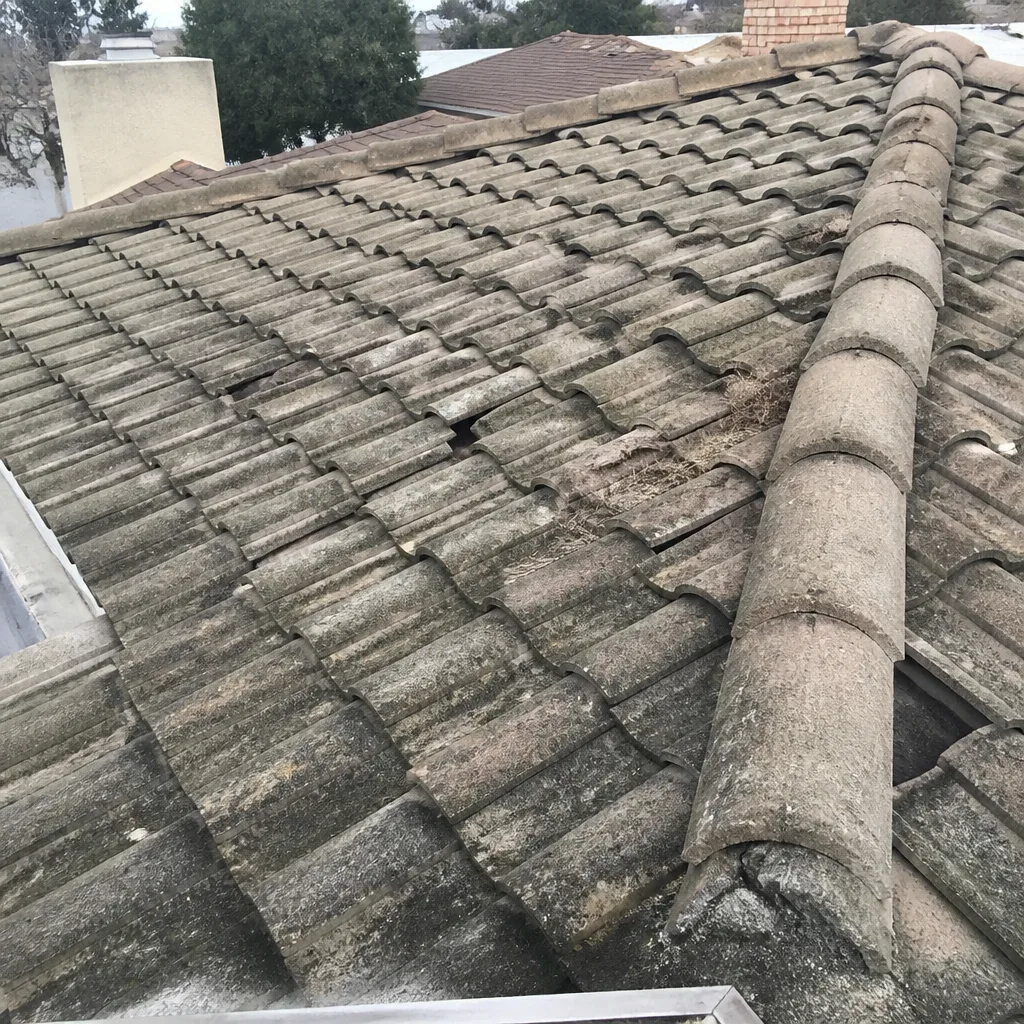 Before
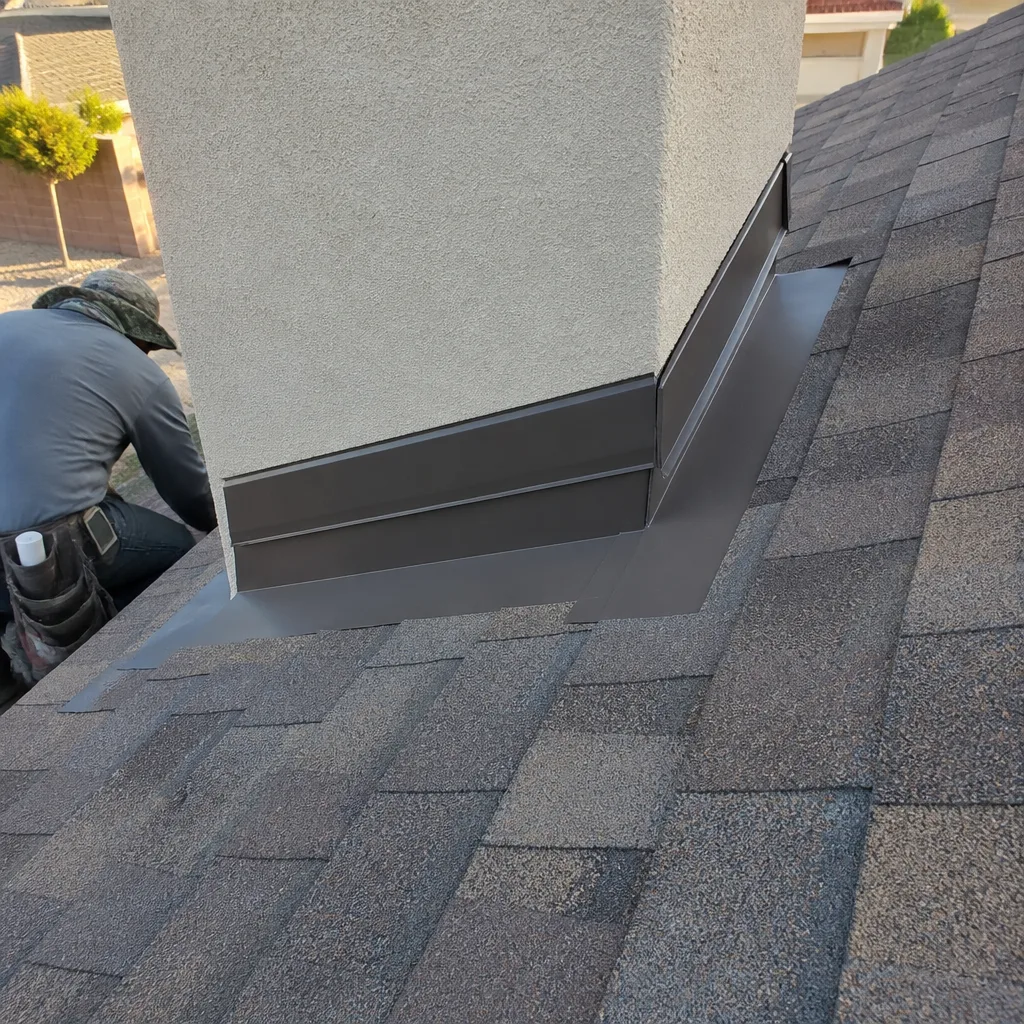 After
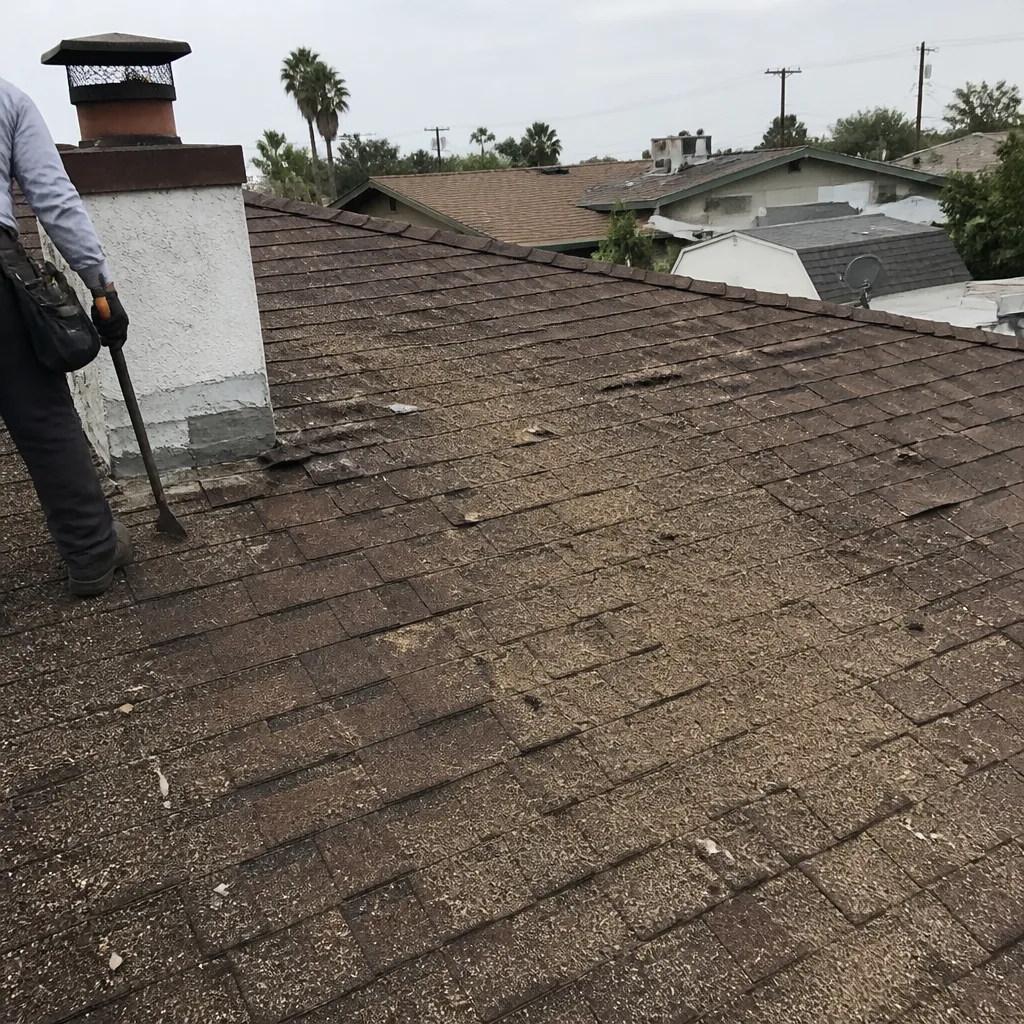 Before
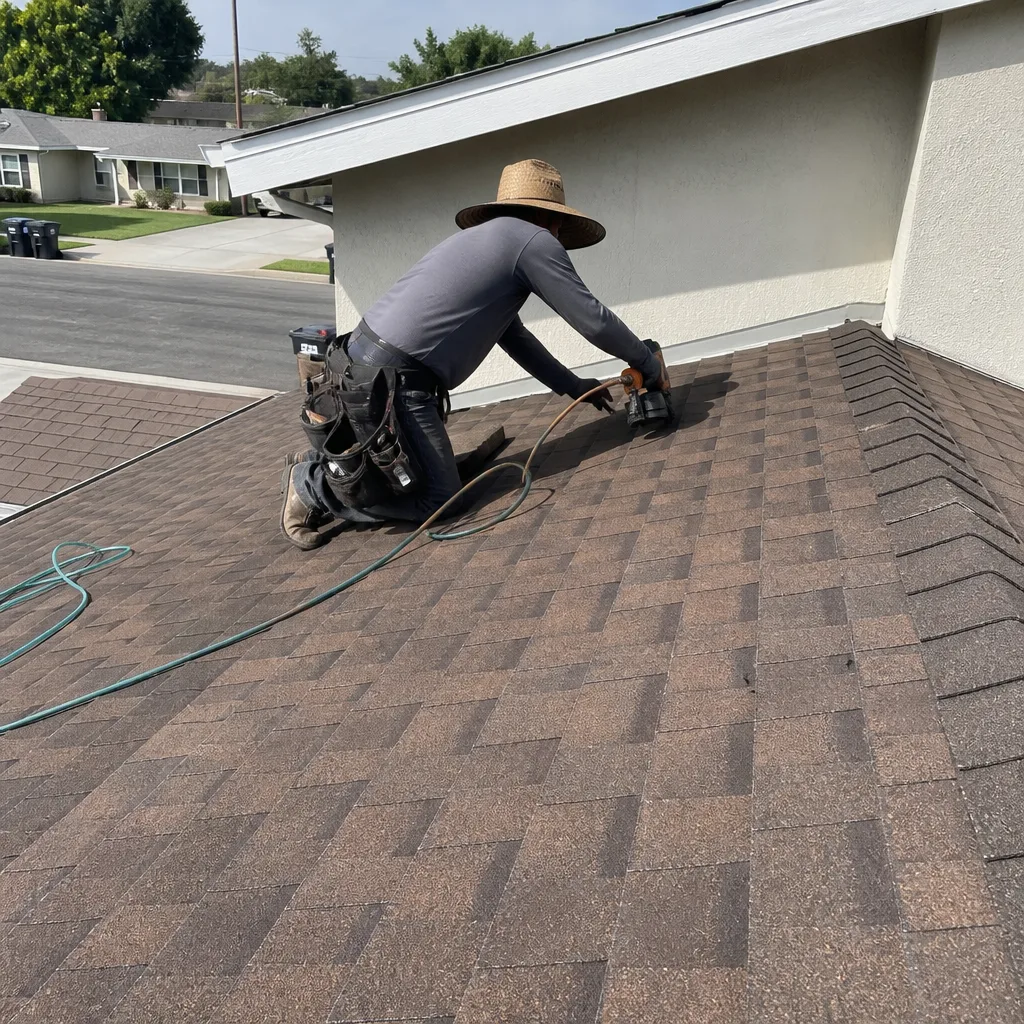 After
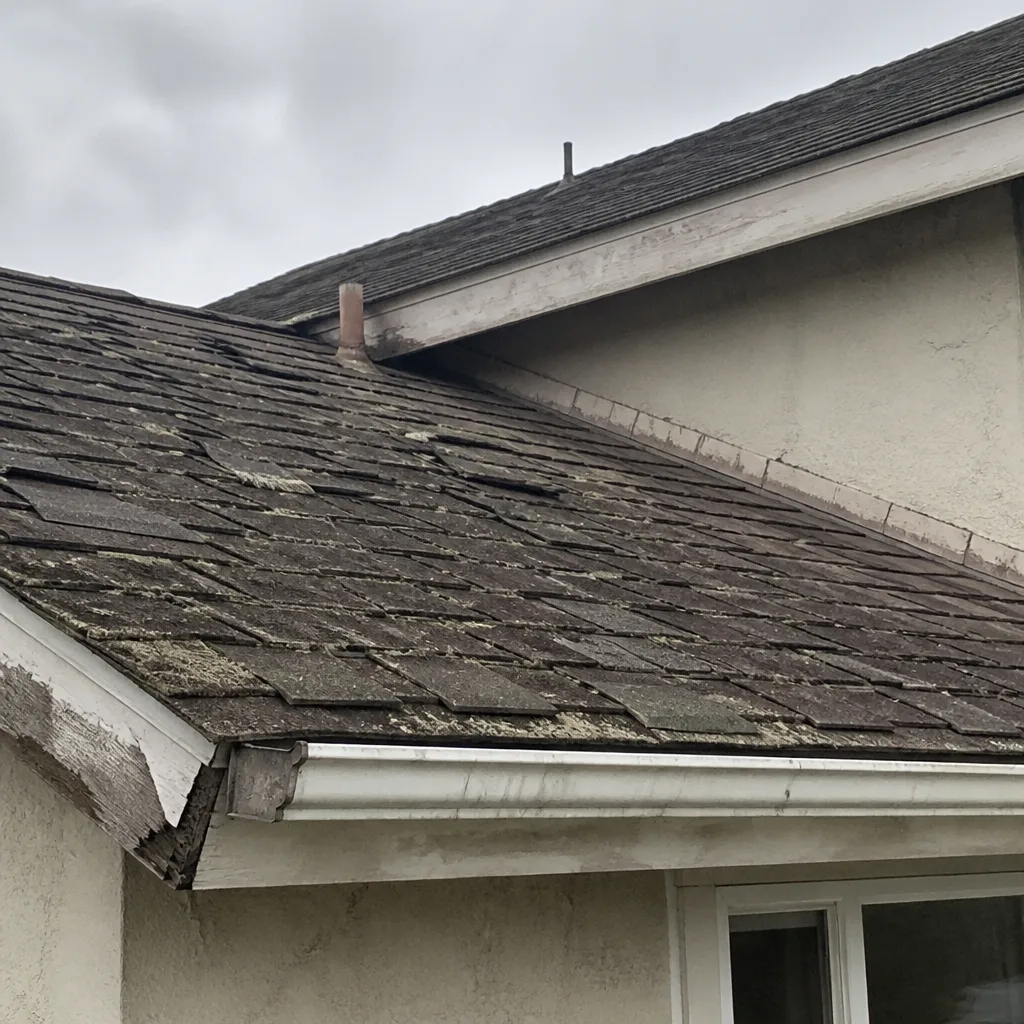 Before
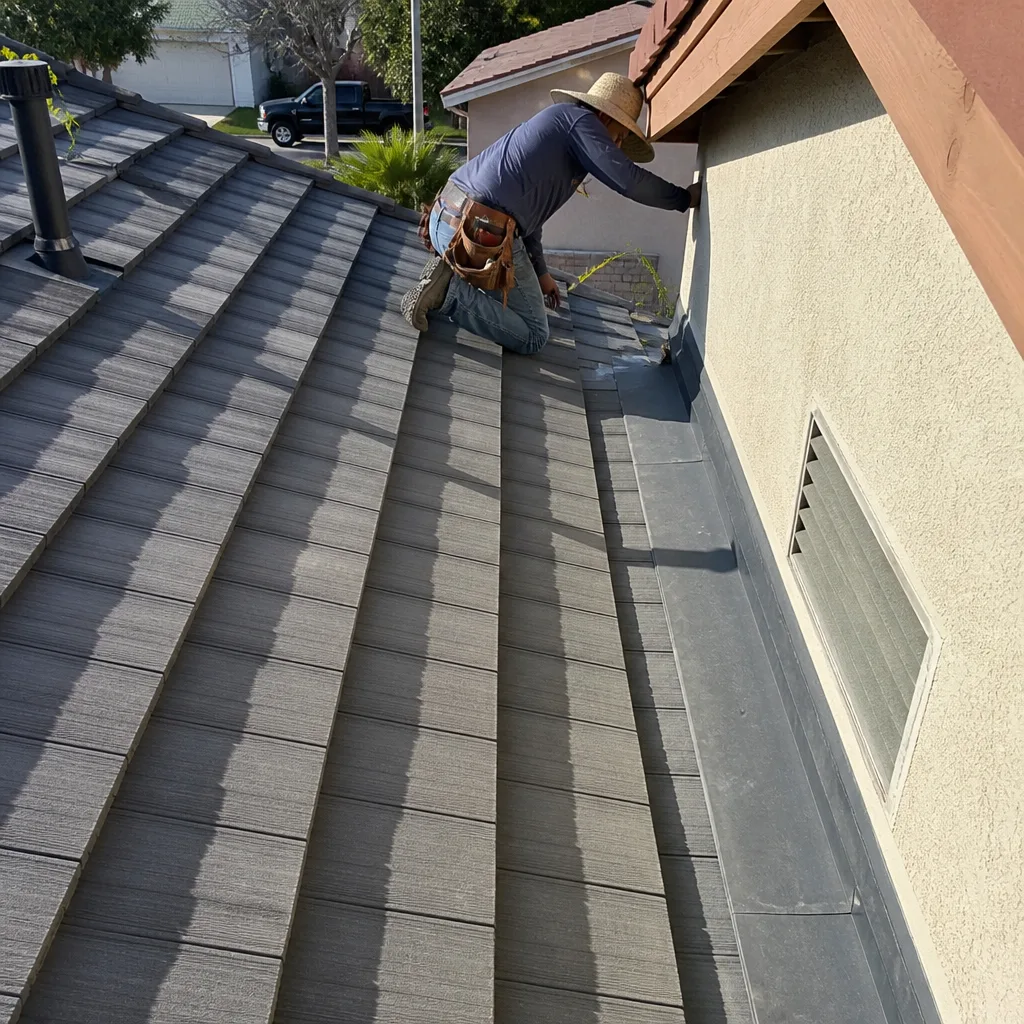 After