
Last updated October 31, 2026
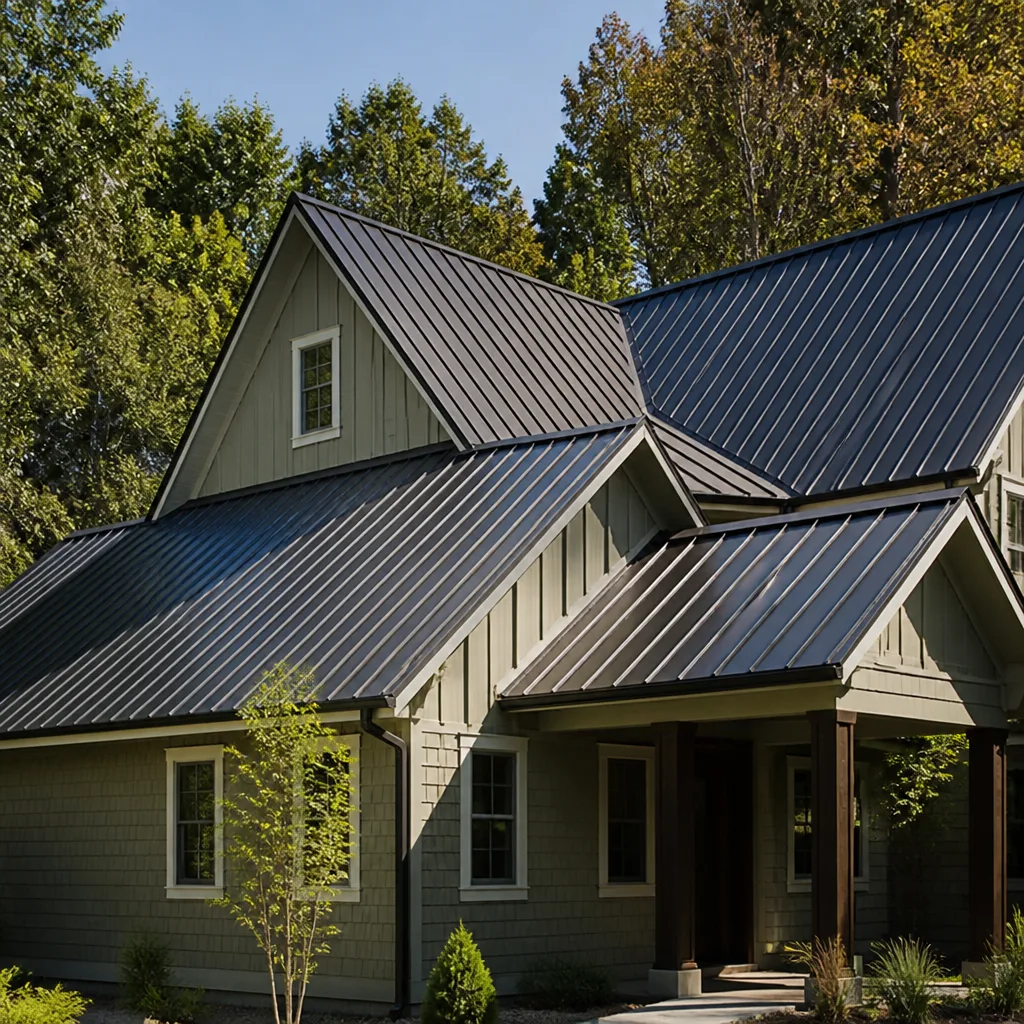 Metal roofing
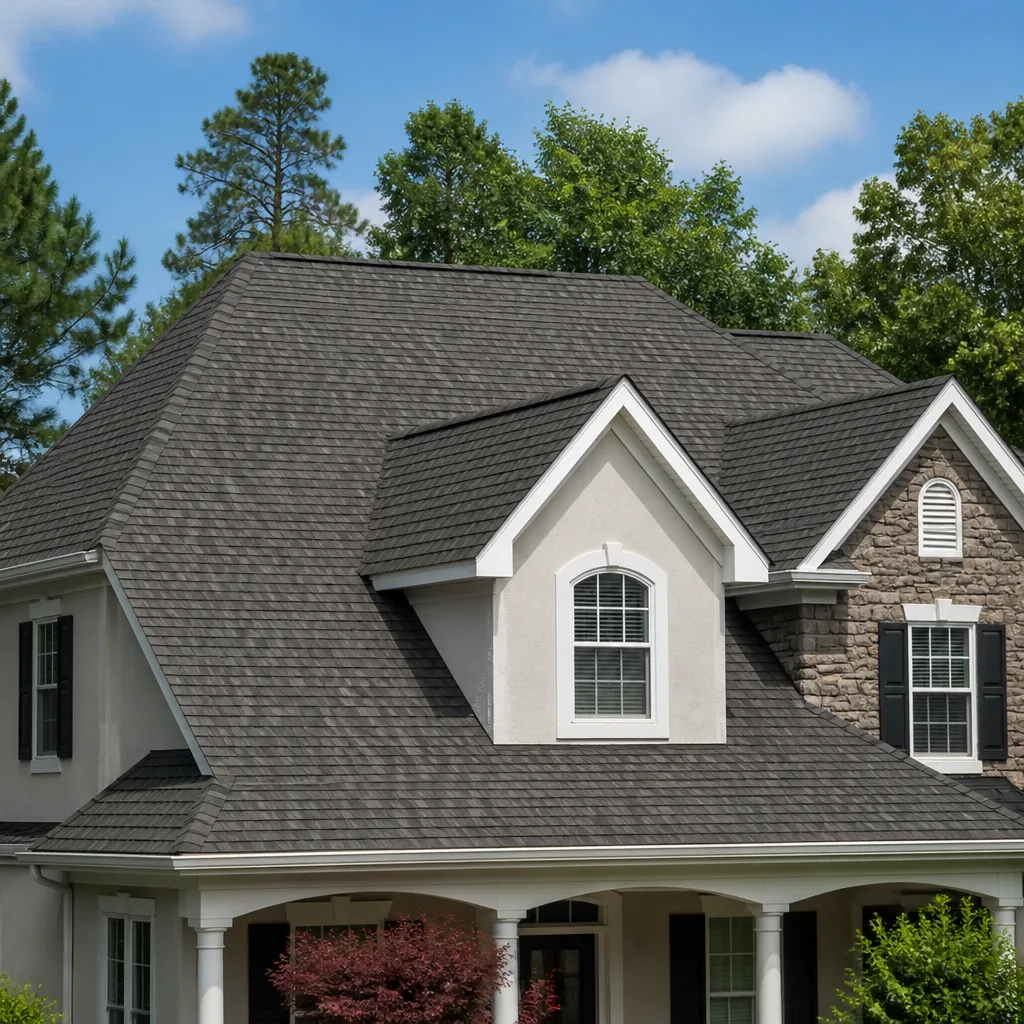 Architectural shingles
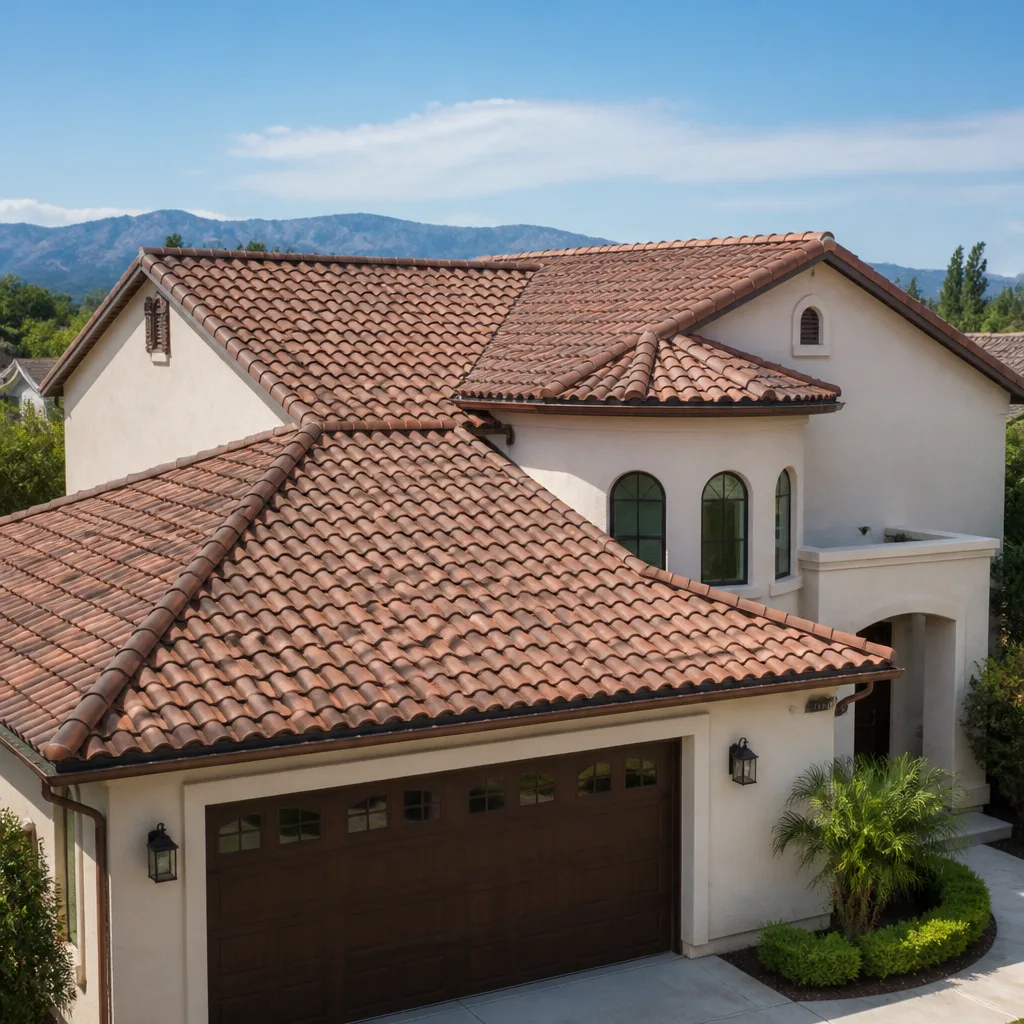 Tile roofing
 GAF
 Owens Corning
 Flat & low-slope
Free roof inspection with deck photos before we talk money - GAF and Owens Corning certified installation
Roofing Cost Breakdown: The Santa Ana Homeowner’s Reference for 2026
Two Santa Ana re-roof quotes that are $4,000 apart may reflect different material grades, different permit inclusions, or one contractor simply planning to skip the haul-off fee. The quote sheet won’t tell you which. What it will show is a single bottom-line number that bundles labor, materials, disposal, and fees into one figure you’re expected to compare against another bundled figure from a different company. This guide unbundles every line item so you can evaluate roofing quotes in Santa Ana on an apples-to-apples basis, understand what actually drives cost in 2026, and spot the gaps that become surprise change orders halfway through the job. For Roofing Warning Signs: A Santa Ana Homeowner’s Reference Guide, see our companion resource.
Quick Answer
A full roof replacement in Santa Ana in 2026 typically costs between $9,500 and $32,000 depending on material type, roof complexity, and whether the underlying deck needs work. Architectural asphalt shingles run $5.50 to $7.50 per square foot installed, clay tile runs $12 to $22 per square foot, and a flat roof membrane replacement runs $8 to $14 per square foot. The single biggest variable isn’t material cost – it’s whether your contractor’s quote includes deck repair allowance, permit fees, drip edge, and disposal, which together can swing a quote by $2,400 to $4,800 on an average Orange County home.
Styles & brands we work with
Table of Contents
- What Roofing Materials Actually Cost in Santa Ana in 2026
- What Labor Rates in Santa Ana Really Reflect
- The Line Items That Separate a Complete Quote From an Incomplete One
- How Manufacturer Partnerships Affect Your Material Price
- The Cost-Per-Year Calculation: Comparing a $12,000 Roof to a $20,000 Roof Honestly
- Santa Ana-Specific Factors: Climate, Code, and Market Conditions
- Repair Versus Replace: When the Smaller Number Is the Wrong Comparison
- What to Expect From the Inspection Before the Quote
What Roofing Materials Actually Cost in Santa Ana in 2026
The material you choose sets the floor for your total roof cost, but it doesn’t set the ceiling. In Santa Ana’s market, material pricing has shifted over the past two years as manufacturer price increases have landed unevenly across product categories. Asphalt has climbed steadily. Clay and concrete tile have climbed more. Here’s what we’re seeing on the ground in Orange County for 2026, priced per square foot of installed roof, not per square of material:
- 3-tab asphalt shingles: $4.75 to $6.00 per square foot installed. The entry-level option. Lifespan of 15 to 20 years in Santa Ana’s sun exposure. Largely being phased out by manufacturers as architectural shingles absorb the market.
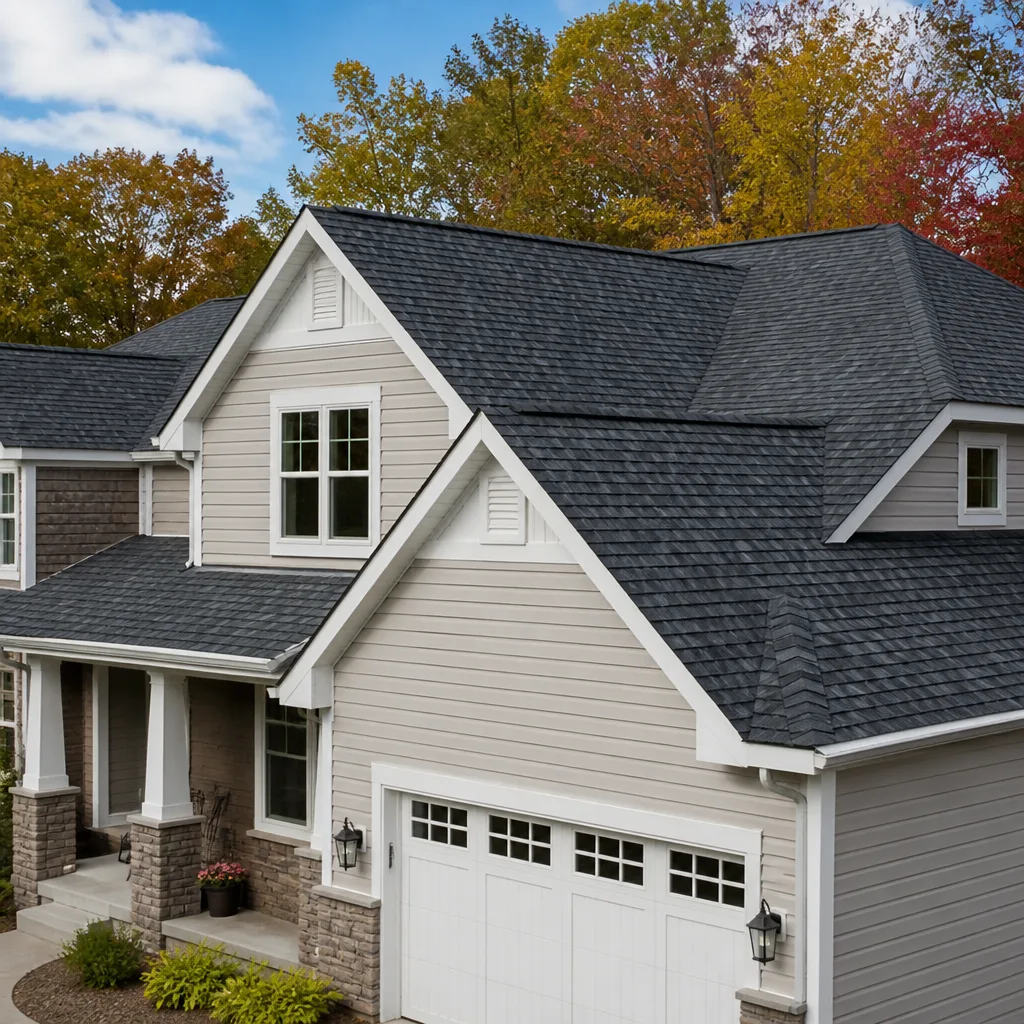
- Architectural (dimensional) asphalt shingles: $5.50 to $7.50 per square foot installed. The most common residential roof in Santa Ana. Lifespan of 25 to 35 years depending on the specific product line. Brands like GAF Timberline, CertainTeed Landmark, and Owens Corning Duration all sit in this range with modest price differences between them.
- Concrete tile: $9 to $14 per square foot installed. Heavier and more durable than asphalt, with a 40 to 50 year lifespan. Popular in Santa Ana’s Spanish-influenced neighborhoods where the aesthetic is part of the home’s character.
- Clay tile: $12 to $22 per square foot installed. The premium option, and the range is wide because clay tile quality varies dramatically. A Boral clay tile system sits at the higher end, and for good reason – the manufacturing consistency and color retention are different from what you’ll find in budget imported tile. Lifespan of 50 to 75 years.
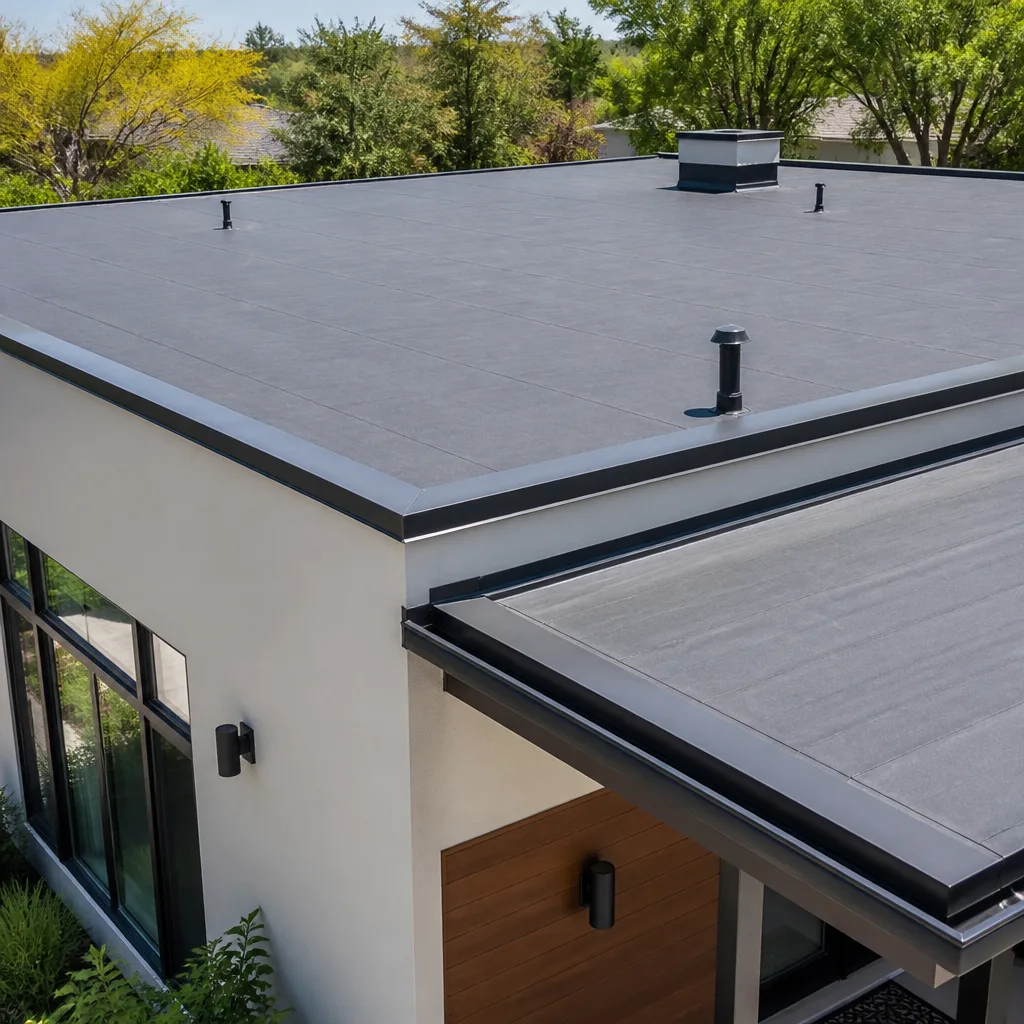
- Flat/low-slope membrane (TPO or modified bitumen): $8 to $14 per square foot installed. Used on flat sections, additions, and some mid-century homes in central Santa Ana. Lifespan of 15 to 25 years depending on membrane type and installation quality.
These ranges assume a straightforward roof with reasonable access. A steep-pitch roof, a cut-up roofline with many hips and valleys, or a two-story home where every bundle of shingles gets hoisted by hand will push labor cost upward within each range. The material price per square foot barely moves; what moves is the cost to install it properly.
What Labor Rates in Santa Ana Really Reflect
When a Santa Ana homeowner sees a labor figure on a roofing quote, they’re not seeing an hourly rate. They’re seeing a bundle of crew time, project duration, access difficulty, and the contractor’s overhead for carrying licensed, insured labor. A crew replacing a simple single-story roof in the Willard neighborhood might finish in two days. The same crew on a two-story Spanish Colonial near Floral Park with a steep tile profile and limited staging space may need five. Same materials. Different labor number. Here’s what actually moves the labor line:
- Crew size and composition: Most residential roof tear-offs in Santa Ana run with four to six people. A smaller crew costs less per day but extends duration. A larger crew costs more per day but finishes faster. Total labor cost often lands in the same place either way – what changes is how many days your home is exposed to weather and noise.
- Roof access and pitch: Anything steeper than 7:12 requires roof jacks and safety harnesses, which slows production. Two-story homes require material hoisting. Tight setbacks between neighboring homes, common in older Santa Ana tracts, mean no room for a truck-mounted conveyor, so everything goes up by ladder. These aren’t line items; they’re absorbed into labor.
- Tear-off versus overlay: In 2026, nearly every reputable contractor in Orange County will insist on full tear-off rather than shingling over an existing layer. Santa Ana’s building code follows California’s requirements, and layering a second roof over the first hides deck damage and adds weight the structure may not be engineered for. Tear-off labor, hauling, and disposal add roughly 20 to 30 percent to the total job cost compared to a hypothetical overlay – but the hypothetical overlay is a false economy.
- Deck condition discovered on tear-off: This is the line item that turns a $14,000 quote into an $18,000 final bill. When the old roof comes off, the plywood or OSB deck underneath is sometimes rotted, delaminated, or simply not up to current fastening standards. A quote that doesn’t include a per-sheet deck replacement allowance is a quote that expects you to absorb surprise costs later. More on this below.
Our crews work across the full roof lifecycle in Santa Ana, and the pattern we see consistently is that homeowners who understand their labor quote at this level ask better questions and get better results. The number isn’t arbitrary. It’s a reflection of how hard your specific roof is to access, tear off, and rebuild properly.
The Line Items That Separate a Complete Quote From an Incomplete One
The fastest way to evaluate a Santa Ana roofing quote is to check whether it contains the line items that every complete job requires. Contractors who omit these aren’t necessarily dishonest – many are submitting a lean number to win the bid and planning to adjust later. But late adjustments are change orders, and change orders are how a $15,000 roof becomes a $19,000 roof after the old shingles are already in the dumpster.
- Deck repair allowance: A complete quote includes a per-sheet price for replacing damaged decking, with language like “deck replacement billed at $85 per sheet if needed.” A quote that says “deck replacement included” is vague. A quote that doesn’t mention decking at all is the one to worry about – because rot under the old shingles is common in Santa Ana, especially on older homes where the original roof was installed decades ago.
- Building permit and inspection fees: The city of Santa Ana requires a building permit for any full roof replacement, and the fee is based on the project valuation. Some quotes include it; some don’t. If two quotes are $600 apart and one includes the permit and the other doesn’t, the more expensive one is actually the same price. This is a classic apples-to-oranges comparison point.
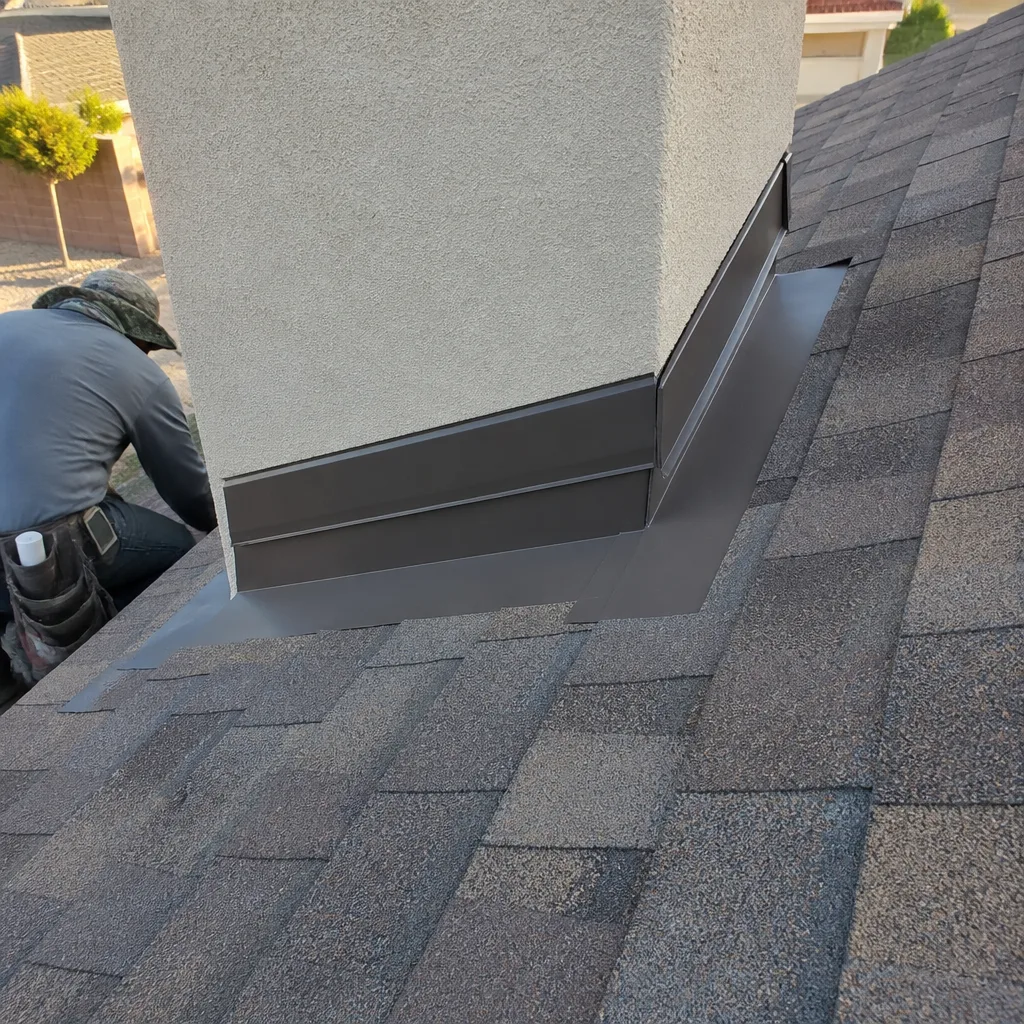
- Drip edge and flashing: Drip edge is the metal strip along the roof’s perimeter that directs water away from the fascia. It’s required by current California building code on all new reroofs. Some older Santa Ana homes don’t have it because it wasn’t required when the original roof went on. A complete quote specifies new drip edge around the entire perimeter and replacement flashing at all valleys, chimneys, and wall intersections. If the quote doesn’t mention flashing, ask.
- Underlayment specification: This is the layer beneath the shingles or tile, and it’s where cheap quotes get cheap. Budget contractors may use a single layer of 15-pound felt. Higher-quality installations use synthetic underlayment or even a self-adhered ice-and-water barrier in valleys and at eaves, which matters in Santa Ana’s occasional heavy rain events even if we don’t deal with snow. The quote should name the specific underlayment product. If it just says “underlayment,” ask which one.
- Haul-off and disposal: Tearing off an old roof generates several tons of debris – often four to six tons for an average Santa Ana home. Disposal is a real cost, and some quotes quietly leave it for the homeowner to handle. A quote that includes “haul-off and disposal” in the written scope is protecting you from a surprise dumpster rental bill.
- Manufacturer warranty registration: Most major manufacturers offer enhanced warranty coverage only when the roof is installed by a contractor authorized to install their products and the job is registered with the manufacturer. A complete quote names the manufacturer and the warranty level. A quote that says “25-year warranty” without naming the manufacturer or the registration process is describing a material warranty, not a workmanship or system warranty.
At Tilecraft Roofing, our quotes include all of these line items as standard practice because we work with seven major roofing manufacturers – GAF, CertainTeed, Owens Corning, IKO, Atlas, Tamko, and Boral – and each of those partnerships requires a documented, specified installation to stand behind the warranty. The line items aren’t extras. They’re the job.
How Manufacturer Partnerships Affect Your Material Price
Most homeowners don’t think about the relationship between their contractor and the material manufacturer, but it’s one of the quietest cost drivers in roofing. Contractors buy materials through distribution channels, and volume through those channels affects per-square pricing. A contractor who installs one brand exclusively may get better pricing on that brand – and that’s often why they recommend it so strongly. It’s not always because it’s the best roof for your home. It’s because it’s the best-margin roof for them.
This is where the single-brand pitch breaks down. If a contractor stocks only one manufacturer’s products, every roof gets the same material, whether that material suits the home or not. A 1920s Spanish Revival in the Washington Square neighborhood of Santa Ana might genuinely benefit from the authentic clay tile look that Boral produces – and a contractor with no access to Boral will instead push what they have, which might be an architectural shingle in a terra cotta color that approximates tile but isn’t tile. The homeowner gets a roof. They don’t get the right roof for the home.
Working with a multi-manufacturer contractor changes the math in two directions. First, the homeowner gets genuine choice – IKO for a budget-conscious asphalt replacement, Tamko for a mid-range architectural shingle with strong wind performance, Atlas for storm-resistant product lines, Boral for premium tile on a character home. Second, the contractor can price across manufacturers rather than being locked into one distribution channel. That competition doesn’t always show up as a lower line item on the quote; sometimes it shows up as better warranty terms, faster material availability, or the ability to match an existing roof profile that a single-brand contractor would have to tear off and replace entirely.
The practical takeaway: ask your contractor which manufacturers they’re authorized to install and why they’re recommending a specific product for your roof. If the answer is “this is what we always use,” that’s a flag. The right answer sounds more like, “For your pitch and sun exposure, we’d recommend this product because it handles heat better than the cheaper alternative, and here’s the price difference.”
The Cost-Per-Year Calculation: Comparing a $12,000 Roof to a $20,000 Roof Honestly
Roofing bids in Santa Ana tend to be compared as single numbers: $12,000 versus $20,000. The more expensive quote loses the comparison because the number is higher. But a roof isn’t a one-time purchase – it’s a durable asset that lasts 25 years or 60 years depending on what you buy. The honest comparison isn’t total cost. It’s cost per year of expected service life.
Here’s the method. Take the full installed cost, including permits, deck work, and all line items. Divide by the realistic lifespan of that roof on your specific home in Santa Ana’s climate, not the manufacturer’s theoretical maximum. The result is what the roof costs you per year.
- Architectural asphalt: $14,000 installed, 28 realistic years in Santa Ana’s sun = $500 per year.
- Concrete tile: $19,000 installed, 45 realistic years = $422 per year.
- Clay tile (Boral): $25,000 installed, 65 realistic years = $385 per year.
The $25,000 roof is the cheapest roof in this comparison. It costs the least per year of protected service, and it also carries additional benefits the calculation doesn’t capture: lower replacement frequency means fewer projects over your lifetime of ownership, less construction waste, and a premium aesthetic that holds property value in Santa Ana’s tile-heavy neighborhoods.
This doesn’t mean tile is right for every home. Tile is heavy; some structures weren’t engineered for it without reinforcement. Tile is also overkill on a starter home where the owner plans to sell in five years – in that scenario, the buyer won’t pay a premium for the remaining 60 years of roof life, so the asphalt shingle is the correct financial call. The point isn’t that one material wins. The point is that the per-year calculation gives you the real answer, while the total-cost comparison gives you a misleading one. Run the numbers on every quote you receive.
Santa Ana-Specific Factors: Climate, Code, and Market Conditions
Santa Ana’s climate shapes roof performance in ways that national roofing guides don’t fully capture. We get roughly 13 inches of rain per year, mostly in concentrated winter events, and we get intense UV exposure year-round. The sun is the more aggressive component. Asphalt shingles lose their oils and become brittle faster in constant sun than they do in cooler climates; tile and membrane roofs handle UV better, which is one reason they’re common on higher-end Santa Ana homes. If you’re choosing between asphalt grades in Santa Ana, the higher-end architectural shingles with better UV resistance genuinely last longer here, not just in manufacturer marketing materials.
Santa Ana also has a meaningful inventory of older homes – early 20th-century bungalows, mid-century tracts, and Spanish Colonial revivals – where the original roof framing wasn’t designed for modern roofing weights. Any conversation about switching from asphalt to tile on an older home should include a structural assessment of whether the deck and framing can carry the load. California building code sets minimum load requirements, and some pre-1960 Santa Ana homes need reinforcement before tile is an option. That’s not a reason to avoid tile; it’s a reason to know the number before you choose it.
On the code side, Santa Ana follows the California Building Code with local amendments, and the city enforces roofing permits and inspections on all full replacements. See our Roofing Permits, Codes & Inspections in CA: What You Need to Know for deeper detail. The inspection process requires the roof deck to be visible to the inspector before it’s covered – which means any contractor who plans to shingle over an old roof won’t pass inspection. Reputable Santa Ana roofers schedule this into the project timeline; it’s a one-day interruption between deck prep and material installation. If a contractor tells you an inspection isn’t needed, walk away.
Finally, there’s a market factor: Santa Ana’s housing stock is aging, and reroof demand in Orange County has been steady for years. That means good crews are booked out, sometimes four to eight weeks, especially in spring and fall. Waiting for the low bid often means waiting longer for the work, and during Santa Ana’s occasional Santa Ana wind events, a compromised roof becomes an urgent problem. Our Roofing Emergency Preparedness Guide for Santa Ana Homes explains how to plan ahead. Budget the timeline the same way you budget the cost.
Repair Versus Replace: When the Smaller Number Is the Wrong Comparison
Every homeowner wants the smaller number. If a roofer can fix a leak for $800, that beats a $16,000 replacement every time – unless the roof needed replacement anyway, in which case the $800 is a bridge to a bigger cost, not a solution. The challenge in Santa Ana is determining which situation you’re in, and that’s where the inspection genuinely matters.
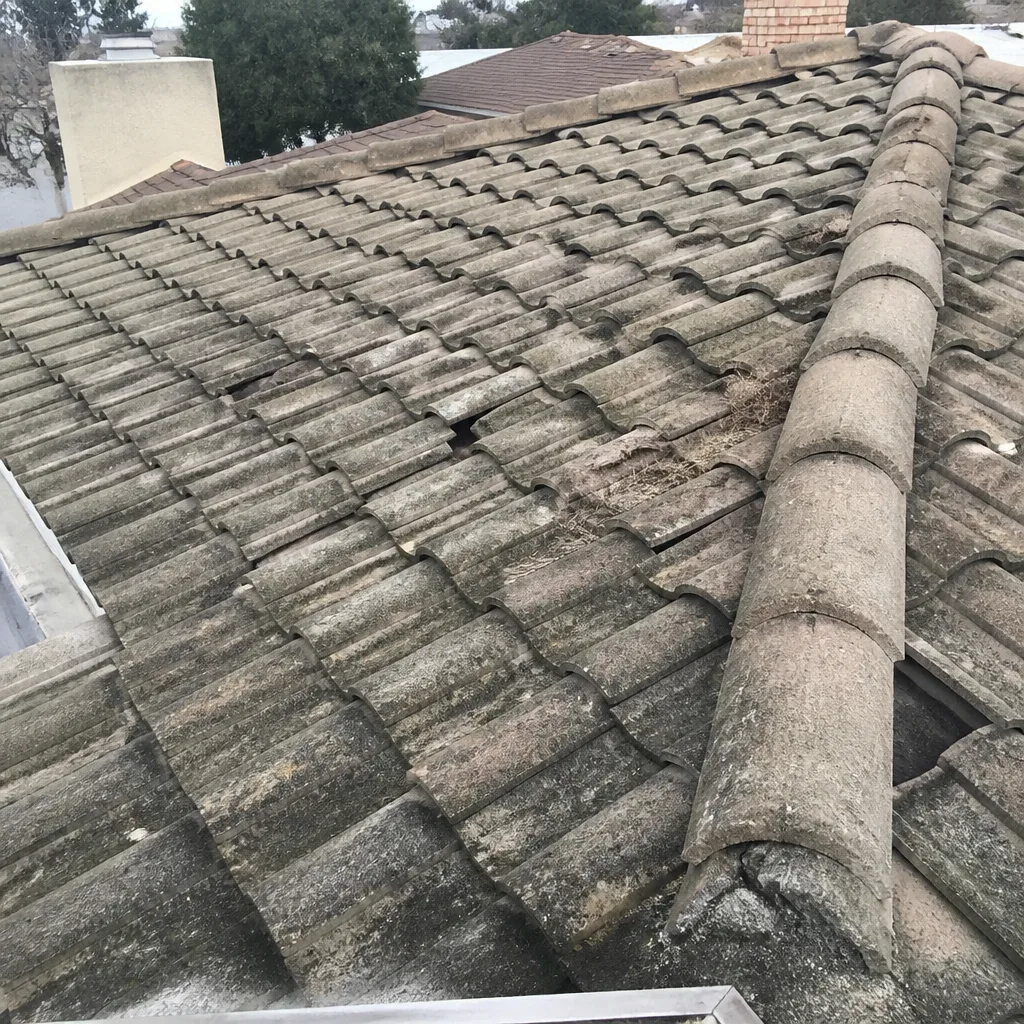
A roof that’s leaking around a single flashing point, a cracked tile, or a small section of wind-damaged shingles is usually repairable. A roof that’s leaking because the underlayment has degraded across the entire surface is not repairable in any meaningful sense – you’d be patching a substrate that has already failed, and the next leak is already forming somewhere else. The telltale signs that point toward replacement: granule loss across the whole roof, shingles that are curled or lifting in multiple areas, water staining on the underside of the deck visible from the attic, and any roof that’s past its expected service life for its material type.
The honest path is a diagnostic Roof Inspection in Santa Ana that tells you which situation you’re in. If the roof is repairable, the repair is a small number and the right call. If the roof has reached the end of its service life, a Roof Repair in Santa Ana is a temporary measure, not a solution, and a Roof Replacement in Santa Ana is the honest recommendation. The hard part for homeowners is trusting the roofer’s assessment, which is why the inspection-first approach matters. We look before we quote, and the recommendation is based on what’s actually on the roof, not on what we’d prefer to sell.
What to Expect From the Inspection Before the Quote
Before any accurate roofing quote can exist, someone has to look at the roof. In Santa Ana, that means getting on the roof, checking the attic, and documenting the condition of the deck, the flashing, the ventilation, and the material layer that’s currently installed. A roofer who quotes a replacement from the driveway without getting on the roof is guessing. A roofer who gets on the roof and comes back with a detailed scope is doing the work that the quote depends on.
A proper inspection should include attic access when available. The underside of the deck tells you what the topside can’t: water intrusion history, ventilation adequacy, and deck condition are visible from below. In Santa Ana’s older homes, attic access varies – some have full attics, some have tight crawl spaces, some have none. A good inspector works with what the home provides and tells you what they couldn’t see.
The inspection result should be a written document with photographs, not a verbal summary. It should identify the current material, estimated age, condition of the deck, condition of flashing at all penetrations, ventilation performance, and a clear recommendation: repair, replace, or monitor. From that document, an accurate quote follows within a day or two. The inspection is the foundation everything else sits on. If a contractor is willing to write a number without it, the number is fiction.
Common Mistakes to Avoid
- Comparing quotes by total number alone. A $13,000 quote that includes permits, deck allowance, drip edge, and disposal is often cheaper than a $11,500 quote that includes none of those things. Read the line items before you compare the totals.
- Ignoring the underlayment spec. The layer beneath the shingles or tile determines how the roof performs in the long term. A cheap quote with unspecified underlayment is cheap because something got downgraded.
- Choosing material by price only without running the per-year calculation. A $12,000 asphalt roof and an $18,000 tile roof are not competing on price – they’re competing on cost per year, and the math often flips the intuitive answer.
- Assuming the lowest bid is the bad bid and the highest bid is the good one. Quality and price aren’t correlated that cleanly. Evaluate the scope, the materials, the warranty registration, and the contractor’s access to the right products, then evaluate price.
- Not asking which manufacturers the contractor is authorized to install. The honest answer to this question tells you whether the roofer is recommending from a portfolio or from an inventory shelf.
- Deferring replacement until the roof is actively leaking. Once water penetrates the deck, the repair cost compounds. Deck replacement, insulation replacement, and interior drywall repair all get added to the roof cost. Scheduling replacement before failure is cheaper than after it.
See the difference
 Before
 After
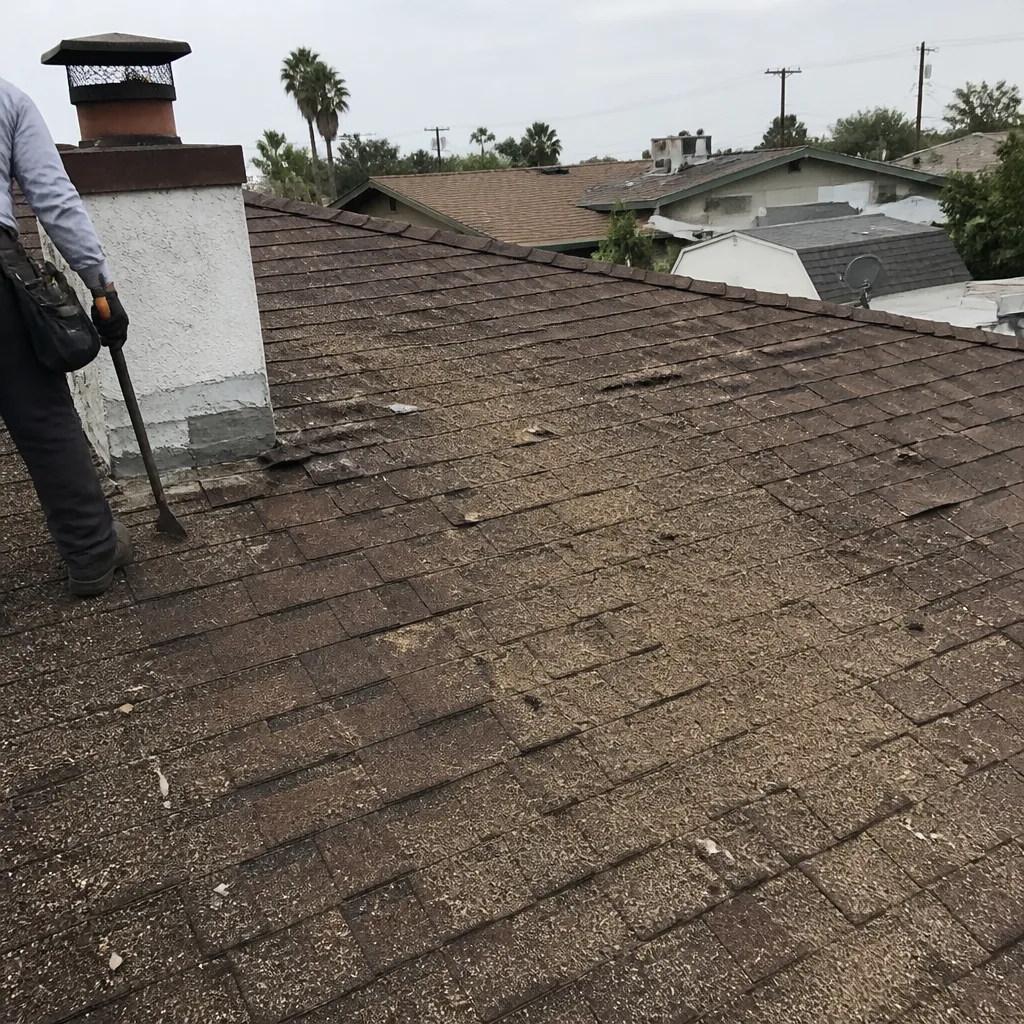 Before
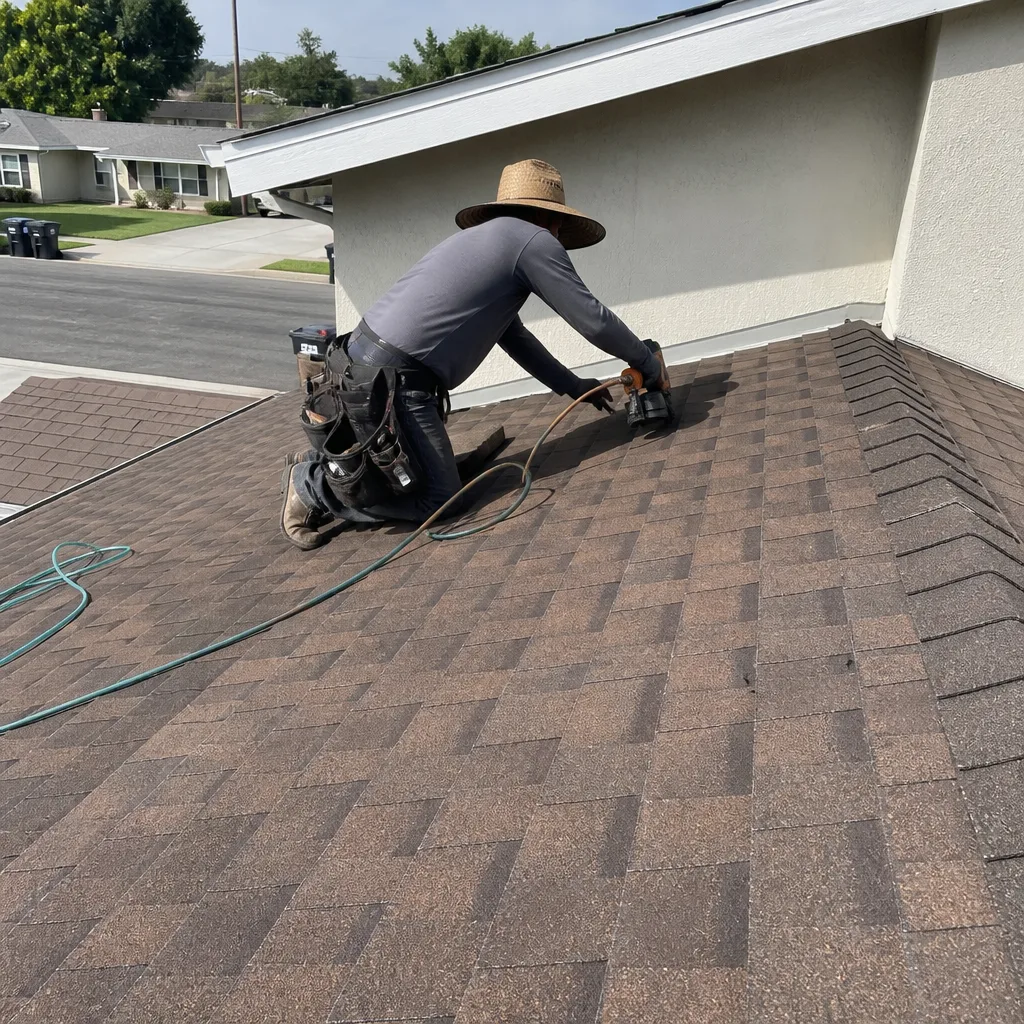 After
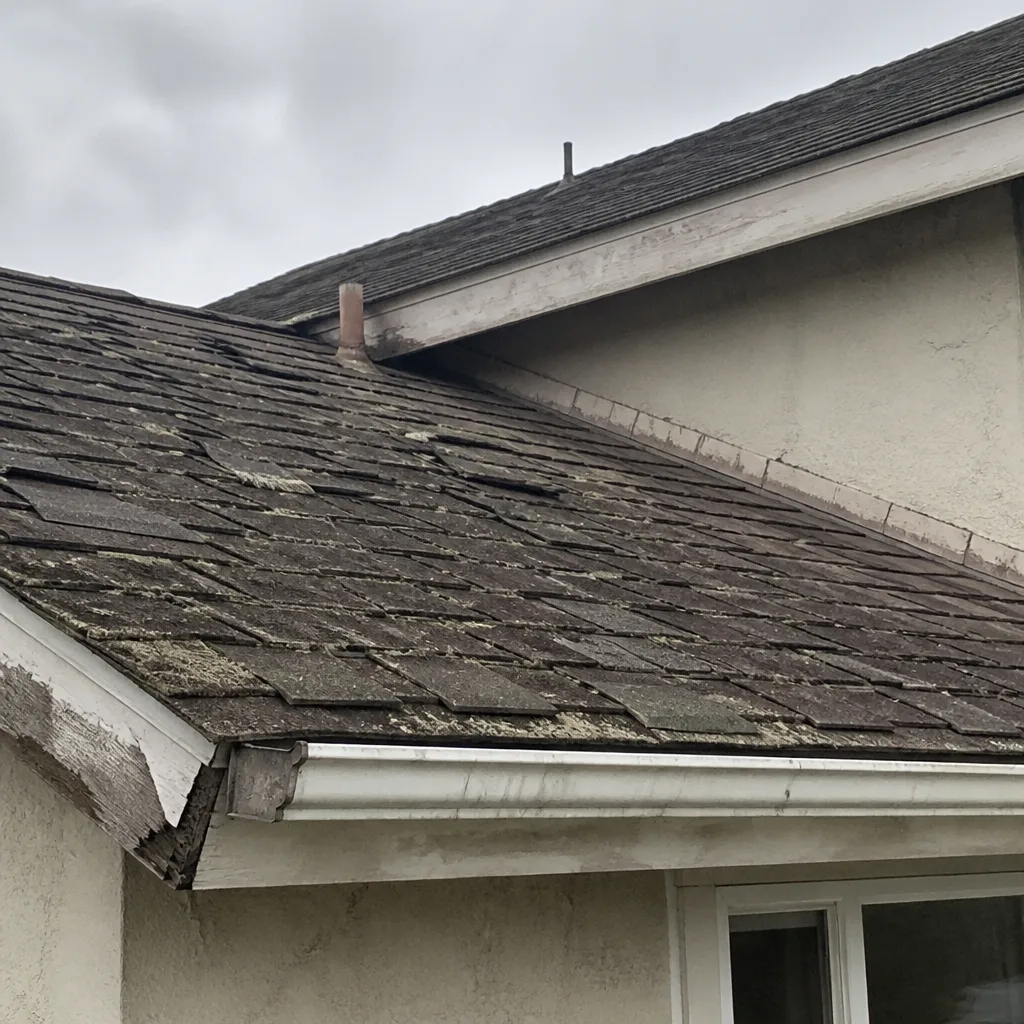 Before
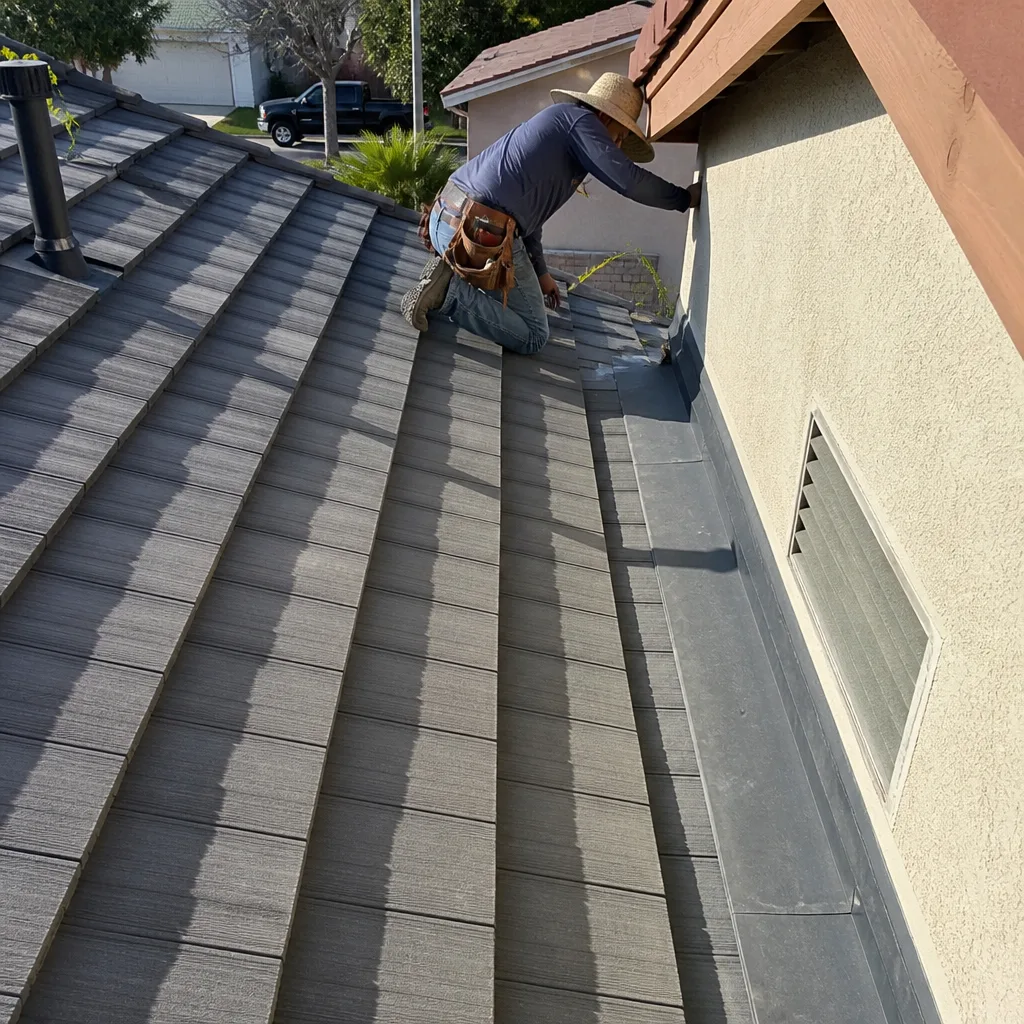 After
When to Call a Professional
If you’ve found water staining on a ceiling, granules collecting in your gutters, or tiles that have slipped or cracked after a Santa Ana wind event, you need a professional assessment. These are the symptoms of a roof that’s either failing or approaching failure, and the cost of delaying the inspection is measured in deck sheets and drywall patches, not just shingles. If your roof is past its expected service life for its material – 20 years for 3-tab asphalt, 30 for architectural, 50 or more for tile – a professional inspection will tell you whether you have remaining life or should start budgeting for replacement. Tilecraft Roofing offers free estimates in Santa Ana – call (833) 467-4846 to schedule yours.
Frequently Asked Questions
A full roof replacement in Santa Ana typically costs between $9,500 and $32,000 depending on material type, home size, roof complexity, and whether deck repair is needed. Architectural asphalt shingles on an average Santa Ana home run $12,000 to $18,000 installed. For an exact number on your roof, call (833) 467-4846 for a free estimate – our quotes include all line items up front.
It shouldn’t, if the quote is complete. The most common reason prices change mid-project is deck rot discovered during tear-off that wasn’t accounted for in the quote. A complete quote includes a per-sheet deck replacement price so you know the cost before the work starts. Quotes that omit this line item are the ones that surprise homeowners later.
Any legitimate roofing contractor in Santa Ana handles the building permit and inspection process as part of the project. The permit fee is based on project valuation and is a standard line item on a complete quote. If a contractor suggests skipping the permit, that’s a red flag – Santa Ana enforces reroof permits, and an unpermitted roof creates disclosure problems when you sell the home.
A typical asphalt shingle roof on a single-story Santa Ana home takes two to three days from tear-off to final inspection, weather permitting. Tile roofs and two-story homes take longer, often four to seven days. The inspection itself is the variable that sometimes adds a day – the deck must be inspected before covering, which means the project pauses briefly between tear-off and installation.
For homes that will be owned long-term, tile often costs less per year of service life than asphalt – a $25,000 clay tile roof that lasts 65 years costs about $385 per year, while a $14,000 asphalt roof that lasts 28 years costs $500 per year. Tile also suits Santa Ana’s sunny climate and matches the aesthetic of the city’s Spanish-influenced neighborhoods. However, older homes may need structural reinforcement before tile is feasible. Call (833) 467-4846 for an inspection that will tell you what your specific roof can carry.
Roof inspection pricing varies by company and scope. Tilecraft Roofing treats inspection as a standalone diagnostic service, not just a pre-sale step – the goal is an honest assessment of your roof’s condition, whether or not you ultimately replace or repair anything. Call (833) 467-4846 for current inspection pricing and scheduling.
The Bottom Line
A roofing quote in Santa Ana is only as useful as the line items behind the bottom number. Complete quotes include deck allowance, permit fees, drip edge, flashing, a named underlayment, and disposal. Incomplete quotes include a lower number and a surprise later. Material choice should be driven by the cost-per-year calculation, not the total-cost comparison, and the right product for your roof depends on your home’s structure, your ownership horizon, and the specific conditions on your roof – not on which brand your contractor stocks. Get the inspection first, run the numbers on every bid, and call (833) 467-4846 for a free estimate from a crew that works with seven leading brands and lets the roof determine the recommendation. For more guides & resources, visit our blog.
Written by the team at Tilecraft Roofing, serving Santa Ana since 2012.