
Last updated October 31, 2026
 Metal roofing
 Architectural shingles
 Tile roofing
 GAF
 Owens Corning
 Flat & low-slope
Free roof inspection with deck photos before we talk money - GAF and Owens Corning certified installation
Roofing Warning Signs: A Santa Ana Homeowner’s Reference Guide
Here’s something most roofing guides won’t tell you: by the time a roof looks bad from the street, the damage underneath is usually three to five years old. In Santa Ana’s climate, where summer UV hits 300+ days a year and winter brings sudden downpours, minor failures accelerate quietly. A granule patch on shingles, a hairline crack in ridge cap mortar, a faint musty smell in the attic in August. None of these scream emergency. All of them are talking to you. This guide teaches you what they’re saying, so when you call a contractor, you can describe the failure mechanism, not just the symptom. For a broader overview of materials, codes, and contractor selection, see The Complete Guide to Roofing in Santa Ana. That one skill changes whether you get a $400 repair or a $22,000 replacement quote.
Styles & brands we work with
Quick Answer
The most reliable roof warning signs in Santa Ana are: granule buildup in gutters (material aging), cracked ridge cap mortar (thermal expansion), attic-side deck staining (slow moisture intrusion), and efflorescence on clay tile joints (water traveling through mortar). Each sign points to a specific failure mechanism, and identifying that mechanism tells you whether you need monitoring, repair this season, or immediate professional attention.
Table of Contents
- Granules in the Gutter: Reading Material Age
- Ridge Cap Problems: Lifted vs. Cracked
- What the Attic Tells You Before the Ceiling Does
- Santa Ana Tile Roofs: Efflorescence and Mortar Joints
- Flat Roof Surface Crazing: UV Damage in Plain Sight
- Severity Triage: Monitor, Repair This Season, or Call Today
- Common Mistakes to Avoid
- When to Call a Professional
- Frequently Asked Questions
- The Bottom Line
Granules in the Gutter: Reading Material Age
You clean your gutters twice a year. Maybe you’ve noticed what looks like coarse black sand collecting in the downspout elbows. Most homeowners write it off as normal. Here’s what it actually is: the ceramic coating on your asphalt shingles shedding as the asphalt binder breaks down under heat and UV exposure.
Granule loss is a life-cycle indicator. Every asphalt shingle sheds granules from the day it’s installed. But when the rate accelerates, that’s your signal that the shingle’s waterproofing asphalt is exposed and oxidizing. It’s not a cosmetic issue, though from the street it looks like one. It’s the roof’s way of telling you the material is entering its final third of service life.
How to read what you’re seeing:
- Light, consistent granules: normal for any roof over five years old. Monitor seasonally.
- Heavy accumulation, bare spots on shingles visible from the ground: asphalt exposure has begun. The shingles are losing their algae and UV resistance. Repair individual slopes this season, or plan for replacement within two to four years.
- Granules plus shingle edges curling upward: the shingle matrix is breaking down. Water can now get under the shingle’s seal strip. This is a repair-now situation on affected slopes.
- Granules in the gutter after a specific storm, along with shingle debris: wind damage, not age. Document it for insurance.
One detail that matters more than most homeowners realize: which shingle is shedding. Ten-year-old GAF Timberline on a north-facing slope should still be holding its granule layer. If that slope is shedding heavily while the south slope looks fine, you’re not looking at age. You’re looking at manufacturing variance, poor attic ventilation on that side, or installation error. That distinction changes the conversation entirely, and it’s the kind of information an honest contractor wants before they quote anything. For help evaluating manufacturers, read Choosing the Right Roofing Brand: A Buyer’s Guide for Santa Ana.
Santa Ana’s summer heat accelerates granule loss on south-facing and west-facing slopes specifically. We see roofs in the Washington Square and Floral Park neighborhoods that are identical in age but a decade apart in wear, purely because of sun orientation and tree cover. Trees are a bigger factor here than most guides acknowledge. A mature sycamore shading a roof in the morning can extend asphalt life by three to five years in this climate.
Roof Repair in Santa Ana starts with identifying which slopes are failing and why. Repairing one slope of a granule-shedding roof is sometimes the right call. Other times, the slope condition tells you the whole system is nearing end of life and replacement should be scoped honestly. The granule test tells you which conversation you need to have.
Ridge Cap Problems: Lifted vs. Cracked
The ridge cap is the row of shingles or tiles running along the peak of your roof. It’s the roof’s spine. And in Santa Ana, it fails in two distinct ways that most guides conflate into one vague “ridge cap damage” bucket. That conflation is expensive, because the two failure modes require different repairs at very different costs.
Wind-lifted ridge cap is a fastener failure. The nails either backed out, were driven too shallow at installation, or missed the roof deck entirely. When the Santa Ana winds blow (and in October and November, they regularly gust past 40 mph), the edges of the cap lift. You’ll see it from the ground: cap shingles or tiles that look slightly raised on one end, like a loose flap. Sometimes you hear a light tapping in high wind.
The fix is straightforward: resecure the cap with proper fasteners, check for any water that got under the lifted section, and reseal. It’s a few hundred dollars. Delaying means wind-driven rain gets under the cap, and now you’ve got deck damage running down both sides of the ridge. Wind-lifted cap that’s ignored becomes a much bigger repair within one rainy season.
Cracked ridge cap is different. It’s a material failure, not a fastener failure. On asphalt roofs, the cap shingles develop vertical cracks right at the bend, because every day they flex with thermal expansion. Santa Ana regularly swings 30 to 40 degrees between night and afternoon in spring and fall. Multiply that flex cycle over eight to ten years, and the cap material simply fatigues.
On clay tile roofs, cracked ridge cap usually shows up as a hairline fracture running across the tile’s crown. The tile expands and contracts, and the mortar bed holding it doesn’t flex. Something has to give. It’s the tile.
Why the distinction matters:
- Wind-lifted cap: fix the fasteners. The material is still serviceable.
- Cracked cap: the material has failed. Replacing a section of cap with new material, then bedding it properly, is the correct repair. Patching or sealing a cracked cap is temporary; thermal cycling will reopen the crack within a year or two.
On a recent roof in the Park Santiago area, a homeowner showed us three cracked ridge tiles on a back elevation. From the street, the roof looked perfect. It had been “inspected” by another company the year before. Nobody walked the ridge. The interior damage from moisture entering through those cracks had already stained the OSB deck underneath. The repair involved replacing the cracked tiles and re-bedding the adjacent caps. A month later, you couldn’t see a difference from the ground. But the attic no longer breathes damp in the morning.
That’s the pattern with ridge cap issues: the ground-level view lies to you. A roof needs to be walked or drone-inspected at the ridge line specifically to catch this early.
What the Attic Tells You Before the Ceiling Does
A ceiling water stain doesn’t tell you where the leak is. It tells you where water stopped. The source is typically three to six feet uphill from the stain, because water travels along the underside of the roof deck until it finds a seam or a nail and drops. By the time it’s on your ceiling, it’s been traveling for a while.
This is why the attic is the most underrated diagnostic space in a Santa Ana home. You can catch roof failure months or years before it reaches living space, if you know what you’re looking at.
What to check in the attic, and what each finding means:
- Dark streaking on the underside of the roof deck (OSB or plywood): water has been getting under the roof covering and running across the deck. The dark color is tannin from the wood or algae feeding on moisture. This is active or recent moisture intrusion. Find the source uphill.
- White, chalky residue on rafters or decking: moisture has evaporated repeatedly in this area. The minerals left behind indicate a slow, periodic leak, often around a nail or a flashing point. It’s not active right now, but it was, and the conditions that caused it haven’t changed.
- Rust on any exposed nail heads protruding through the deck: condensation is present. This usually means the attic isn’t ventilating properly, and that condensation is cycling moisture against the roof structure. It’s not a roof leak in the traditional sense. It’s a ventilation failure that will eventually rot the deck from underneath.
- Daylight visible through the deck at any seam or knot: the deck has a gap. This is common on older Santa Ana homes where decking was installed with spacing, but if you can see light, water can enter the same way. Flashing or patching at that point is urgent.
- Insulation that’s darker in patches or matted down: water has soaked that insulation at some point. Wet insulation loses R-value and holds moisture against the deck, accelerating rot. Identify the water source before replacing insulation; otherwise you’re treating the symptom.
One thing we tell Santa Ana homeowners consistently: a quick attic check in September, before the rainy season, is worth more than a January ceiling stain discovery. September is when the attic is driest and the signs are easiest to read. You have time to schedule a Roof Inspection in Santa Ana and address slow issues before winter rain turns them into active leaks.
The underside of the deck tells a story the shingles can’t. When we walk an attic, we’re reading that story from the inside. It’s often more informative than the exterior walk.
Santa Ana Tile Roofs: Efflorescence and Mortar Joints
Clay tile roofs are a defining feature of Santa Ana’s older neighborhoods, and they behave nothing like asphalt shingles. A tile roof doesn’t “wear out” the way shingles granule-shed. The tiles themselves, properly installed, can last fifty to eighty years. What fails first is the system around them: the mortar joints and the underlayment beneath the tiles.
The most useful early warning sign on a Santa Ana tile roof is efflorescence. You’ll see it as a white, chalky bloom on the surface of clay tiles, most often near the ridge, at hip lines, or around vents and curbs. It’s not mold. It’s mineral salts that water has carried through the mortar and deposited on the tile surface as it evaporated.
What efflorescence is actually telling you: water is moving through the mortar joint. The mortar has become porous or has cracked, and moisture is traveling through it. The tile itself may be perfectly sound. But the joint that locks it into the roof system no longer sheds water the way it should. That water is finding its way under the tile, onto the underlayment, and eventually through the deck.
How to triage efflorescence:
- Light, patchy efflorescence isolated to one or two tile rows: early porosity. The joint can be repointed (mortar scraped and replaced) before underlayment damage accumulates. Monitor annually.
- Heavy efflorescence across a ridge line or entire hip: systemic joint failure. The mortar bed has failed and water is entering across a broad area. Repair this season; the underlayment beneath is likely already compromised.
- Efflorescence plus displaced tiles or visible gaps in the mortar: the joint has failed mechanically. Water is actively entering. Do not walk on that section. Call for repair before winter rain.
There’s a second, subtler sign on tile roofs that almost no one mentions: tile surface spalling, where small flakes of the tile’s fired surface chip off, leaving a rougher, lighter-colored patch. On a fifty-year-old Santa Ana tile roof, some spalling is normal weathering. It’s the pattern that matters. If spalling is concentrated on tiles that sit in a shaded pocket or under an overhang, that’s freeze-thaw damage from trapped moisture. If it’s uniform across the roof, that’s UV and age, and the tiles are nearing replacement.
Tile systems are where material choice matters most. A clay tile roof in Santa Ana that gets proper joint maintenance will outlast three asphalt installations. A tile roof with ignored joints will fail from the inside while looking fine from the street. The material itself is rarely the problem. It’s the joints, and the joints are repairable if caught in time.
Not every contractor carries Boral tile products or stocks the specific profile needed to match a 1960s Santa Ana roof. When we quote a tile repair, we’re matching existing profile, color, and weathering pattern, because a new tile next to a fifty-year-old tile looks like a patch job. Boral’s range makes that matching possible on most classic Santa Ana profiles. That’s not a sales pitch. It’s the difference between a repair that disappears and one that announces itself.
Flat Roof Surface Crazing: UV Damage in Plain Sight
Santa Ana has thousands of homes with flat or low-slope roof sections, particularly on postwar ranch-style homes, additions, and carport structures. Flat roofs fail differently than pitched roofs, and the earliest sign is so common that homeowners stop seeing it: surface crazing.
Crazing looks like the fine lines on old ceramic glaze, a network of hairline cracks running across the surface of the roof membrane. On a built-up roof or modified bitumen surface, it’s the top layer of asphalt or coating drying out and shrinking as UV light breaks down the volatile compounds that keep it flexible.
Crazing itself isn’t a leak. But it’s the clearest warning you’ll ever get on a flat roof. Here’s the progression:
- Surface dulls from a deep color to a chalky gray: UV oxidation has begun. The membrane is losing flexibility. Monitor.
- Fine crazing lines appear, no cracking through the membrane: the surface layer is brittle. Water isn’t penetrating yet, but the membrane has lost its ability to expand and contract with Santa Ana temperature swings. Repair this season: a surface coating or cap sheet will restore UV resistance.
- Cracks widen, and you can see fiber or fabric at the bottom of the crack: water is now reaching the reinforcement layer. This is active moisture entry, even if you haven’t seen an interior stain. The underlayment and deck below are getting wet. Call for repair now.
- Blisters appear (raised bubbles in the membrane): water has entered beneath the membrane and is vaporizing in the sun, pushing the membrane up from underneath. This is not repairable with surface coating. The wet sections need to be cut out, dried, and patched, or the roof section replaced.
Flat roofs in Santa Ana take a beating that pitched roofs don’t. They hold water longer after rain. They get direct UV sun from 10 a.m. to 6 p.m. in summer, with no shade. And on a 100-degree July afternoon, the surface temperature of a dark flat roof can exceed 140 degrees. Every material has a UV budget, and Santa Ana flat roofs use theirs up faster than the same roof in a coastal microclimate.
Here’s the misdiagnosis we see most often: a homeowner sees crazing, paints a reflective coating over it, and thinks they’ve extended the roof’s life by ten years. What they’ve actually done is sealed a brittle membrane under a coating that will crack as the membrane beneath continues to shrink. The coating hides the problem while the membrane continues to fail underneath. Crazing has to be addressed as a material condition, not a surface blemish.
Severity Triage: Monitor, Repair This Season, or Call Today
Every warning sign in this guide has a severity. Here’s the triage in one place, because when you’re standing in the driveway looking up at your roof, you don’t want to re-read 3,000 words. You want a decision framework.
| Warning Sign | What It Indicates | Action |
|---|---|---|
| Light granule accumulation in gutters | Normal aging | Monitor seasonally |
| Surface crazing on flat roof, no cracks through membrane | UV oxidation, membrane losing flexibility | Repair this season |
| Patchy efflorescence on tile joints | Early mortar porosity | Repair this season |
| Wind-lifted ridge cap | Fastener failure | Repair this season |
| Dark streaks on attic deck | Active or recent moisture intrusion | Call today for an inspection |
| Blisters on flat roof membrane | Water under membrane, active entry | Call today |
| Cracked ridge cap with daylight-visible gap | Material fatigue, open water path | Call today |
| Daylight visible through attic deck seam | Open gap in roof deck | Call today |
One note on the “monitor” category: monitoring only works if you actually do it. Twice a year, walk the property (or hire an inspector to walk the roof) in April and October—see Seasonal Roofing Care for Santa Ana: Year-Round Homeowner’s Guide for a full schedule. Santa Ana’s dry summers make visible damage easy to spot in October, before the winter rain cycle starts. A fifteen-minute seasonal check catches most failures before they’re emergencies.
Common Mistakes to Avoid
- Painting over flat-roof crazing without addressing the membrane. A reflective coating seals a failing surface and hides the problem while the membrane keeps shrinking underneath. The coating will crack within two seasons and you’ve spent money on a cosmetic fix.
- Assuming a ceiling stain points straight up. Water travels downhill along the deck, often three to six feet from the entry point. Patching directly above the stain usually misses the source, and the stain comes back.
- Replacing a whole tile roof because a few joints are failing. Clay tile itself often remains sound for decades. The mortar joints and underlayment are the replaceable components. A reputable contractor should scope the joint repair before recommending full replacement.
- Ignoring the attic because the roof looks fine from the curb. The underside of the deck shows moisture intrusion years before it appears on the ceiling. If you only inspect the roof from the ground, you’re looking at the last stage of failure, not the first.
- Patching a cracked ridge cap with sealant. Thermal cycling will reopen the crack within a year or two. The cap material has failed and needs replacement of the cracked section, not a bandage.
- Waiting for a leak before calling anyone. By the time water reaches your ceiling, the deck, insulation, and possibly framing have been wet for months. Roof problems are cheapest when they’re still on the roof.
When to Call a Professional
Call a professional when you see any sign in the “Call today” column of the triage table: dark streaks in the attic, blisters on a flat roof, cracked ridge cap with visible gaps, or daylight through the deck. Also call when you’re not sure what you’re looking at. The cost of a professional inspection in Santa Ana is a fraction of what a missed early-warning sign costs six months later. Tilecraft Roofing offers free estimates in Santa Ana. Call (833) 467-4846 and we’ll look before we quote. That’s not a sales funnel. It’s how we’ve built our reputation in this city: inspection first, recommendation second, work third.
Frequently Asked Questions
Twice a year is right for Santa Ana’s climate: once in October, before the rainy season, and once in April, after winter weather has had a chance to expose any leaks. If your roof is over fifteen years old or has known problem areas, a professional walk should happen at least annually. Roof Inspection in Santa Ana is a standalone service, not a sales call, so scheduling one is the cheapest insurance against a winter surprise.
Most Santa Ana roof repairs fall between $350 and $2,800 depending on scope. Resecuring a wind-lifted ridge cap or repointing a small section of tile joints runs a few hundred dollars. Replacing a flat roof blister section or repairing deck damage from a long-running attic leak runs into four figures. For an exact quote on your specific issue, call (833) 467-4846. Estimates are free.
You can spot basic signs from the ground: lifted ridge cap, heavy granule accumulation in the gutter, visible tile displacement, flat roof blisters. But the ground view misses ridge-line cracking, attic deck staining, and the early stages of joint failure. Most roof problems start where you can’t see them from the driveway. A professional walk or drone inspection covers what the ground view can’t.
The tile itself, properly laid, commonly lasts fifty to eighty years. What fails first in Santa Ana tile roofs is the mortar joints and the underlayment beneath the tiles. Those components typically need attention every twenty to thirty years. If your tile roof is showing efflorescence at the ridge or hips, the tiles are probably fine; the joints need repointing.
It means the shingle’s asphalt binder is oxidizing and the protective ceramic layer is shedding. Light granule loss is normal aging. Heavy granule loss with visible bare spots means the shingles have entered the final third of their service life and should be assessed for repair or Roof Replacement in Santa Ana.
No. A roof leak that dries out has not repaired itself; it’s just waiting for the next rain. The water entry point is still open, and the materials it’s soaked are still damaged. One of the most expensive patterns we see in Santa Ana is a “dry” leak that returns every winter, doing cumulative damage each time. Call (833) 467-4846 the first time you see a stain, not the third.
The Bottom Line
Roof warning signs aren’t random symptoms. Each one maps to a specific failure mechanism, and knowing that mechanism is what lets you communicate with a contractor on equal footing. Granules in the gutter mean asphalt oxidation, not dirt. Efflorescence on tile means mortar porosity, not mold. Crazing on a flat roof means UV fatigue, not a cosmetic blemish. Read the signs right and you’ll know whether you’re monitoring, repairing this season, or calling today. Read them wrong and you’ll either panic-buy a roof you didn’t need or ignore a cheap repair until it becomes an expensive one. Inspection first, recommendation second. That’s the order, and it works every time. If you need a professional eye on your Santa Ana roof, call Tilecraft Roofing at (833) 467-4846 for a free estimate, or browse more guides & resources.
Written by the team at Tilecraft Roofing home, serving Santa Ana since 2012.
See the difference
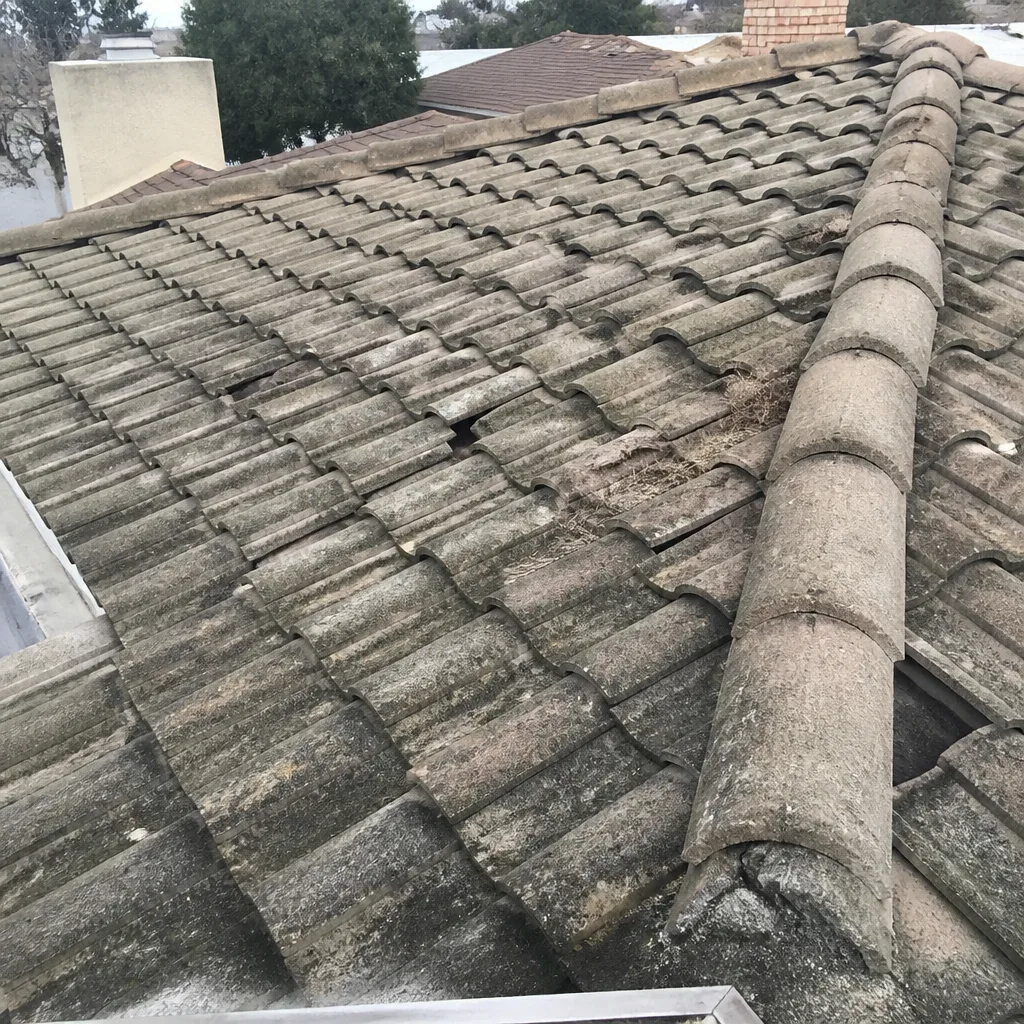 Before
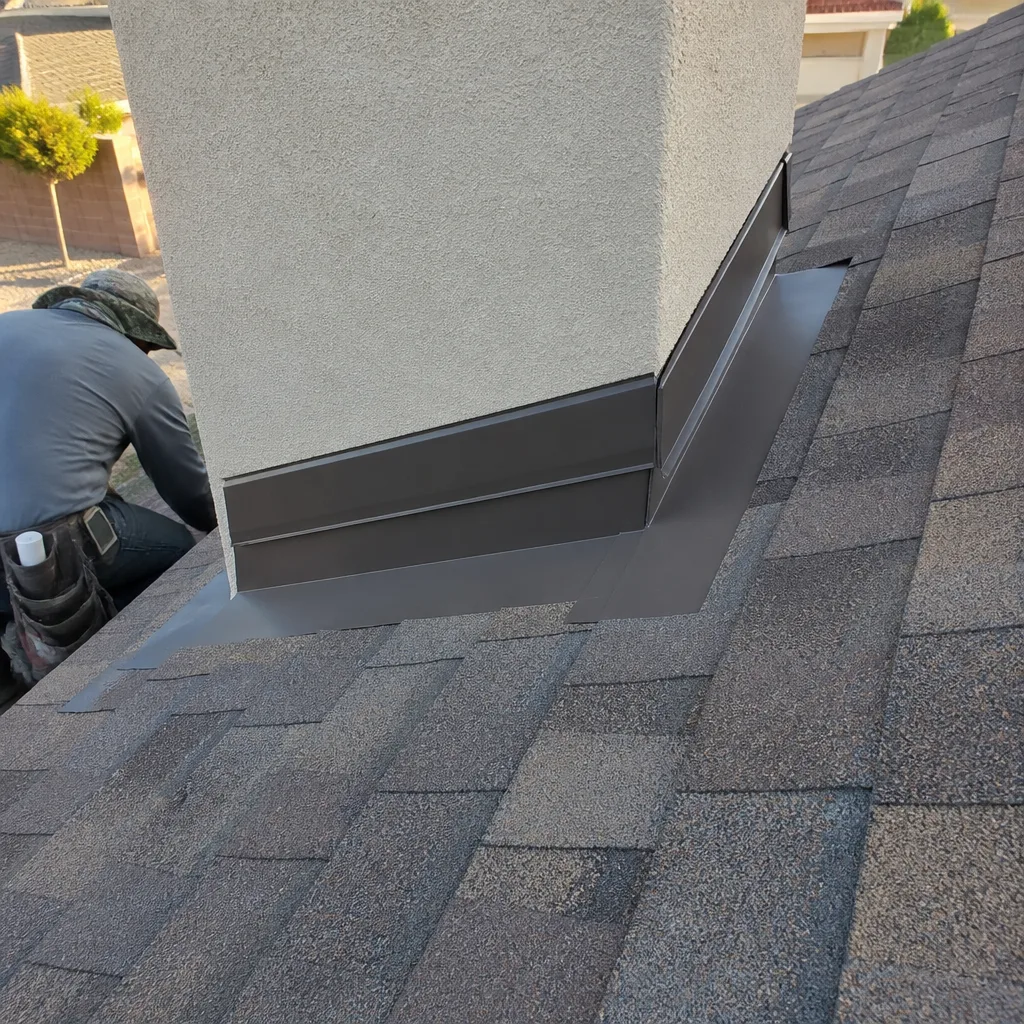 After
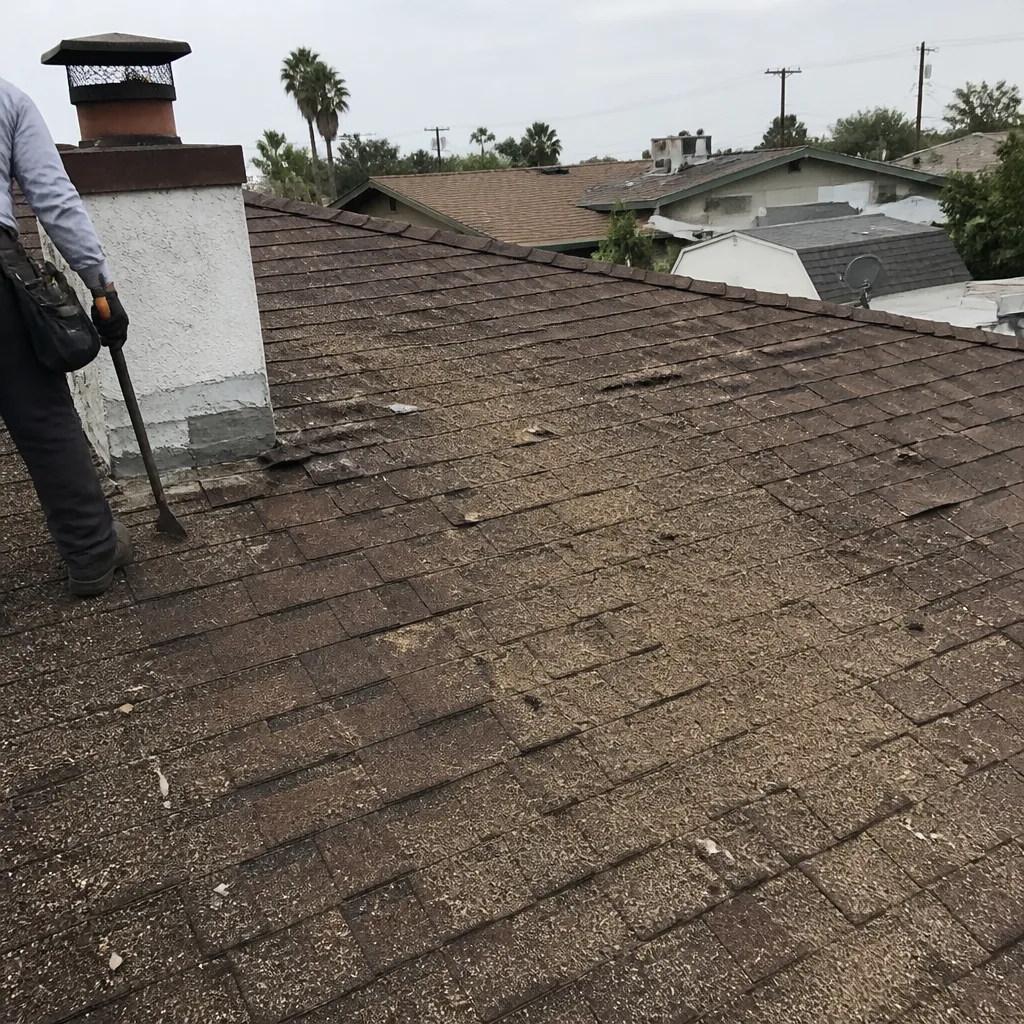 Before
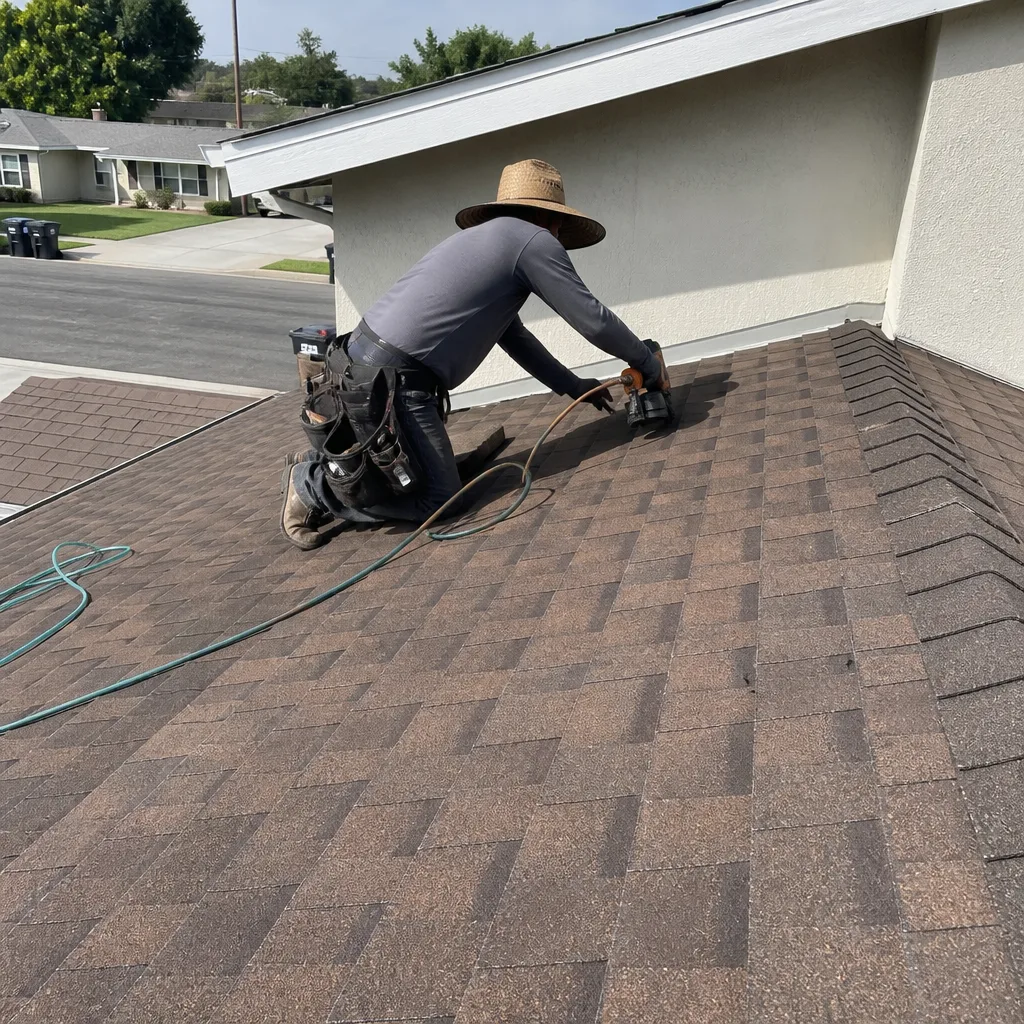 After
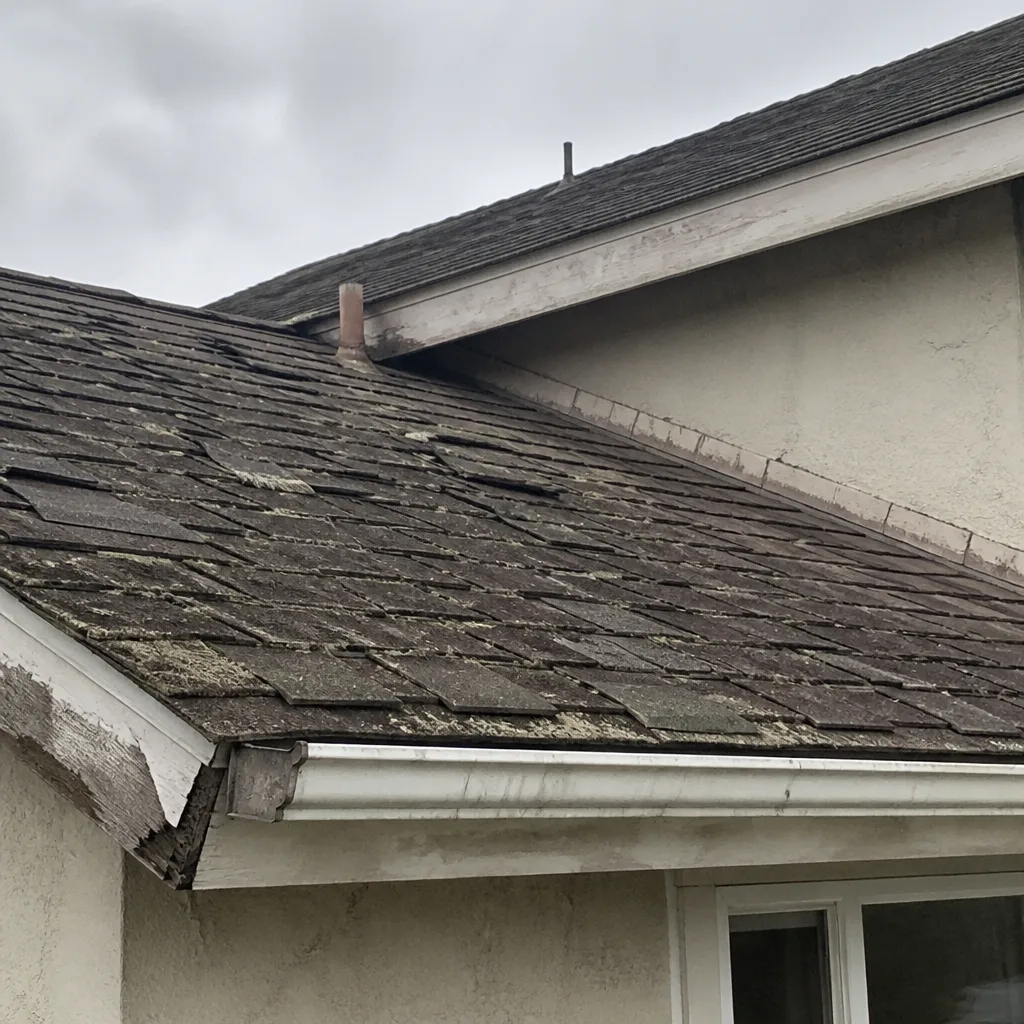 Before
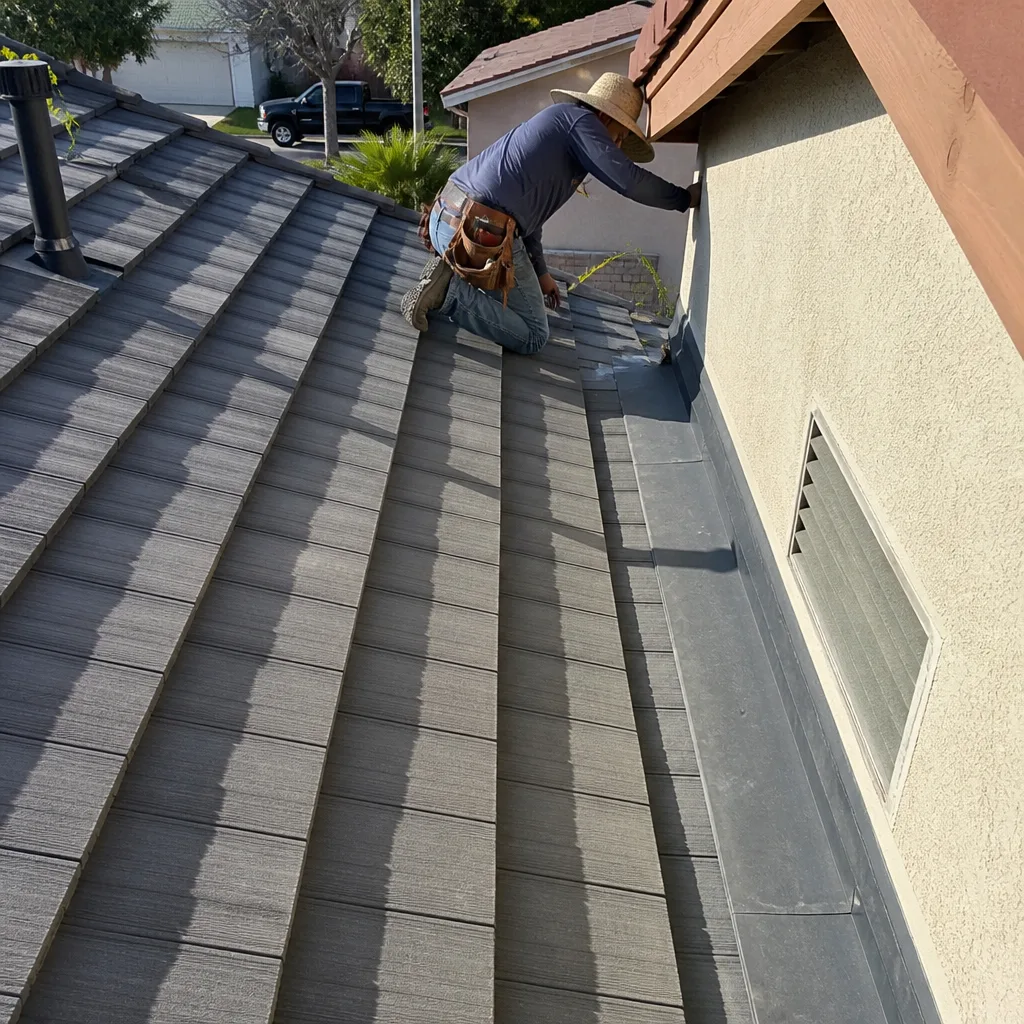 After