
Last updated October 31, 2026
 Metal roofing
 Architectural shingles
 Tile roofing
 GAF
 Owens Corning
 Flat & low-slope
Free roof inspection with deck photos before we talk money - GAF and Owens Corning certified installation
Roofing Emergency Preparedness Guide for Santa Ana Homes
The Santa Ana Wind Advisory that triggers most roofing emergencies in this city is typically forecast 24 to 48 hours before the first gust arrives. That means the majority of roof damage Santa Ana homeowners deal with each year is technically preventable with one afternoon of preparation. This guide walks through the exact preparation checklist, the two things to do immediately after damage, how to handle a California insurance claim without getting shortchanged, and how to spot a storm chaser before you sign anything. If you own a home in Santa Ana, this is the playbook for the wind season.
Styles & brands we work with
Quick Answer
The most common roofing emergency in Santa Ana is wind-lifted shingles or tiles, not rain-driven leaks. Prepare for a wind event by clearing loose yard debris, checking visible fasteners, and securing anything on the roof surface. If damage happens, tarp the exposed area if it’s safe to do so, photograph everything before touching anything, and call a licensed roofer for a written emergency repair scope before filing your insurance claim.
Table of Contents
- Why Santa Ana Wind Beats Rain as a Roof Killer
- The 30-Minute Pre-Wind Checklist
- The First Two Hours After Damage
- Filing a Roofing Claim With California Homeowners Insurance
- Vetting Emergency Contractors in a Storm Chaser Market
- Emergency Repair vs. Permanent Repair: Get It in Writing
- Common Mistakes to Avoid
- When to Call a Professional
- Frequently Asked Questions
- The Bottom Line
Why Santa Ana Wind Beats Rain as a Roof Killer
Santa Ana gets roughly 14 inches of rain a year. That’s not enough precipitation to be the primary driver of roofing failures in this city. What Santa Ana does get is wind. Sustained Santa Ana wind events routinely push 30 to 40 mph with gusts reaching 60 mph or higher through the canyons and across the flatter tracts in neighborhoods like Floral Park, Washington Square, and the areas east of the 5 freeway. Those gusts don’t blow roofs off. They do something slower and more insidious: they lift the leading edge of shingles and tiles just enough to break the seal, then work that opening wider with every subsequent gust.
We’ve inspected roofs across Santa Ana after wind events and the pattern is consistent. The damage concentrates on the corners and edges where wind pressure is highest. A shingle that was sealed yesterday gets its adhesive bond broken today. The next wind event peels it back further. Water doesn’t need to be involved for a roof to become an emergency. A lifted shingle is an open seam, and if a light Santa Ana rain follows the wind, that’s when the ceiling stain appears.
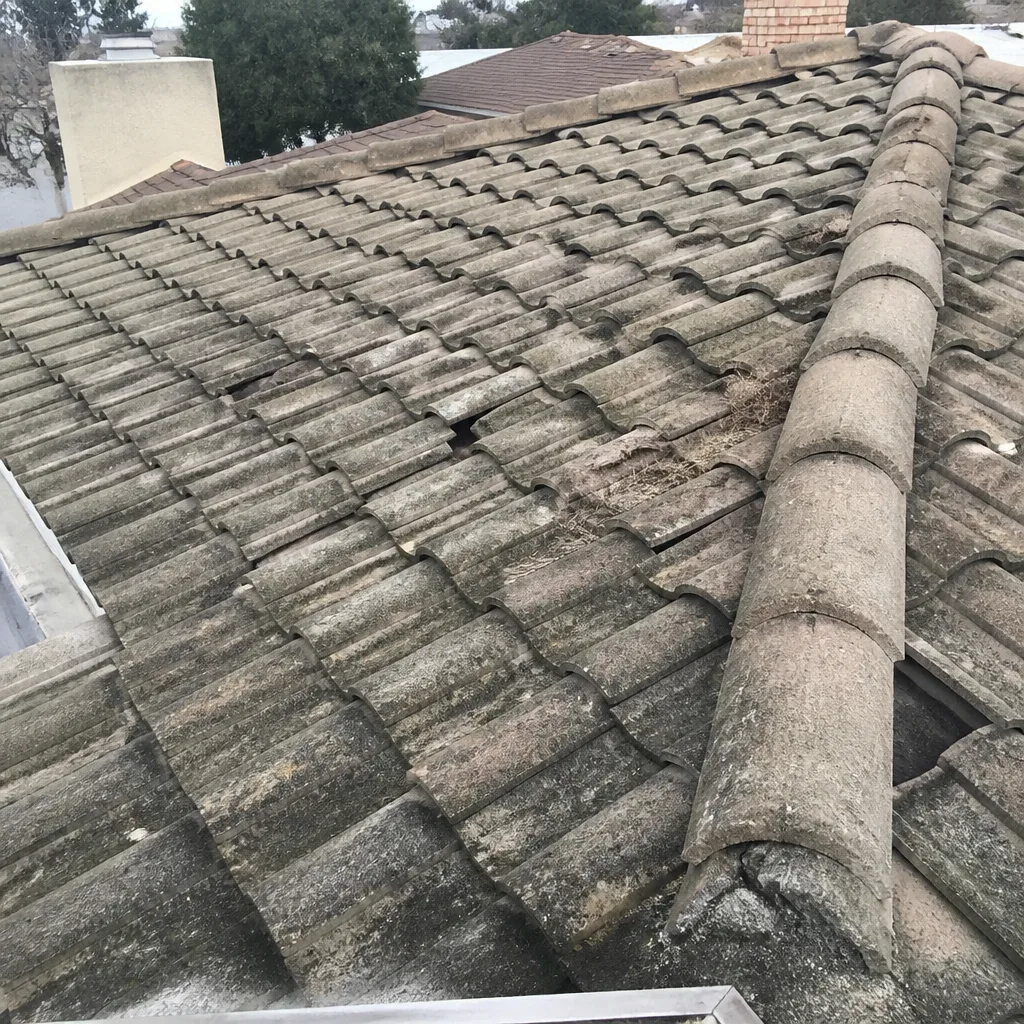
Concrete tile roofs, common in the older Santa Ana neighborhoods and the hillside communities, fail differently. The tile itself rarely breaks from wind. What fails is the underlayment beneath it, exposed when tiles lift and drop repeatedly. By the time a homeowner sees a cracked tile, the water barrier underneath may have been compromised for months. This is why Roof Inspection in Santa Ana is the diagnostic step we recommend before any repair or replacement gets scoped. Wind damage is cumulative and often hidden.
The 30-Minute Pre-Wind Checklist
When a wind advisory hits your phone, you have a small window before the gusts arrive. The following checklist is completable by one person in under 30 minutes and addresses the three most common sources of wind-driven roof damage we see in Santa Ana: flying debris, loose fasteners, and clogged or unsecured drainage.
- Clear loose debris from the yard and roof surface. Palm fronds, dead branches, patio furniture, potted plants, children’s toys, and anything lightweight enough to become airborne. A palm frond moving at 50 mph will do real damage to shingles and tile. Walk the perimeter and remove or anchor everything loose.
- Check visible fasteners on roof-mounted equipment. Look for HVAC caps, vent covers, satellite dish brackets, and any roof penetration you can see from the ground. If a fastener is visibly backed out or the cap is wiggling, note it. Do not climb onto the roof yourself. Santa Ana wind exploits loose penetrations first.
- Inspect and secure gutters and downspouts. Gutters that are already hanging loose become projectiles. Check that brackets are still tight against the fascia. Clear any accumulation of leaves and debris, especially if you live near the older tree canopies in Floral Park or Park Santiago where eucalyptus and sycamore drop constantly.
- Photograph the roof as it is right now. Stand in the yard and take a series of photos from every accessible angle. This establishes baseline condition. If wind damage happens, you’ll have a before record that insurance adjusters find genuinely useful. Most homeowners skip this step and regret it.
- Close and latch all windows, skylights, and attic vents. Wind-driven rain in Santa Ana enters through small openings, not large ones. Skylight seals and attic vent louver plates are the first to leak when wind adds horizontal pressure to rain.
This checklist works because it addresses the failure chain we’ve observed repeatedly in Santa Ana. Debris becomes a projectile. A projectile breaks a tile or tears a shingle. The wind finds that opening and works it. Preparation breaks the chain at the first link.
The First Two Hours After Damage
If you’re reading this after an event, here is what to do in order. The first two hours after wind damage matter because they determine whether a small repair stays small or becomes a full replacement. They also determine whether your insurance claim gets paid without argument. What you do now is more important than what you did before.
- Photograph everything from the ground before anything is moved or touched. Wide shots showing the entire roof plane. Close shots showing the damaged area. Photos of any debris that fell. Photos of the interior ceiling if there is an active leak. The rule is simple: document first, touch second. Insurance adjusters in California are trained to look for evidence that the homeowner made things worse before filing the claim. Your photos establish the pre-touch condition.
- Contain the water intrusion. If water is entering the living space, place buckets or bins under the leak. Move furniture and electronics out of the path. Do not apply water from the inside outward and do not poke holes in the ceiling. A sagging drywall bulge means water is pooling on top of it. If the bulge is small, place a bucket below and let it drain naturally through the existing crack. If the bulge is large, the water weight can collapse the ceiling. That’s the point where you call a professional water mitigation crew, not a roofer.
- Assess whether a temporary tarp is safe to install yourself. The honest answer for most Santa Ana homeowners is no. Wind doesn’t stop after the gusts die down. Climbing onto a damaged roof during a Santa Ana wind event is genuinely dangerous. If the damage is minor and you have roofing experience, you can tarp the area using furring strips and cap nails, anchoring the tarp to the roof deck and not just the shingles. If there is any doubt about your ability to do this safely, wait for a licensed roofer. The cost of a professional tarp installation is a fraction of the cost of a fall.
- Call a licensed roofing contractor for a written emergency repair scope. This is the document that anchors your insurance claim. It itemizes what was damaged, what needs to happen immediately to prevent further damage, and what the emergency repair will cost. Do not sign a contract for permanent work in this moment. Emergency scope first, permanent contract later.
- Contact your insurance carrier to open a claim. You’ve documented, contained, and gotten an emergency scope from a contractor. Now call the insurer. Give them the photos, the scope, and your timeline. The claim will move faster because you’ve already done the work the adjuster would ask for anyway.
Most Santa Ana homeowners skip step 3 and go straight to tarping with whatever is in the garage. A blue tarp nailed over the ridge without furring strips becomes a sail the moment the wind returns. We’ve seen tarps end up in neighbor’s yards the same afternoon they were installed. If you’re going to tarp, tarp correctly. If you can’t do it correctly, wait.
Filing a Roofing Claim With California Homeowners Insurance
California homeowners insurance claims for wind damage follow a predictable process, and the adjuster who shows up is looking for three specific things. Know these before you file. The documentation you gather in the first hours after damage is what separates a claim that gets paid in full from one that gets depreciated or denied.
Documentation the adjuster will ask for:
- The exact date and time the damage occurred. Wind events are verifiable through weather data. If you say the damage happened Tuesday and the wind advisory was for Monday, the claim gets flagged for inconsistency.
- Photos of the damage taken before any repairs, tarping, or cleanup occurred. Baseline photos from before the event are a bonus that most claimants don’t have.
- A written scope of work from a licensed roofing contractor. This should itemize the damaged materials, the recommended repair, and the cost. Adjusters use this scope as the basis for their own estimate and they notice when a contractor knows what they’re doing.
- Evidence that you took immediate steps to prevent additional damage. This is what the tarp photos and the emergency scope demonstrate. Insurance policies require the homeowner to mitigate further loss. If you waited two weeks with a hole in the roof and then filed, the adjuster will argue the water damage after the event was your fault. That argument usually wins.
- Any receipts for emergency work already completed. Temporary tarping, water mitigation, and emergency repair costs are typically reimbursable under the loss of use or mitigation provisions of most California homeowner policies.
One thing we tell every Santa Ana homeowner: get the emergency repair done first and permanent repair scoped after. The adjuster wants to see that the roof is no longer actively deteriorating. A tarped roof with a written emergency scope is a frozen problem. An open roof with water actively entering the home is a growing problem. Insurance handles frozen problems better than growing ones.
If the adjuster’s estimate comes back lower than your contractor’s scope, you have the right to ask for a reinspection. The contractor who wrote the original scope can be present. In our experience, the gap between what the adjuster writes and what the work actually costs is widest when the original scope was vague. Specific line items with specific measurements rarely get contested.
Vetting Emergency Contractors in a Storm Chaser Market
Within 48 hours of any significant Santa Ana wind event, out-of-state contractors will be knocking on doors in affected neighborhoods. Some of them are legitimate companies who travel to high-demand areas. Many of them are not. The storm chaser model is built on collecting deposits for work they never complete, or completing it badly and vanishing before the warranty is claimed. Vetting them takes ten minutes and it is worth doing even when you’re panicked.
What to ask any contractor who knocks on your door after a wind event:
- Show me your California contractor’s license. The CSLB website lets you verify the license is active, the classification is roofing, and the name matches the person standing in front of you. No license, no work. This is non-negotiable and it filters out most storm chasers immediately.
- Give me a written scope with a line-item breakdown. A legitimate contractor can itemize what needs to happen and what it costs. A storm chaser gives you a lump sum and a deadline that expires tonight. The deadline is the tell. Real roofing companies in Santa Ana don’t do pressure closing tactics.
- Show me proof of insurance. Workers’ comp and general liability. The certificate should list the roofer as the insured and the policy dates should be current. If they’re unwilling to provide this, the risk lands on your homeowners policy if a worker gets hurt on your roof.
- What is your local address? A P.O. box or an address in another state is a red flag. A contractor with a physical presence in Orange County is one you can find again if the work fails. This is the practical difference between an emergency repair that gets warrantied and one that doesn’t.
Our process at Tilecraft Roofing is always inspection-first. We look before we quote. That principle applies to emergency work too. The emergency repair addresses the immediate threat. The permanent solution, whether repair or Roof Replacement in Santa Ana, gets scoped only after we can see the full extent of what the wind actually did. A contractor who wants to quote a full replacement from the driveway before looking at the roof is not doing you a favor.
Emergency Repair vs. Permanent Repair: Get It in Writing
The words “emergency repair” and “permanent repair” have specific contractual meanings, and if you don’t get the distinction in writing, you can end up paying for permanent work that was never actually done. This is the most common contractual dispute we see in the weeks after a Santa Ana wind event.
Emergency repair is defined by its purpose: stop active water intrusion and prevent further damage. It is temporary by definition. A tarp over the damaged area. A roof cement patch over a missing shingle. A temporary seal at a pipe boot that has been pulled loose. Emergency repair is not meant to be a long-term solution, and the invoice should state that explicitly. “Temporary water intrusion prevention” is the phrase that tells the insurance adjuster this was mitigation, not correction.
Permanent repair addresses the root cause and restores the roof to its pre-loss condition. Replacing the damaged shingles with matching material. Resetting and re-pointing the displaced tiles. Replacing the damaged underlayment and the fasteners that failed. Permanent repair is the work that actually ends the problem. The invoice should state “permanent repair complete” and list the specific materials used.
What happens when the contract just says “Repair roof”? The contractor does temporary work, you pay for permanent work, and two months later the same leak reappears during a light Santa Ana rain. The contractor is long gone or argues that this is a new problem. You have no written distinction to point to. The fix is simple: before any work starts, ask for the scope to state whether the work is emergency or permanent, and how long the repair is expected to last. A contractor who can’t answer that question is guessing.
We write scopes that separate these two phases explicitly because we’ve seen what happens when they blur. Roof Repair in Santa Ana after a wind event should start with the emergency containment and end with a clearly scoped permanent fix. The two phases sometimes happen on the same day and sometimes days apart, but they are different work with different purposes.
Common Mistakes to Avoid
- Waiting for rain to take wind damage seriously. Santa Ana homeowners see a lifted shingle and think it can wait. The shingle that’s lifted today is the leak tomorrow. The first rain after a wind event is when the emergency call becomes a replacement call.
- Climbing onto a damaged roof during a wind event. This is how honest people become statistics. A 60 mph gust on a roof surface you can’t see clearly is an unforced risk. No homeowner should be on a damaged roof during active wind. Period.
- Using a standard blue tarp nailed over the ridge. The tarp becomes a sail. Furring strips and cap nails anchored to the deck are the only weatherproof tarp installation. Anything less fails within hours in Santa Ana wind and creates a bigger mess than the original damage.
- Filing an insurance claim before getting an emergency scope from a contractor. The adjuster asks for the scope anyway. Filing without it means the claim sits waiting while you gather what you should have gathered first. Claim first is the wrong order.
- Signing a contract from the first contractor who knocks. The storm chaser’s business model depends on panic. A ten-minute license check and a second quote breaks the model. You are never obligated to sign with the first bid no matter what they say about the window of opportunity closing.
- Overlooking the underlayment on tile roofs. Homeowners see intact tiles and assume the roof is fine. The tile is not the waterproofing. The underlayment under the tile is. When tiles lift and drop repeatedly in Santa Ana wind, the underlayment gets abraded and torn regardless of whether the tiles crack. Tile is the shield. The underlayment is the seal.
- Accepting a lump-sum quote without line items. A single number with no material breakdown tells you nothing about what you’re paying for. Shingles cost money. Labor costs money. Fasteners cost money. If the contractor can’t itemize, the contractor is not doing the math. They are naming a number.
When to Call a Professional
Call a licensed roofing contractor when the damage involves anything beyond a single missing shingle you can safely reach from an extension ladder with the ladder properly secured. Water actively entering the living space, visible sagging in the roof deck, multiple displaced tiles, lifted shingles across a large area, or any damage near a roof penetration are all professional-repair territory. These conditions mean the weatherproofing layer has been compromised and temporary measures will not hold.
If you’re unsure whether the damage warrants professional attention, the answer is to get an inspection. Tilecraft Roofing offers free estimates in Santa Ana. We inspect the roof before we recommend any scope of work. Call (833) 467-4846 and we’ll look at what the wind did and tell you honestly whether you’re looking at a repair or something more involved.
Frequently Asked Questions
Emergency roof repair in Santa Ana typically runs $350 to $1,200 for temporary containment like tarping and roof cement patches, with permanent repairs running higher depending on the extent of material damage and the roofing system type. The exact cost depends on how many shingles or tiles were damaged, whether underlayment needs replacement, and how accessible the damaged area is. Call (833) 467-4846 for an exact quote after we inspect the damage. Estimates are free.
Wind damage is a covered peril under most standard California homeowners policies, and that includes damage from Santa Ana wind events. Your policy may apply a separate wind deductible that is higher than your standard deductible, and California policies commonly use a percentage-based deductible for wind claims. Review your declarations page before filing and call your agent with specific questions about your wind deductible.
Most California policies require that you report damage within a reasonable timeframe, typically interpreted as 30 to 60 days, but the practical reality is that claims filed within the first two weeks get processed faster and contested less. The longer you wait, the harder it becomes to prove the damage was from the wind event and not from deferred maintenance. File as soon as you have the documentation in order.
Only if you can do it safely from a ladder without walking on the damaged area, and only if you anchor the tarp to the roof deck with furring strips and cap nails rather than nailing it over the ridge. The wind doesn’t stop after the gusts die down, and a poorly anchored tarp in Santa Ana wind becomes a projectile. If there is any doubt about your ability to do it correctly, wait for a licensed roofer.
Wind damage typically shows as shingles or tiles that are missing, creased, or lifted with visible fastener pull-through, concentrated on corners and edges where wind pressure is highest. Maintenance issues show as uniform granule loss, age-related curling, and leaks that pre-date the weather event. Insurance pays for the first. Homeowners pay for the second. A documented pre-event inspection baseline makes this distinction clear to an adjuster.
The decision hinges on two things: the age of the roof and the extent of the damage. A roof with 15 or more years on it that sustains wind damage across multiple planes is often a replacement candidate. A newer roof with localized damage is a repair. Roof Inspection in Santa Ana gives you the data to make that call without pressure. We repair when repair is right, replace when it’s not, and recommend the right material for your roof rather than whatever is in stock.
The Bottom Line
Santa Ana roofing emergencies are overwhelmingly wind-driven, and the wind gives you 24 to 48 hours of warning before it arrives. That warning is the difference between preventing damage and filing a claim. Prepare in 30 minutes: clear debris, check visible fasteners, secure gutters, photograph your baseline. If damage happens anyway, document first, contain second, get a written emergency scope third, and file the claim fourth. Vet any contractor who knocks with a license check and a line-item scope. Get the emergency versus permanent distinction in writing. Most importantly, never put yourself on a damaged roof. The wind will be back. Tilecraft Roofing home is here when you need the roof looked at before or after the next event.
Written by the team at Tilecraft Roofing, serving Santa Ana since 2012.
See the difference
 Before
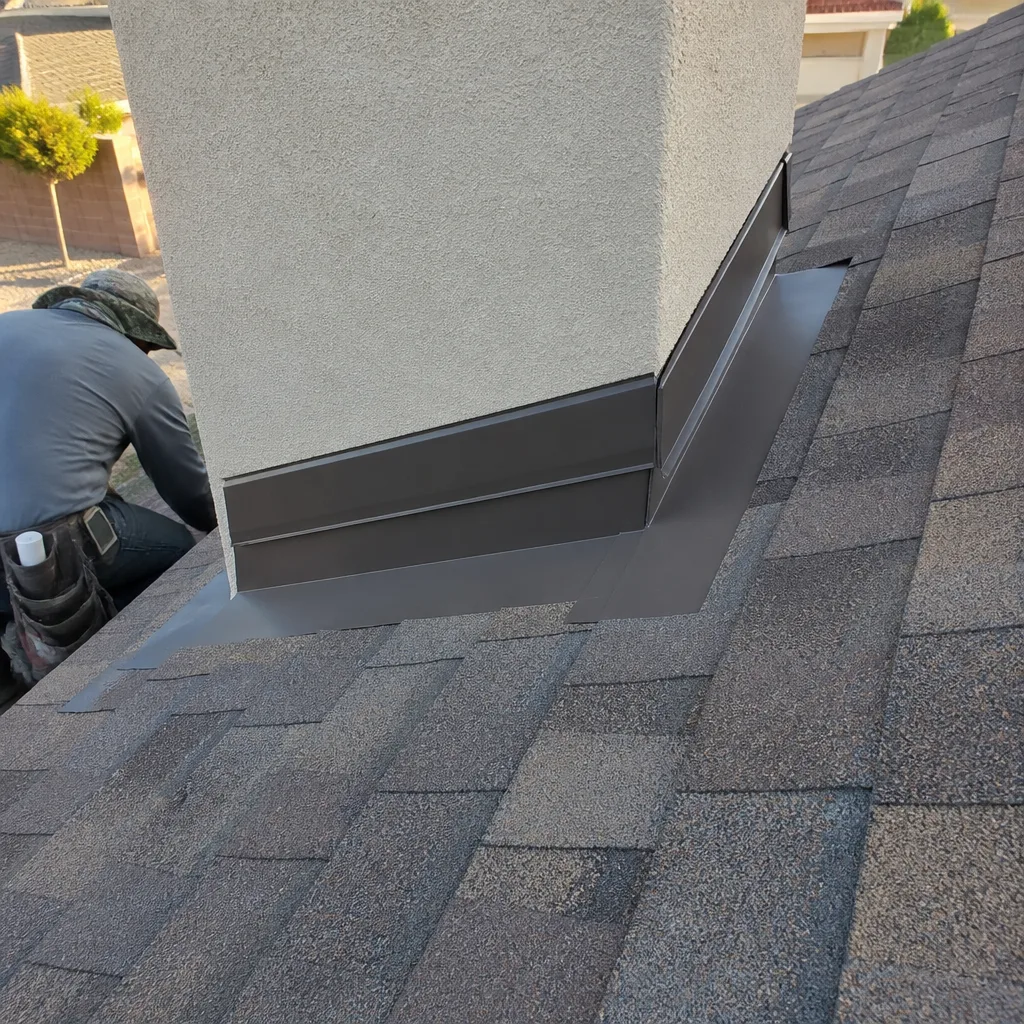 After
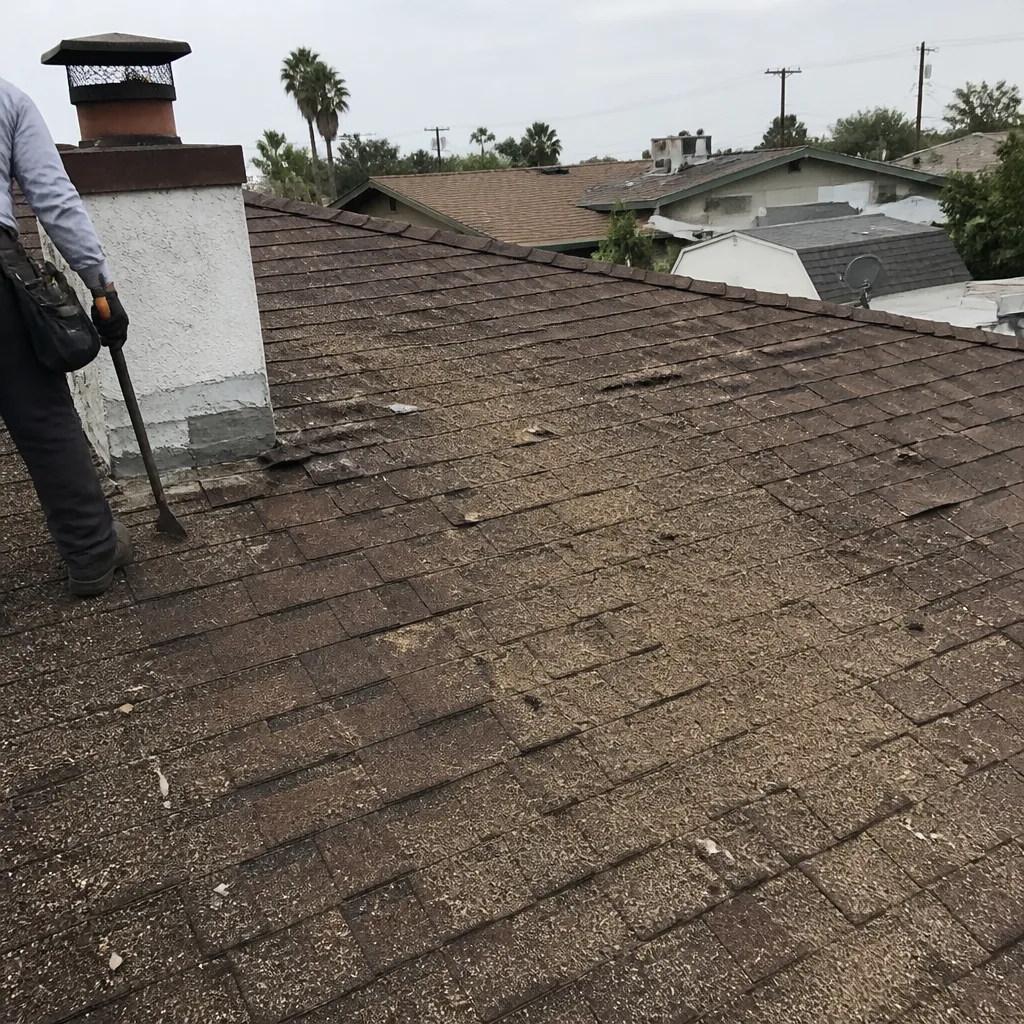 Before
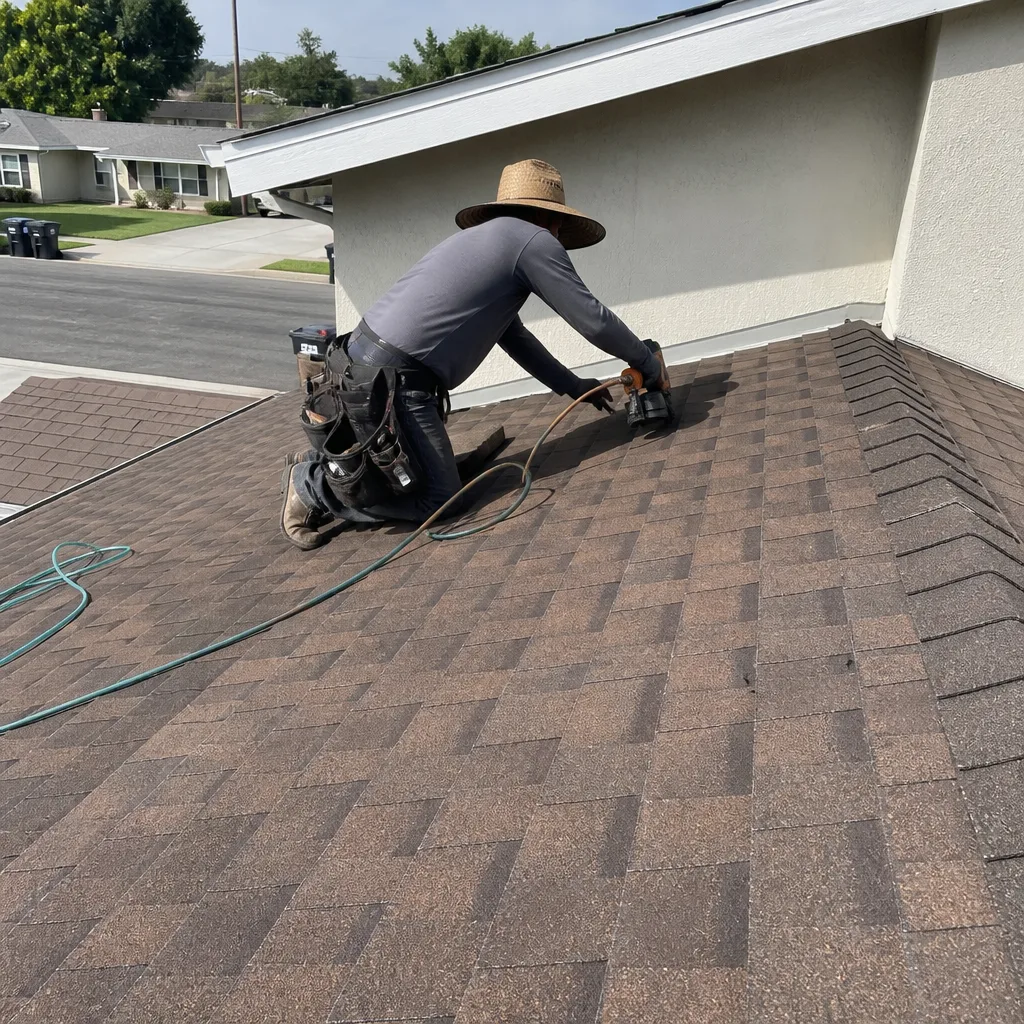 After
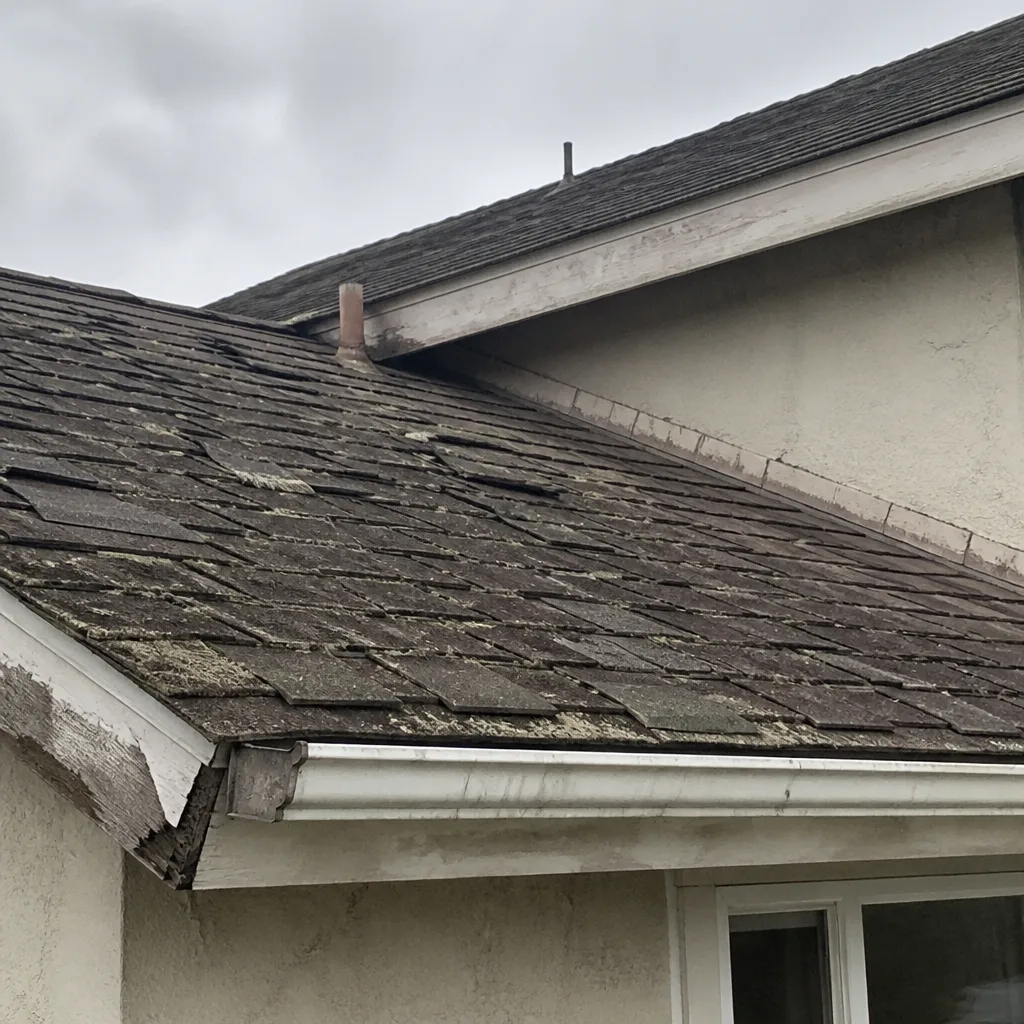 Before
 After