
Last updated October 31, 2026
 Metal roofing
 Architectural shingles
 Tile roofing
 GAF
 Owens Corning
 Flat & low-slope
Free roof inspection with deck photos before we talk money - GAF and Owens Corning certified installation
Roofing Permits, Codes & Inspections in CA: What You Need to Know
In California, installing more than one layer of roofing over an existing layer without a permit isn’t just a code violation – it’s a future buyer’s problem that shows up on a home inspection report. Most homeowners in Santa Ana don’t realize they needed a permit until the re-roof is already done, and by then the fix costs more than the original job. This guide walks through the actual permit triggers, the inspection sequence, the Title 24 energy rules, and what happens when work gets skipped. For Roofing Warning Signs: A Santa Ana Homeowner’s Reference Guide, see our related resource. If you’re planning any roofing work in Orange County, you’ll leave this page knowing exactly what to ask your contractor before the first shingle comes off.
Quick Answer
California requires a building permit for most roof replacements and for repairs that involve structural changes, but not for minor repairs under 10% of the roof area within a 12-month period. A final inspection verifies the work meets current California Building Code and Title 24 energy standards. Skipping the permit creates resale, insurance, and liability exposure that typically costs more than the permit itself.
Styles & brands we work with
Table of Contents
- What Actually Triggers a Roofing Permit in California
- How Santa Ana and Orange County Permits Actually Work
- What a Final Inspection Covers and Why It Protects You
- What Unpermitted Roofing Work Does to Your Insurance and Resale
- Title 24 Energy Rules for Roof Replacements
- What Roofing Permits Cost and How Long They Take
- Choosing a Contractor Who Won’t Skip the Permit
- Common Mistakes to Avoid
- When to Call a Professional
What Actually Triggers a Roofing Permit in California
California Building Code Section 105.1 requires a permit for any roofing work that involves structural alteration or replacement of the roof covering when the existing material is removed and new material installed. The practical split is simple: repairs under about 10% of the roof area within any 12-month window usually don’t need a permit, and anything larger does. But “usually” is doing heavy lifting there. Local jurisdictions in Orange County can and do set stricter thresholds, and Santa Ana follows the California Residential Code with only minor local amendments.
The repair-versus-re-roof distinction trips up more homeowners than any other part of the code. Here’s the line:
- Repair: Replacing a few damaged shingles, sealing a small leak, or fixing flashing around a vent. No permit required in most California jurisdictions.
- Re-roof: Removing the existing roof covering down to the deck and installing new underlayment and covering. Permit required, full stop.
- Overlay: Installing new shingles over an existing layer. California allows a maximum of two layers total. The second layer still requires a permit. A third layer is a code violation that must be torn off before any new work can be permitted.
The two-layer rule is where things go sideways. A homeowner in Santa Ana might buy a house with two layers already on the roof. That roof is grandfathered in, but the moment any re-roof happens, both layers must come off. A contractor who offers to “just go over it” is offering to create a violation you’ll have to pay to fix later. Whenever we inspect a roof in Santa Ana that’s been overlaid twice, the conversation starts with tear-off cost because there’s no legal path around it.
Tile roofs have their own wrinkle. Removing and reinstalling tile for underlayment replacement counts as a re-roof and needs a permit. Replacing a few broken tiles does not. The material matters, but the distinction is always the same: are you preserving the roof system, or changing it?
How Santa Ana and Orange County Permits Actually Work
Santa Ana issues building permits through its Planning and Building Agency, and roofing permits fall under the simple “express” category in most cases. A contractor applies, pays the fee, and the permit is usually ready within a few business days. The in-person or online application requires a description of the work, the roof square footage, the material being installed, and the contractor’s license information.
What causes delays in Santa Ana is rarely the permit itself. It’s the conditions that come with it. Here’s the sequence we see most often:
- Contractor submits permit application with roof details and material specifications.
- City confirms the contractor’s license and insurance are current.
- For full replacements, the city checks whether Title 24 cool roof or insulation requirements apply to your climate zone.
- Permit is issued. Work can begin after payment and posting of the permit card.
- Mid-roof inspection may be required for structural repairs or re-decking.
- Final inspection is scheduled after work is complete.
Orange County’s unincorporated areas run through OC Public Works, and the process is comparable but often a day or two slower because of volume. If you’re in a Santa Ana neighborhood like Floral Park, where many homes are designated historic, expect an additional design review step for any material change that affects the roof’s visual character. Clay tile in those districts isn’t preferred; it’s often required. That’s where Choosing the Right Roofing Brand: A Buyer’s Guide for Santa Ana matters, because the permit process waits on the material choice.
Rain delays inspections. Santa Ana doesn’t get much rain, but when it does, the city won’t schedule a final inspection on a wet deck because the inspector can’t verify the underlayment. In practice, this means a November re-roof can sit with an open permit for a week or two. That’s normal. What’s not normal is a contractor who treats the open permit as optional and tells you the job is “done” before the final sign-off.
What a Final Inspection Covers and Why It Protects You
The final inspection is not a formality. It’s the moment the city verifies that the roof system installed on your Santa Ana home matches the code requirements and the permit documentation. The inspector checks underlayment type and installation, nailing patterns, flashing at penetrations and valleys, edge metal, ventilation, and the roof covering itself. If any part fails, the contractor fixes it before the permit closes.
Here’s what a Santa Ana roofing inspector typically verifies:
- Underlayment meets current California Building Code standards for your roof slope and material type.
- Fasteners are the correct type and pattern for the wind exposure in your area.
- Flashing at chimneys, skylights, vents, and walls is correctly integrated with the roof covering.
- Roof ventilation meets the minimum net free vent area for your attic space.
- The installed roof covering matches the permit application and any Title 24 requirements.
- For tile roofs, the inspector checks that tiles are properly attached with the correct fastener count and that the eave closure system is intact.
Passing that inspection protects you in ways that have nothing to do with the contractor. A closed permit is a public record that the work was done to code. If that roof later leaks and your insurance company investigates, the closed permit is the difference between a covered claim and a denied one. If you sell the house, the closed permit answers the buyer’s inspector’s first question. A roof without a closed permit is a hole in your home’s paper trail that you’ll fill with cash, either at resale or during a claim.
We tell Santa Ana homeowners to treat the final inspection as their own quality check. Ask the contractor to walk the roof with you before the inspector arrives. Look at the flashing. Count the vents. A contractor who’s proud of the work will show you. One who’s defensive about it won’t.
What Unpermitted Roofing Work Does to Your Insurance and Resale
Unpermitted roofing work doesn’t stay hidden. It surfaces at the worst possible moments: when you file an insurance claim, when you sell, or when a neighbor files a complaint during construction. Each one is expensive in a different way.
Insurance claims. Homeowners insurance policies in California typically exclude coverage for damage caused or worsened by work done without a permit. If a roof installed without a permit leaks and damages your ceiling, the insurer will likely deny the interior damage claim, not just the roof. The logic is simple: the insurer can’t verify the work was done correctly, so it won’t pay for the consequences. This isn’t a technicality. We’ve seen Santa Ana homeowners eat five-figure interior repairs because a previous owner skipped a roof permit a decade earlier.
Property resale. California sellers must disclose unpermitted work on the Transfer Disclosure Statement. Once disclosed, buyers have leverage. They’ll demand a price reduction, ask you to pull the retroactive permit before closing, or walk entirely. If you don’t disclose and the buyer’s inspector finds the unpermitted roof, you’re in fraud territory. A roof that should have had a permit is one of the most common discoveries on Orange County home inspections, and the fix is never cheap because the inspector already knows the work predates the current owner.
Code enforcement. Santa Ana code enforcement can flag unpermitted roofing work if a neighbor reports it or an inspector notices during an unrelated visit. The city can order a stop-work, require the roof be removed to verify the deck condition, and assess penalties. The retroactive permit process doubles the inspection fees and may not be possible if the work is already sealed and inaccessible.
The cost of a roofing permit in Santa Ana is a few hundred dollars. The cost of skipping it is measured in five and six figures. There’s no scenario where skipping the permit is the smart financial move.
Title 24 Energy Rules for Roof Replacements
California’s Title 24 energy standards apply to roof replacements, not just new construction. When you re-roof a home in Santa Ana, the new roof covering must meet the minimum aged solar reflectance and thermal emittance values for your climate zone, unless the project qualifies for an exemption. Santa Ana sits in climate zone 8, which is inland Orange County, and the requirements are less aggressive than the desert zones but still real. Our Seasonal Roofing Care for Santa Ana: Year-Round Homeowner’s Guide covers how these standards shift through the year.
Here’s what that means in practice:
- Steep-slope roofs (greater than 2:12): The roof covering must meet a minimum aged solar reflectance of 0.15 and a thermal emittance of 0.75. Most standard asphalt shingles in lighter colors meet this easily.
- Low-slope roofs (2:12 or less): Requirement rises to an aged solar reflectance of 0.63 and thermal emittance of 0.75, which effectively requires a white or light-colored membrane or coating.
- Exemptions: Roofs with building-integrated solar, roofs under fully shaded conditions, and certain historic buildings may qualify. The contractor must document the exemption on the permit application.
- Insulation trade-off: If you add batt insulation to the attic at the same time as the re-roof, you may qualify for a higher reflectance allowance. This is worth asking about if your attic insulation is thin.
Tile roofs and cool-roof shingles from manufacturers like Owens Corning and IKO are engineered to meet Title 24 without forcing a color choice. A clay tile roof in a lighter natural color meets the standard automatically. A dark asphalt shingle may pass depending on the specific product’s rated values, which is why the contractor should pull the product’s CRRC (Cool Roof Rating Council) documentation and attach it to the permit. We include this documentation in every Santa Ana re-roof permit we file, and the inspector has never had to ask for it twice.
What Roofing Permits Cost and How Long They Take
Roofing permit fees in Santa Ana are calculated off the valuation of the work, which is the contractor’s permit-line estimate. For most single-family re-roofs, the permit fee runs roughly $300 to $700. A simple repair permit, when required, runs less. The exact number depends on the city’s current fee schedule and the project valuation, so treat any contractor quote that doesn’t include the permit line as something to question.
Timeline expectations for a standard re-roof permit in Santa Ana:
- Express permit for a simple overlay or tear-off and re-roof: 1 to 3 business days.
- Permit requiring plan check (structural work, historic district, unusual roof geometry): 1 to 3 weeks.
- Inspection scheduling: 1 to 2 business days after request during normal season; rain delays add time.
- Final permit closure: same day as passing the final inspection.
Contractors who tell you permits take months are not working in Santa Ana. A standard re-roof permit here is fast. What takes time is the work itself, and even that is measured in days for most single-family homes. If your contractor blames “the city” for a six-week delay on a standard re-roof, ask for the permit number and call to verify. In our experience, the city is rarely the bottleneck. The contractor’s schedule is.
Choosing a Contractor Who Won’t Skip the Permit
The contractor who skips the permit is usually skipping something else: workers’ compensation coverage, proper underlayment, tear-off disposal fees, or manufacturer installation specs that require extra fasteners. The permit isn’t a standalone issue. It’s a marker for how the contractor runs the rest of the job.
Here’s what to ask before signing a roofing contract in Santa Ana:
- Will you pull the permit in your name and list it on the contract? A contractor who asks the homeowner to pull the permit is shifting liability. The permit should be in the contractor’s name because the contractor is responsible for the work.
- What’s the permit line item on the written estimate? If it’s absent, the contractor either plans to skip it or is burying the cost. Either way, ask directly.
- Can you show me the Title 24 documentation for the material you’re proposing? Any contractor who can’t produce the CRRC ratings for the roof covering hasn’t done this before.
- Have you pulled roofing permits in Santa Ana? Follow up: how many in the last year? A contractor working in the city regularly won’t hesitate to answer.
- Will you be on site for the final inspection? The contractor or a qualified supervisor should be present. If the plan is for you to meet the inspector alone, that tells you who’s responsible if it fails.
At Tilecraft Roofing, we set the permit fee as a visible line item on every Santa Ana quote, and we pull the permit in our name before work starts. When the inspector arrives, the crew lead who ran the job is there to walk the roof. That’s how a permit closes without drama.
Common Mistakes to Avoid
- Assuming a repair never needs a permit. The 10% threshold is the general rule, but structural repairs, re-decking, and any work that alters flashing at load-bearing points can require a permit even below that threshold. When in doubt, your contractor should call Santa Ana’s permit counter and ask rather than guess.
- Letting the contractor talk you into the “no permit” discount. The savings is a few hundred dollars. The liability is five figures. This is the easiest financial decision to get right and the most common one to get wrong.
- Overlaying a second layer without understanding the implications. A second layer is legal with a permit, but it shortens the roof’s service life, hides deck damage, and means the next re-roof is a tear-off of two layers. Some homeowners choose the overlay for budget reasons. Go in with your eyes open about what the next roof will cost.
- Not checking whether the contractor’s insurance covers the permit valuation. The permit valuation is often different from the contract price. Make sure the contractor’s insurance certificate covers the full scope of work, including the permit valuation listed with the city.
- Treating the final inspection as the contractor’s problem. It’s your roof and your home. If the final inspection fails and the contractor disappears, you own the failed roof and an open permit. Be the one who calls to confirm the inspection was scheduled and passed.
- Assuming Title 24 doesn’t apply to re-roofs. It applies. A contractor who doesn’t know this or doesn’t file the paperwork is either inexperienced or cutting corners. Neither is good.
- Paying in full before the permit closes. The industry standard is a deposit followed by progress payments, with the final payment due after the final inspection passes. If a contractor demands full payment before the inspector signs off, walk away.
When to Call a Professional
Roofing permits are not something to navigate alone. If you’ve discovered the previous owner’s roof work was never permitted, you need a contractor who’s comfortable with retrofit permits and can assess whether the current roof can pass inspection or needs remediation first. If you’re planning a re-roof in Santa Ana and want the material choice, Title 24 compliance, and permit process handled correctly, Tilecraft Roofing offers free estimates and a permit line item on every quote. We inspect first, we quote the right material for your roof, and we don’t skip the paperwork. Call (833) 467-4846 to schedule your free estimate. If your roof is leaking today and you need to understand the scope before you move forward, our Roof Repair in Santa Ana page covers the repair process in more detail. For larger work, see Roof Replacement in Santa Ana. And if you want a full assessment of the roof condition before deciding between repair and replacement, start with a Roof Inspection in Santa Ana.
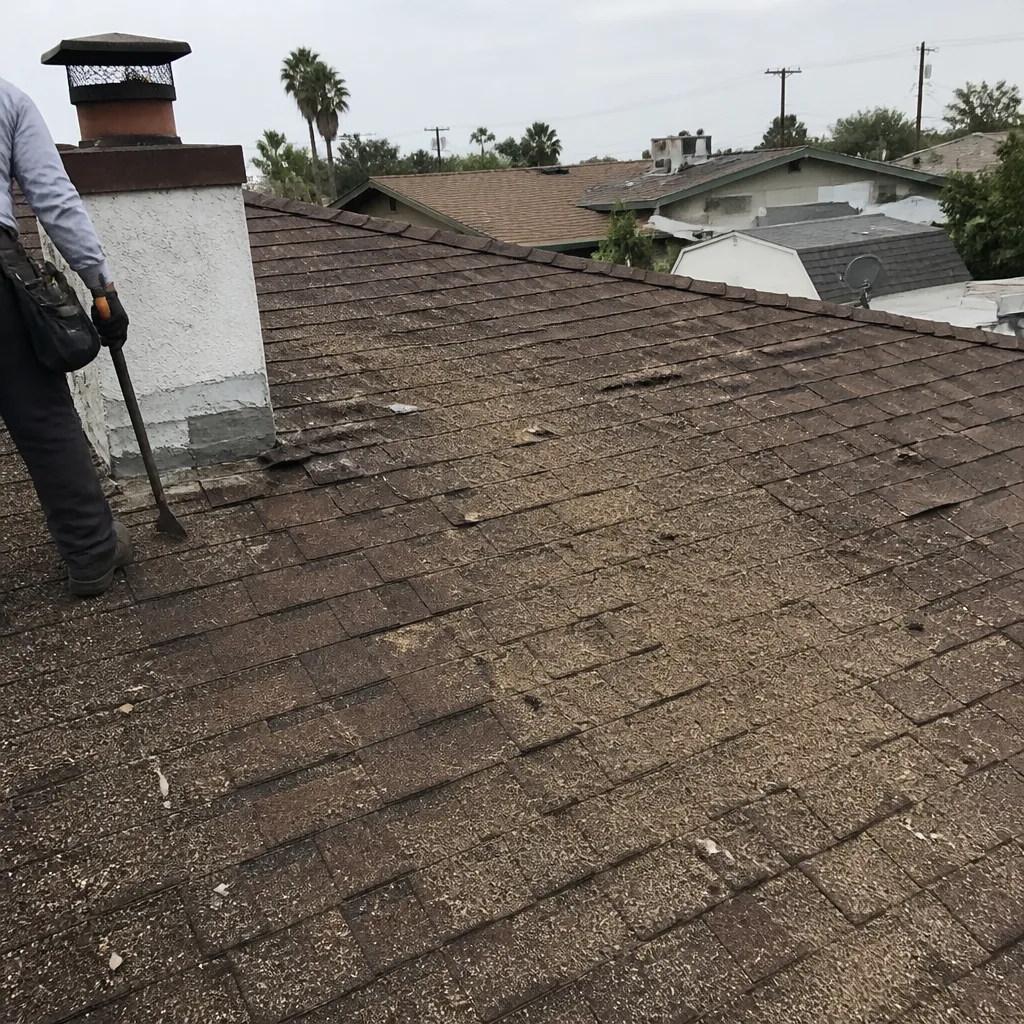
See the difference
 Before
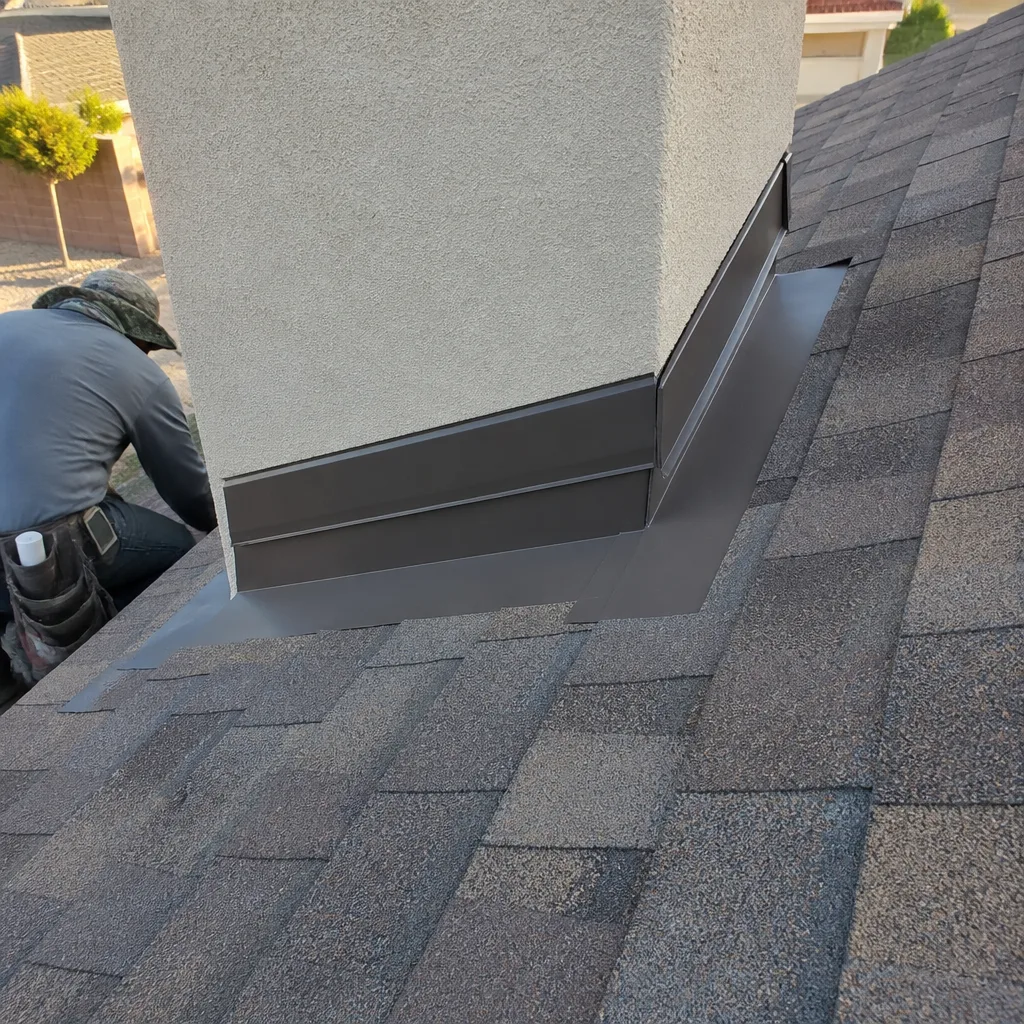 After
 Before
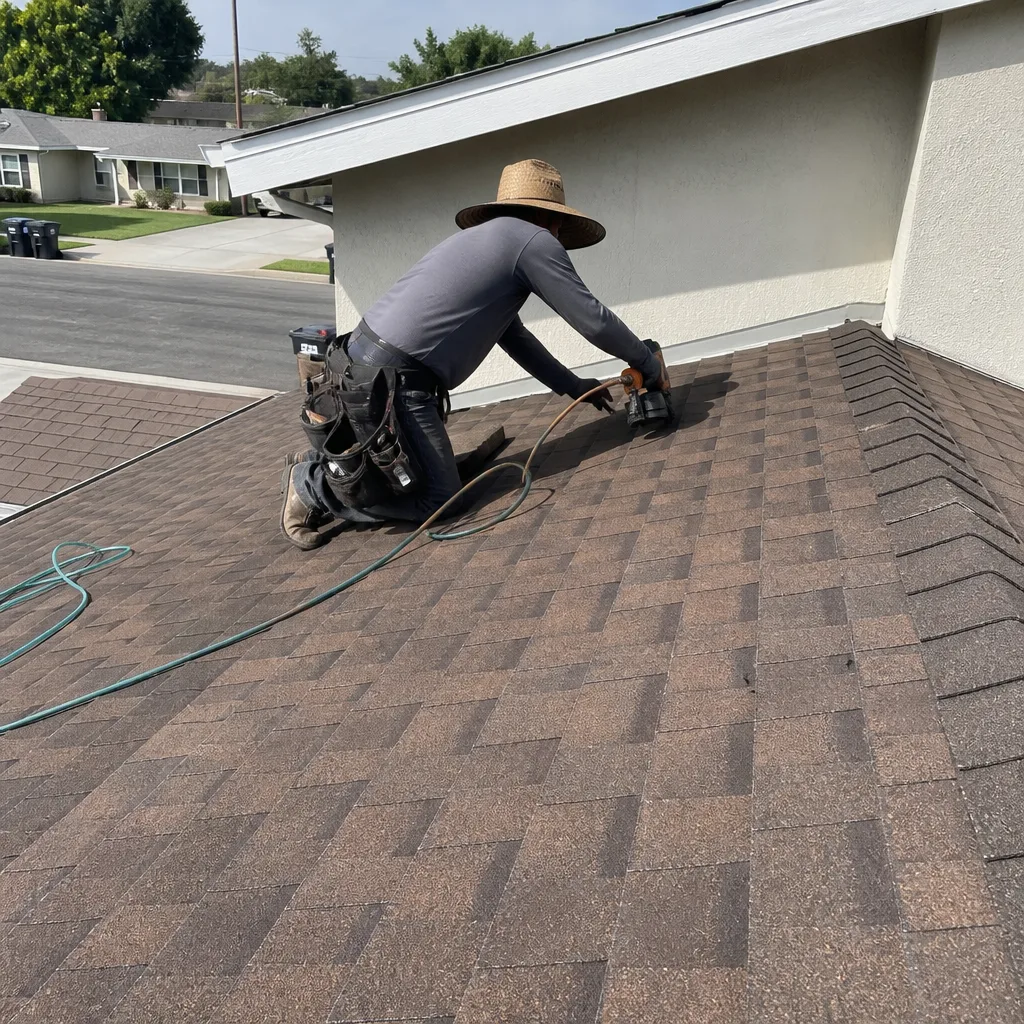 After
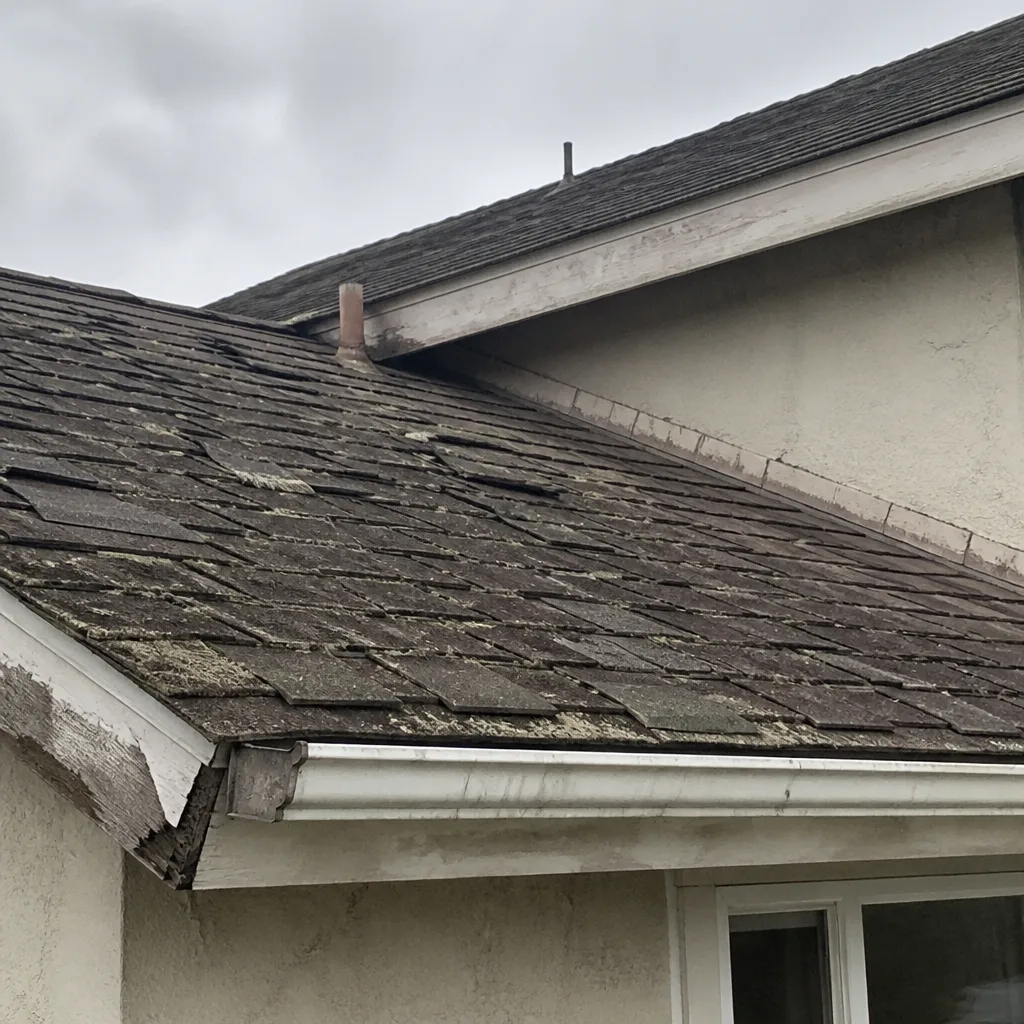 Before
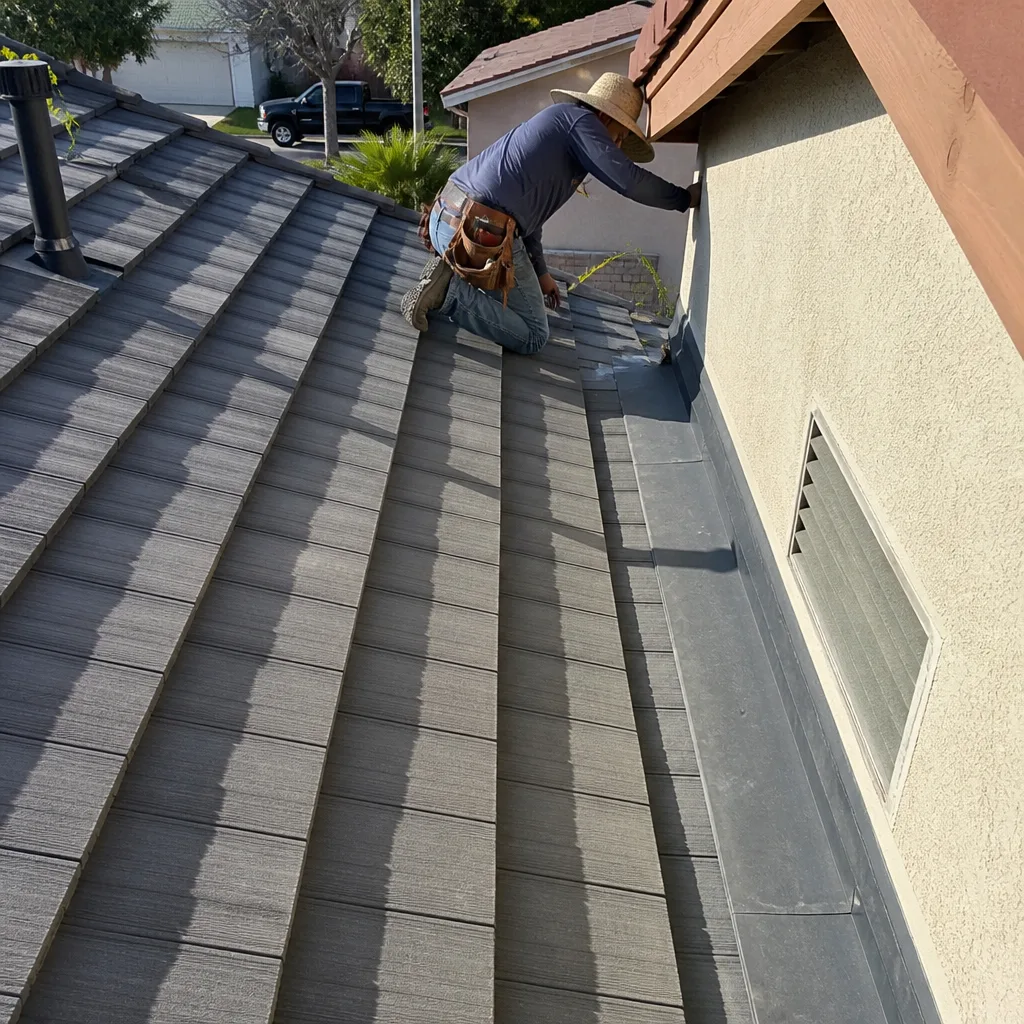 After
Frequently Asked Questions
Yes, a full roof replacement in Santa Ana requires a building permit from the Planning and Building Agency. The permit must be pulled before work begins, and the work must pass a final inspection to close the permit.
A typical single-family re-roof permit in Santa Ana runs roughly $300 to $700, depending on the project valuation. Your contractor’s written estimate should include the permit as a separate line item, and the fee is non-refundable once the application is submitted.
You can sell, but California law requires you to disclose the unpermitted work on the Transfer Disclosure Statement. Once disclosed, most buyers will demand remediation, a price reduction, or both. Failing to disclose exposes you to legal liability that can extend years after the sale.
Typically not. Most California homeowners insurance policies exclude damage caused or worsened by work done without a required permit. If an unpermitted roof leaks and causes interior damage, both the roof repair and the interior damage claim may be denied.
Title 24 requires that your new roof covering meet minimum aged solar reflectance and thermal emittance values based on your climate zone. In Santa Ana, most standard asphalt shingles in lighter colors pass, while low-slope roofs need a white or light-colored surface. Your contractor should provide the CRRC documentation for the specific product being installed.
Call the Santa Ana Planning and Building Agency with your property address and ask for the permit history. If a permit was issued but never given a final inspection, it remains open. You can also ask a roofer to check during an inspection – open permits on a roof are easy to spot if the work was recent, and an experienced eye can often tell whether a final inspection ever happened.
The Bottom Line
Roofing permits in California aren’t complicated, but they are non-negotiable for most re-roofs and full replacements. The permit protects you from insurance denials, resale penalties, and code enforcement action. The final inspection verifies the roof meets current building and energy codes. A contractor who skips the permit is a red flag for everything else about how the job will be run. If you’re planning roofing work in Santa Ana, ask about the permit before you sign anything. Tilecraft Roofing includes the permit line on every estimate, and we’re ready to walk you through the process. Call (833) 467-4846 for a free estimate, or visit our Tilecraft Roofing home page to see how we work.
Written by the team at Tilecraft Roofing, serving Santa Ana since 2012. Explore more guides & resources on roofing in Orange County.