
Last updated October 31, 2026
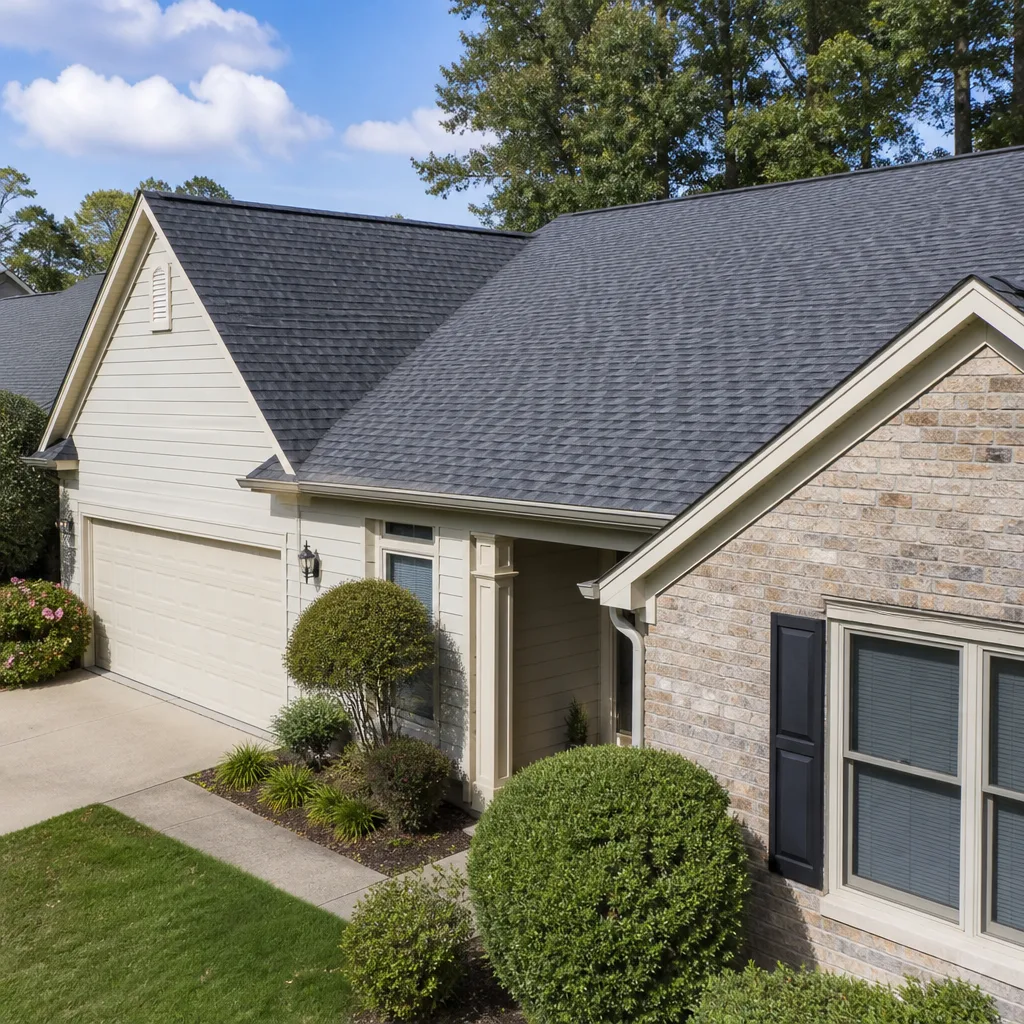
 Architectural shingles
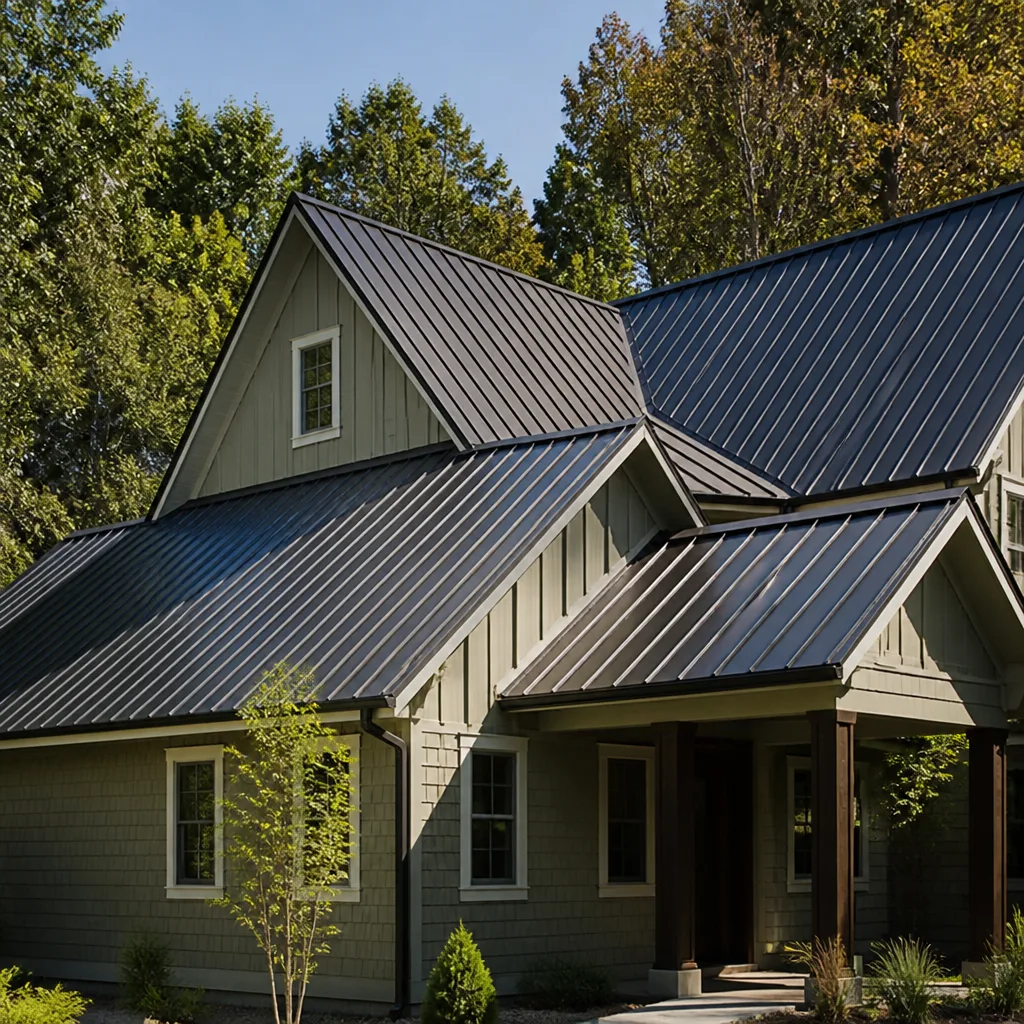 Metal roofing
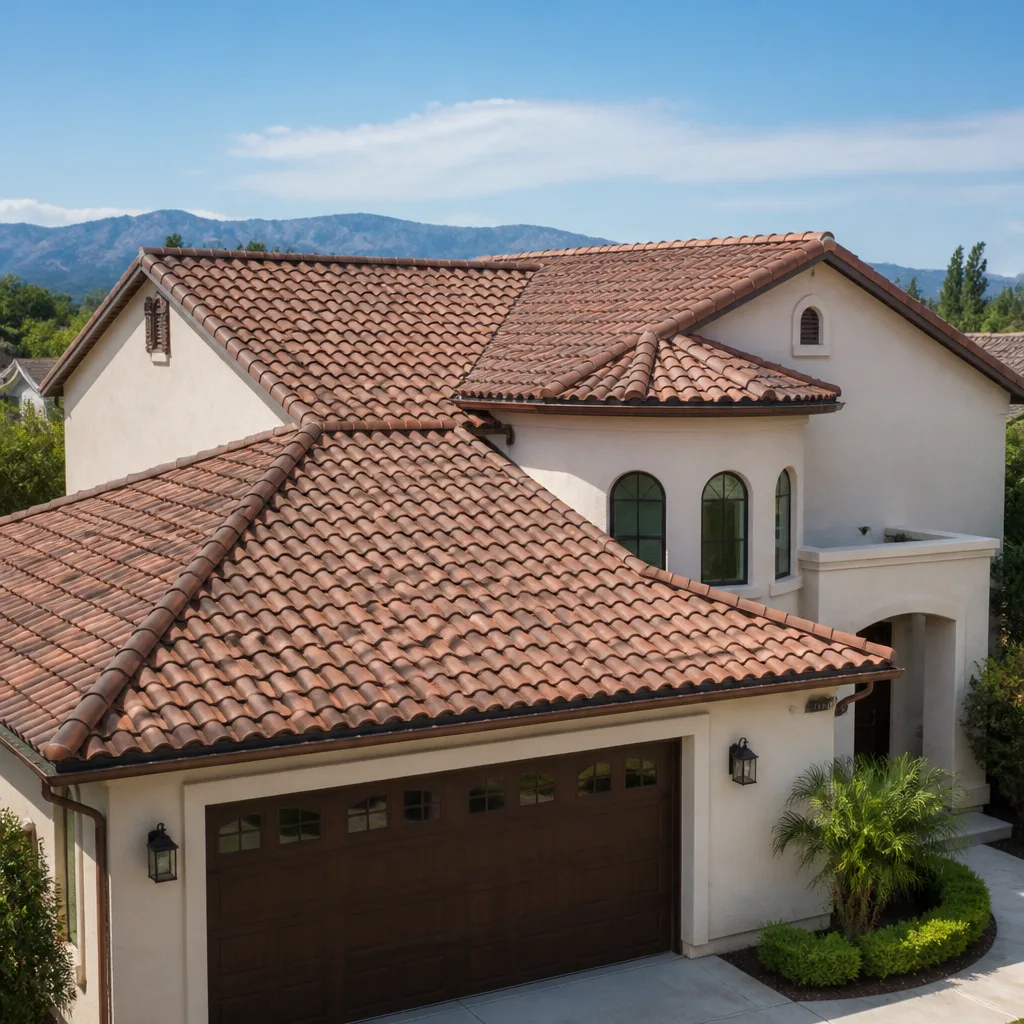 Tile roofing
 GAF
 Owens Corning
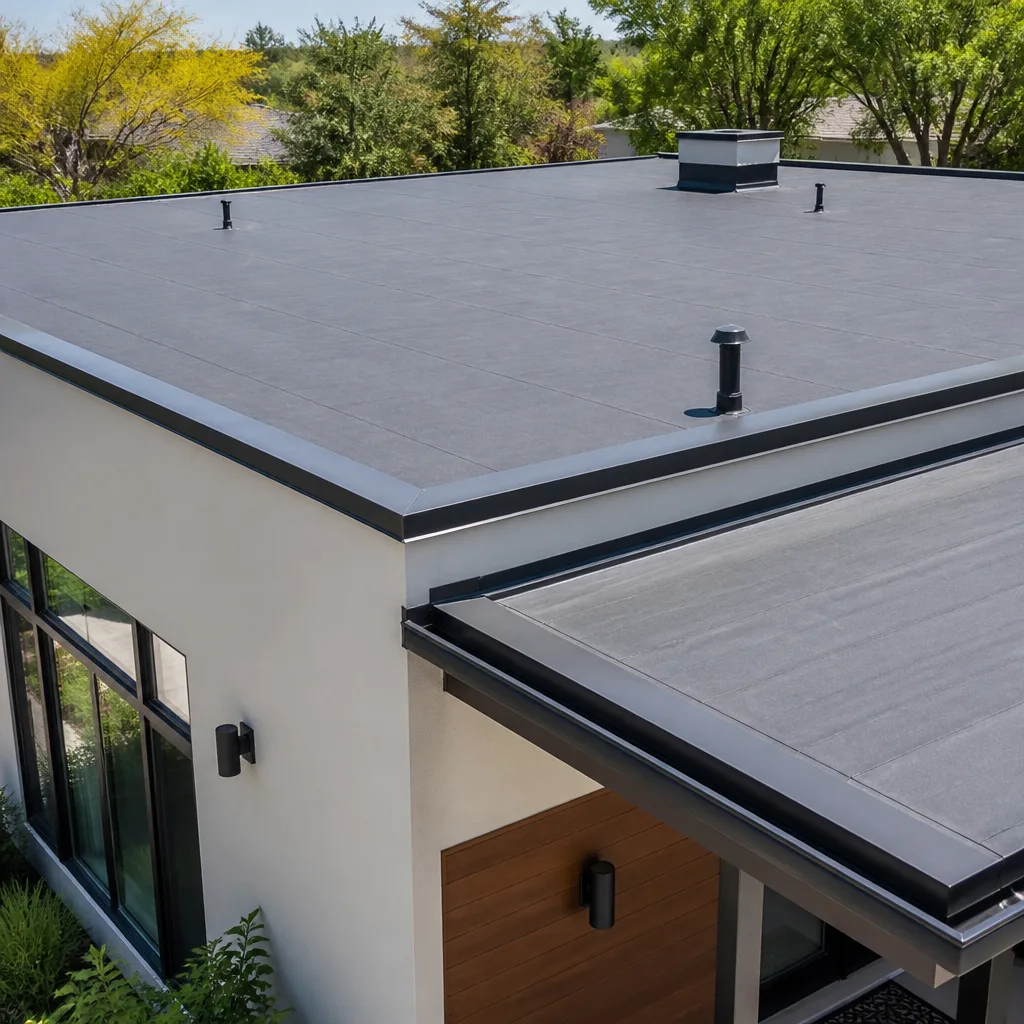 Flat & low-slope
Free roof inspection with deck photos before we talk money - GAF and Owens Corning certified installation
The Complete Roof Repair Guide for Santa Ana Homeowners
Santa Ana averages 282 sunny days a year. Most roofing guides would start there and tell you about sun damage. But the sun isn’t what keeps us busy. What actually determines how fast a roof deteriorates in Santa Ana are the 83 days of marine layer moisture and the annual wind events that top 60 mph. Those are the forces that lift flashing, crack ridge caps, and accelerate granule loss in ways that rain alone never does. This guide maps the entire Roof Repair services lifecycle to those specific Santa Ana conditions, so you’ll know exactly what to expect from the first inspection to the final nail.
Styles & brands we work with
Quick Answer
Roof repair in Santa Ana typically costs between $350 and $1,800 depending on the material and damage scope, with most repairs completed in a single day. The most common repair triggers in this city are wind-lifted flashing, cracked tile from debris impact during Santa Ana wind events, and granule loss accelerated by marine layer humidity in zip codes like 92703 and 92704. A repair makes sense when the damage is localized and the roof structure remains sound; replacement becomes the honest recommendation when repairs would exceed roughly 30% of the roof’s remaining value. For help deciding, see our DIY vs Professional Roofing: The Santa Ana Homeowner’s Decision Guide.
Table of Contents
- How Santa Ana’s Climate Creates Specific Roof Damage
- Reading Wind Damage vs. Water Damage: What Santa Ana Wind Events Actually Do
- The Marine Layer Effect: Humidity’s Quiet Attack on Asphalt Shingles
- Material-by-Material Repair Logic: Tile, Shingle, and Flat Roofs
- How to Read a Repair Estimate Line-by-Line
- Repair vs. Replacement: When a Repair Delays the Inevitable
- The Repair Process Step-by-Step: What to Expect
- Common Mistakes to Avoid
- When to Call a Professional
- Frequently Asked Questions
- The Bottom Line
How Santa Ana’s Climate Creates Specific Roof Damage
Santa Ana sits in a climate pocket that doesn’t behave like the rest of Orange County. The city is far enough inland to catch the full force of the Santa Ana winds as they compress through the canyons, yet close enough to the coast that the marine layer still pushes in during the evening and early morning hours. That combination, intense dry wind followed by damp coastal air, creates a repeating stress cycle that most roofing materials were never designed to handle gracefully.
Here’s what that cycle looks like on a typical roof in Santa Ana:
- Morning marine layer settles moisture on the roof surface and into any exposed underlayment seams. This moisture softens the bond between shingle granules and the asphalt substrate.
- Midday sun burns off that moisture quickly, causing thermal expansion. The roof heats up, materials expand, and the rapid shift from damp to dry pulls at adhesive bonds.
- Late afternoon wind arrives with enough force to catch any edge that’s slightly lifted. Flashing that was secure at 8 a.m. can be working loose by 4 p.m. if it’s already compromised.
- Overnight cooling contracts everything. The daily expansion-contraction cycle, repeated 280-plus times a year, fatigues sealant, loosens fasteners, and cracks brittle materials.
We’ve seen roofs in the Washington Square neighborhood that are five years old and show more wind-related wear than fifteen-year-old roofs in more sheltered parts of the county. The damage isn’t random. It follows patterns that are predictable once you understand the climate drivers. That predictability is what makes a good Roof Inspection in Santa Ana so valuable. A roofer who knows this climate can spot what’s coming before it leaks.
Reading Wind Damage vs. Water Damage: What Santa Ana Wind Events Actually Do
The most important distinction in Santa Ana roof repair is between wind-driven damage and water-driven damage. They require different repair sequences, and a contractor who treats them the same way will miss half the problem.
Wind damage in Santa Ana follows a specific pattern. The winds come from the northeast, funneling through the Santa Ana Canyon and hitting roofs at a consistent angle. Over time, this produces:
- Lifted flashing along the northeast-facing edges. The prevailing wind direction means one side of your roof takes far more abuse than the others. Flashing that’s been hammered by 60 mph gusts for multiple seasons eventually works loose from the sealant.
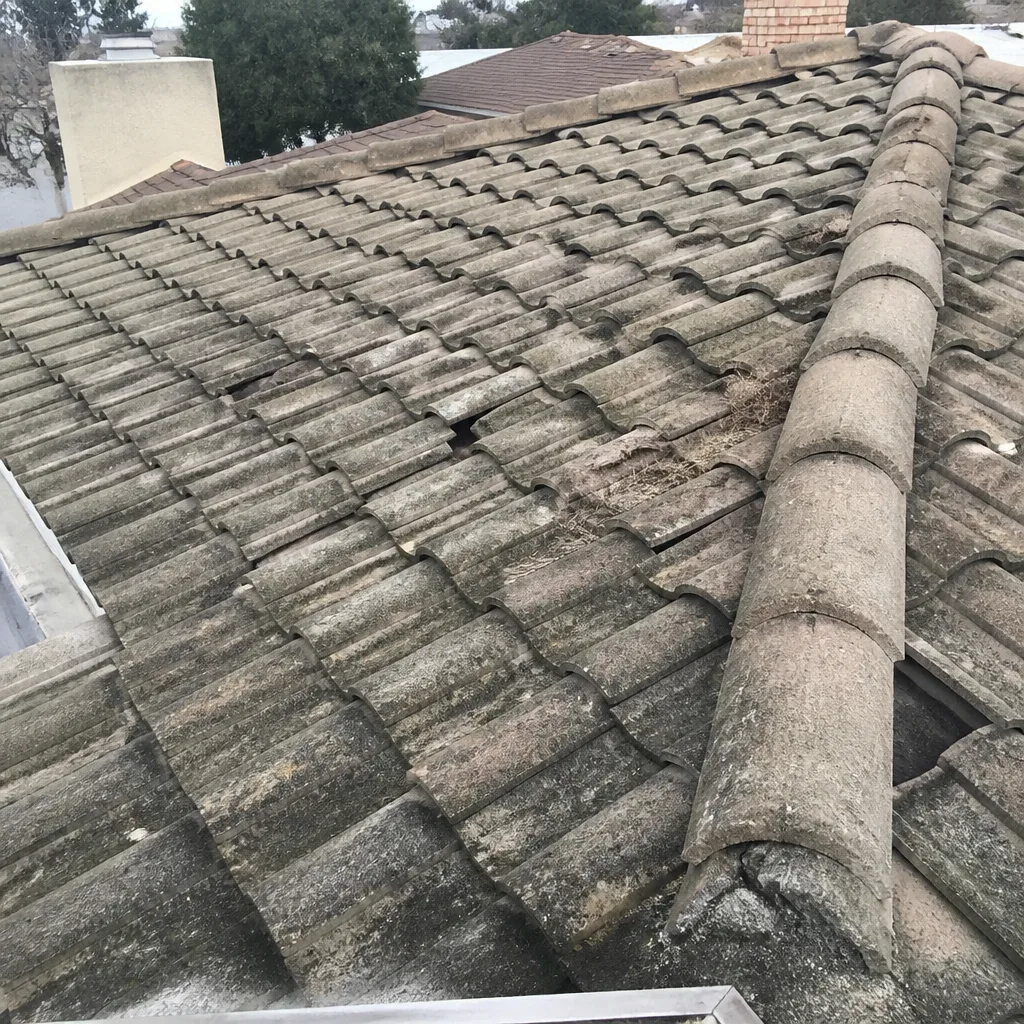
- Cracked ridge caps. Ridge caps sit at the highest point of the roof, fully exposed to wind from every direction. During Santa Ana wind events, debris gets airborne and lands hard on the ridge line. Concrete tile ridge caps crack. Asphalt ridge caps get torn or unseated.
- Debris impact damage. Santa Ana winds carry palm fronds, tree branches, and loose patio furniture across neighborhoods. A palm frond hitting a concrete tile at 40 mph can crack it clean through.
Water damage, by contrast, is usually slower and subtler. It shows up as staining on ceiling drywall, peeling paint around vents, or soft spots in the decking that only become visible during an inspection. The repair sequence matters because wind damage often creates the opening that later lets water in. Fix the water stain without fixing the wind-lifted flashing above it, and you’ll be repairing the same ceiling again next season.
In our experience working across Santa Ana, the most common call we get after a wind event is for a single missing shingle or a cracked tile. The homeowner sees the obvious damage. What they don’t see is the flashing three feet away that’s been lifted just enough to let water track sideways under the shingle course. That’s the repair that actually matters.
The Marine Layer Effect: Humidity’s Quiet Attack on Asphalt Shingles
If you live in zip codes 92703 or 92704, the western and southwestern parts of Santa Ana, your roof deals with something roofs in the eastern foothills don’t: consistent marine layer exposure. The marine layer pushes in from the coast most evenings and lingers until mid-morning. That’s 10 to 14 hours a day of elevated humidity, even when the daytime sky is clear.
What does that humidity actually do to an asphalt shingle roof?
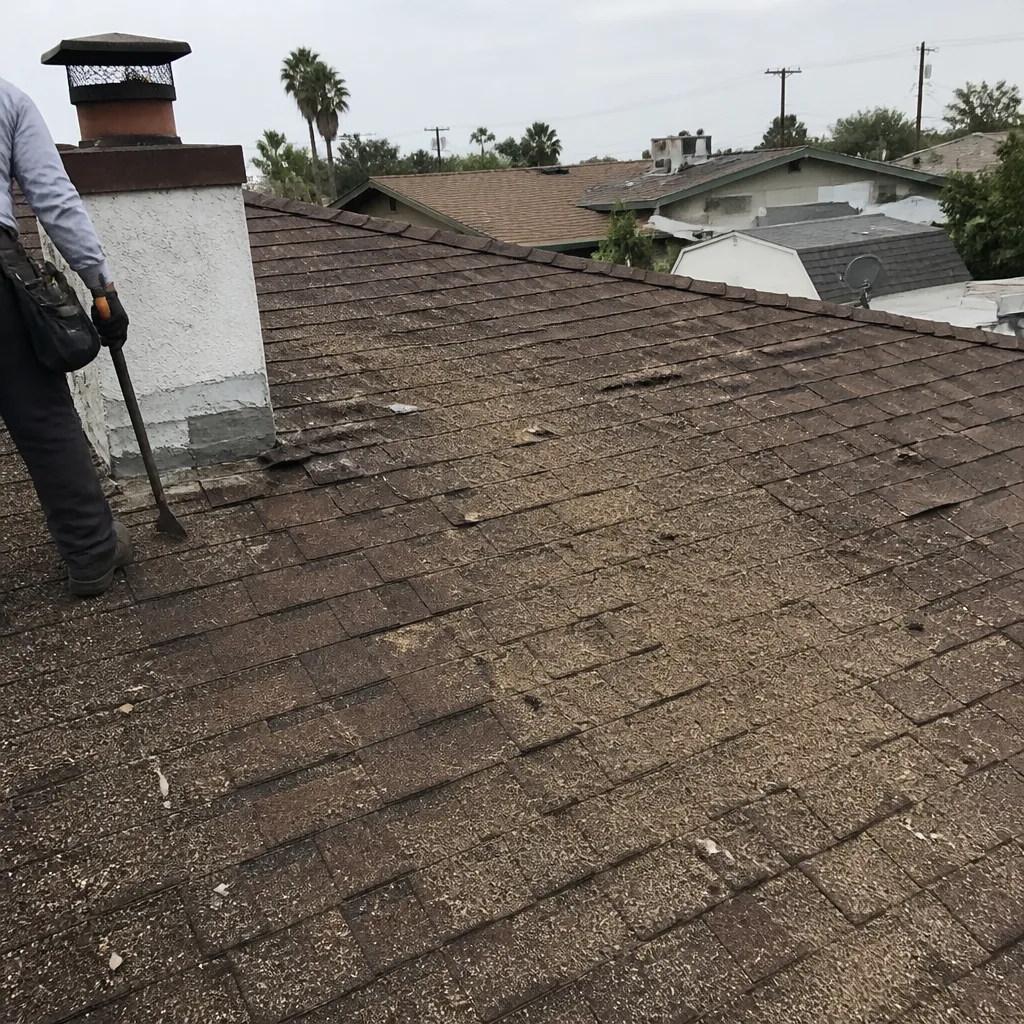
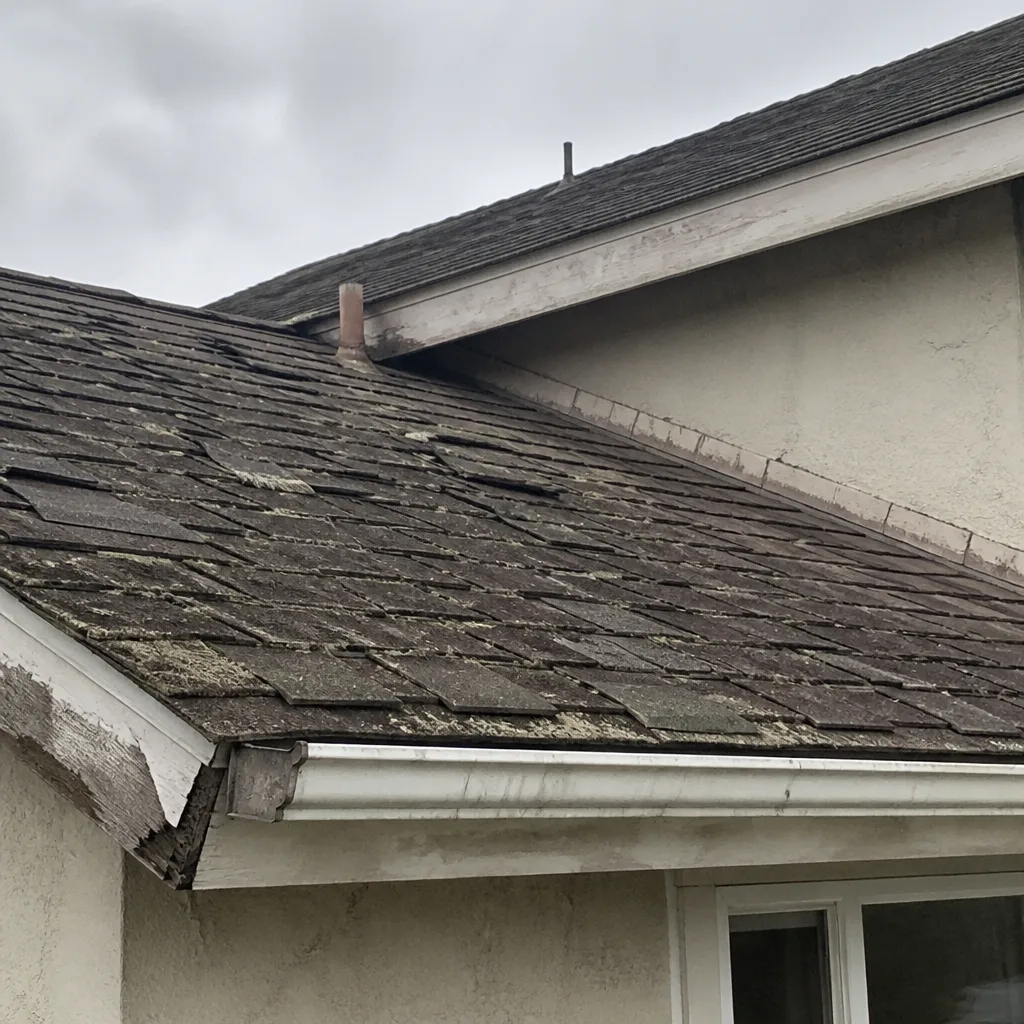
The answer is granule loss. Asphalt shingles are coated with ceramic granules that protect the asphalt from UV radiation. The granules are embedded in the asphalt’s top layer. When moisture works its way between the granules and the asphalt, it breaks the adhesive bond. Wind and thermal cycling do the rest. The granules start to shed.
We see this accelerated granule loss most clearly in the areas of Santa Ana west of Bristol Street. Homeowners there will notice granules collecting in their gutters or at the base of their downspouts. It looks like coarse sand. By the time you can see bare asphalt patches on the shingles themselves, the granule loss has been underway for years.
Brands like GAF and CertainTeed engineer their shingles with granule adhesion as a priority because they know coastal-adjacent markets deal with this exact issue. That’s one reason the material choice matters in Santa Ana. A shingle that holds up well in Phoenix might shed granules noticeably faster in the 92704 zip code, not because the product is defective, but because the environment punishes granule adhesion.
If you’re seeing granules in your gutters more than a year or two after a new roof installation, that’s worth an inspection. Not every granule loss is a warranty issue. Some is normal. But the rate of loss in marine-layer-affected neighborhoods can be two to three times what you’d see in a dry inland climate, and that rate is diagnosable by someone who knows what to look for.
Material-by-Material Repair Logic: Tile, Shingle, and Flat Roofs
One of the most persistent misconceptions in roofing is that a repair is a repair, regardless of what’s on the roof. That’s not how it works. A concrete tile roof in Santa Ana follows different repair rules than an asphalt shingle roof, even when the visible damage looks nearly identical. Understanding the difference helps you evaluate whether a contractor actually knows what they’re doing.
Concrete Tile Roofs
Tile repair in Santa Ana is primarily about cracked tiles and broken underlayment. The tiles themselves are durable, often lasting 50 years or more. What fails first is the underlayment beneath them. When a tile cracks from debris impact during a wind event, water gets through the tile layer and hits the underlayment. If the underlayment is intact, the leak is contained and the repair is simple: lift the cracked tile, replace it, and reset the surrounding tiles.
But if the underlayment has aged past its useful life, that same cracked tile becomes a much bigger problem. You can’t repair the underlayment through a small tile opening. The tiles have to come up in a larger section, the old underlayment is removed, new underlayment is installed, and the tiles are reset. That’s not a repair anymore. That’s the beginning of a Roof Replacement in Santa Ana conversation.
Boral tile systems are common in Santa Ana’s historic districts and upscale neighborhoods. The Boral products are engineered to match older clay tile profiles, which matters when a repair has to blend seamlessly with a roof that’s been in place for decades. Not every roofer keeps Boral tile in stock or has experience cutting and fitting it properly. We carry it because the aesthetic match matters as much as the waterproofing.
Asphalt Shingle Roofs
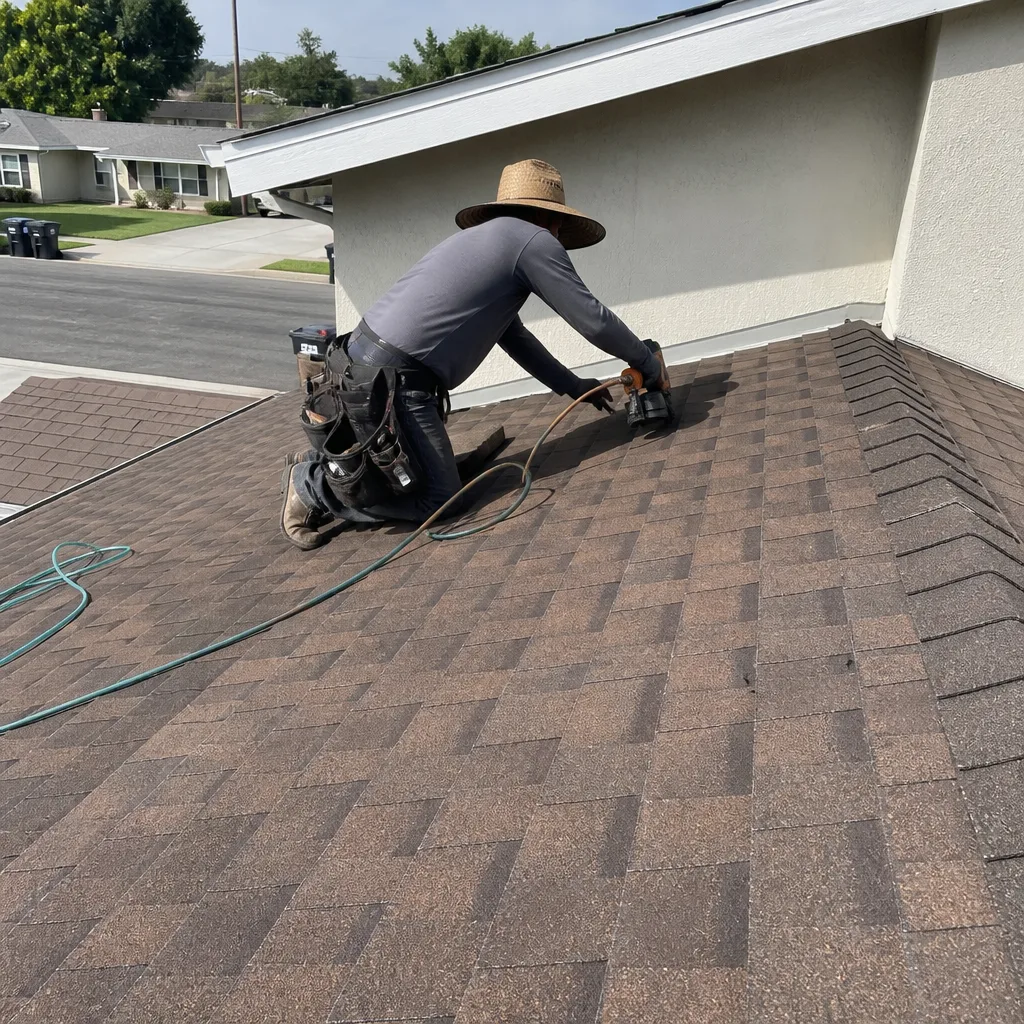
Shingle repair in Santa Ana is about granule loss, wind-lifted tabs, and nail pops. The repair logic is different from tile because shingles are a sealed system. When one shingle lifts, it breaks the adhesive seal on the shingles around it. Wind gets under the lifted edge and begins peeling back the course. A small repair done early can stop a cascade. A repair delayed by six months can turn into a full section replacement.
Tamko and GAF both make shingle lines that are common in Santa Ana. The Tamko Heritage line and GAF Timberline line have different adhesive characteristics and different wind ratings. When we repair a shingle roof, the replacement shingles have to match not just the color, but the dimensional profile of the existing shingles. A mismatched patch looks worse than the original damage.
Flat and Low-Slope Roofs
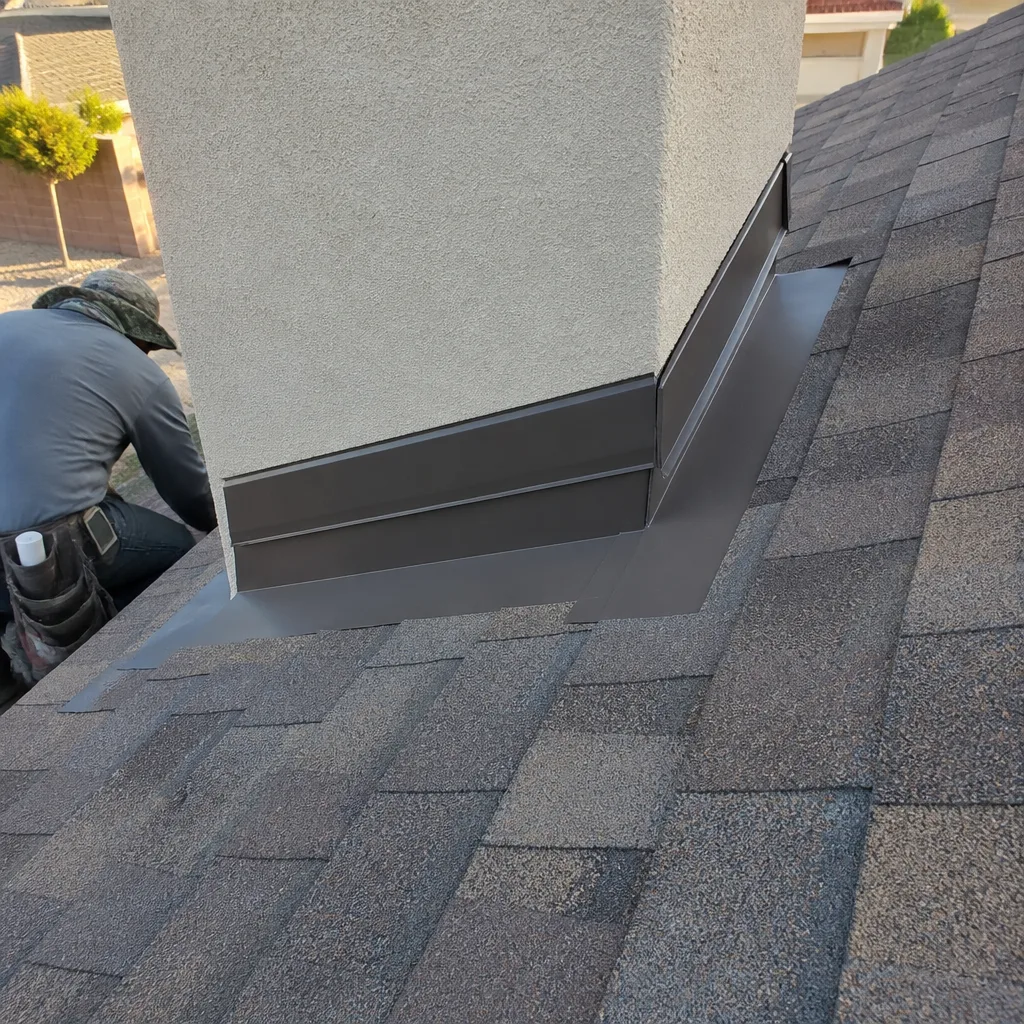
Flat roofs are a different animal entirely. In Santa Ana, flat roofs are common on mid-century homes and on additions. These roofs handle wind well, but they’re vulnerable to standing water and UV degradation. The repair logic is about seam integrity. The weakest points are at the transitions: where the flat roof meets a parapet wall, where a scupper drains, and around any penetration like a vent or HVAC curb.
Flat roof repair in Santa Ana often means resealing seams and reinforcing flashing at these transition points. It’s not glamorous work, but it’s where 90% of flat roof leaks originate. A contractor who wants to coat the entire flat roof for a small leak at the scupper is selling you a replacement, not a repair. Sometimes that’s the right call. Sometimes it’s not. That’s what this next section is about.
How to Read a Repair Estimate Line-by-Line
A repair estimate tells you a lot about what the contractor actually saw on your roof. But only if you know how to read it. Here’s what to look for, line by line, and for deeper guidance check our How to Hire a Roofing Contractor in Santa Ana: A Step-by-Step Guide.
- Damage description. Does the estimate describe the actual damage in specific terms? “Replaced 3 cracked tiles at northwest corner” is a real observation. “General roof repair” is not. If the description is vague, the scope is probably vague too.
- Materials specified. A real estimate names the materials. The specific shingle brand and color, the tile profile, the underlayment type, the flashing gauge. If the line item just says “materials,” ask what materials. You’re entitled to know what’s going on your roof.
- Labor broken out. Labor should be itemized by task. Removing debris, lifting tiles, resetting tiles, sealing flashing. Not just one lump sum called “labor.”
- Underlayment and flashing line items. This is the big one. If your repair involves tile work and there’s no line item for underlayment or flashing, the contractor may be planning to skip the part that actually keeps water out. A tile swap alone doesn’t fix a leak if the underlayment is compromised.
- Disposal fees. Old tiles, old shingles, packaging. Disposal should be listed. If it’s not, it’s either buried in the labor markup or it’s going to be a surprise at the end.
- Permit line or no permit line. In Santa Ana, most roof repairs don’t require a permit if the repair area is under a certain square footage and doesn’t involve structural changes. But if the estimate involves replacing sheathing or cutting into the decking, a permit may be required. A contractor who mentions permits upfront is more credible than one who never brings them up.
- Warranty statement. What does the contractor guarantee for the repair? A year of leak-free performance is a common baseline. The manufacturers we partner with, including Tamko and CertainTeed, offer material warranties that can extend beyond the contractor’s workmanship window. But that’s only available when the repair uses their registered products, installed to their specifications.
When you call for an estimate, ask for a written, line-item scope of work. A contractor who can’t or won’t produce one is telling you something about how they run their business. At Tilecraft Roofing home, every repair estimate includes a full line-item breakdown. It’s not a sales tactic. It’s how we make sure you can hold us accountable to what we quoted.
Repair vs. Replacement: When a Repair Delays the Inevitable
There’s a moment in every roof’s life where the honest answer stops being “we can fix that” and becomes “we can fix it, but you should think about whether that’s the right use of your money.” Knowing where that line sits is the difference between a contractor who wants your business and a contractor who wants what’s best for your roof.
Here’s the framework we use when deciding whether to recommend Roof Repair in Santa Ana or a full replacement.
- Repair makes sense when the damage is localized and the surrounding roof is in good condition. A cracked tile after a wind event, a lifted shingle, a failing boot around a vent. These are isolated problems on an otherwise sound roof. Fix them and the roof keeps doing its job.
- Repair is a judgment call when the damage is widespread but the roof structure is sound. Say you’ve got granule loss across 40% of the roof surface, but no leaks and the decking is solid. A repair can buy you two or three more years. But the granule loss will continue, and you’ll be back. The repair isn’t wrong. It just needs to be priced against the eventual replacement.
- Replacement is the honest answer when the underlying structure is compromised. Rotted decking, saturated underlayment, failed flashing systems that are leaking into the framing. At that point, every repair is a patch on a patch, and the money spent patching could have gone toward the replacement that’s coming regardless.
The percentages matter here. A good rule of thumb: if the total repair cost needed to restore the roof’s integrity exceeds roughly 30% of what a full replacement would cost on that same roof, replacement starts to look like the better financial decision. That’s not a hard rule, but it’s a useful benchmark. We’d rather tell you that now than patch your roof for three years and then tell you.
The material partnerships we hold, with brands like GAF, CertainTeed, Owens Corning, IKO, Atlas, Tamko, and Boral, mean that when replacement is the right call, you’re choosing from a full range of products rather than settling for whatever the contractor happens to have in the warehouse. Seven leading brands, one crew. The material choice is yours, and that choice should start with what’s right for your specific roof in Santa Ana, not what’s most profitable to install.
The Repair Process Step-by-Step: What to Expect
If you’ve never had roof repair done before, the process can feel opaque. Here’s what a well-run repair looks like from start to finish, based on how we approach every job in Santa Ana.
- The inspection comes first. Before any repair is scoped, someone needs to get on the roof and look. Not from the curb with binoculars. On the roof. Walking the surface, checking flashing, examining the problem areas you’ve noted plus the ones you haven’t. We look before we quote. That’s the entire philosophy.
- The scope is written, not spoken. After the inspection, you should receive a written estimate that itemizes what was found and what’s needed to fix it. This is the document you’ll hold us to. If it’s vague, push back.
- Materials are matched before work begins. For shingle repairs, that means confirming the exact shingle brand and color. For tile, confirming the profile and color match. This step prevents the “patched” look that devalues a home.
- The repair area is prepped. Tarps are laid to protect landscaping and walkways. Safety equipment goes up. The work area is staged so that materials can be brought up efficiently without walking on more roof than necessary.
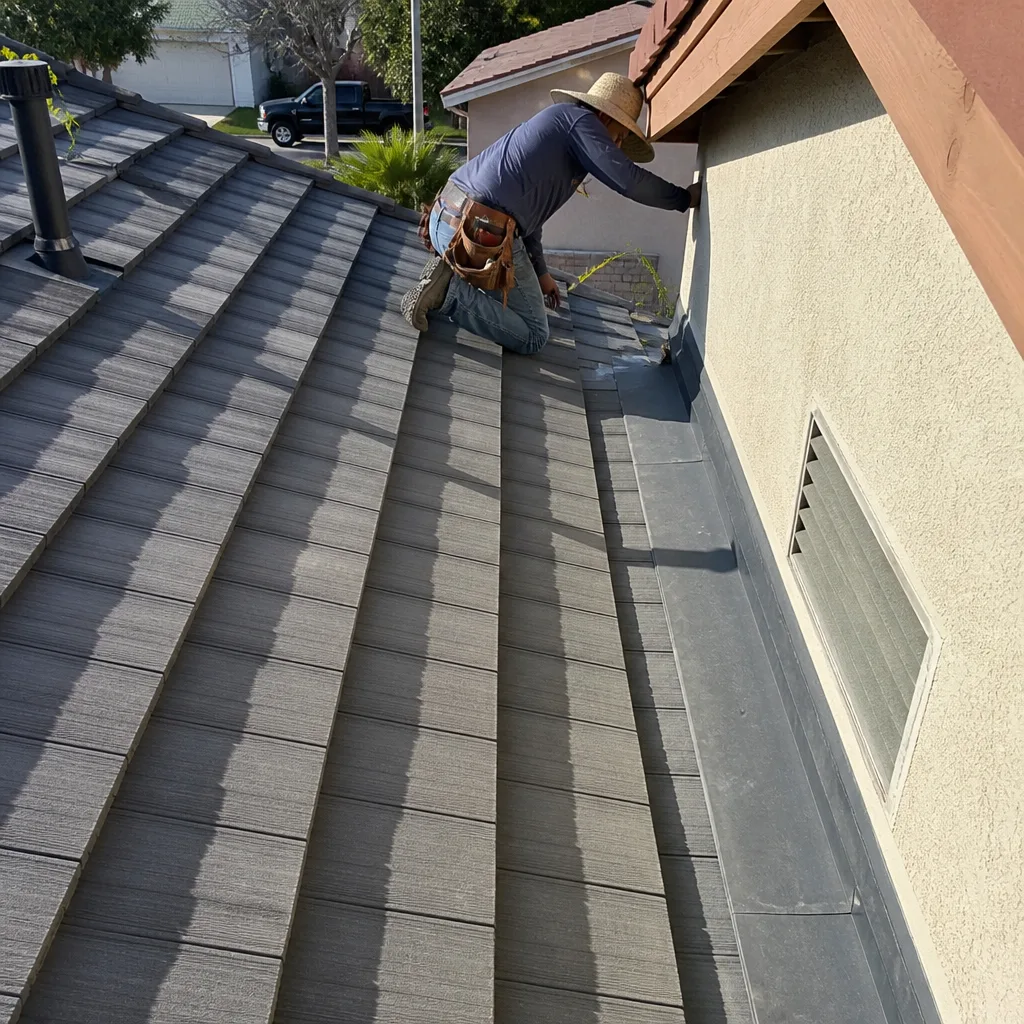
- The repair is executed. This is where component-level precision matters. Every course, every flashing, every fastener. The repair isn’t just about the visible surface. It’s about what’s underneath.
- Cleanup and inspection. When the work is done, the site is cleared of debris, nails are swept from the ground with a magnetic sweeper, and the repair is checked against the original scope. You should be able to walk the area and see exactly what was done.
- The warranty is documented. You receive written confirmation of the workmanship warranty and any applicable material warranties from the manufacturer.
This process takes a day for most repairs. Larger repairs or repairs involving multiple roof sections may take longer. What it shouldn’t take is weeks of waiting and chasing. A roofer who can’t schedule a repair in Santa Ana within a reasonable window is telling you something about their priorities.
Common Mistakes to Avoid
- Treating wind damage as a one-time event. Santa Ana homeowners often fix the visible damage from a wind event and think they’re done. But wind damage is cumulative. The flashing that held this time may be fatigued and ready to fail the next time. Fix the visible damage, sure. But also inspect the surrounding area for weakness the wind exposed.
- Ignoring granule loss until shingles look bare. By the time shingles show visible bald spots, the granule loss has been underway for years and the shingles are already compromised. If your gutters in 92703 or 92704 are collecting granules, get an inspection.
- Choosing a contractor by price alone. A repair quote that’s dramatically lower than the others isn’t a bargain. It usually means the contractor is either skipping steps or doesn’t understand what’s actually wrong. If two quotes are similar and a third is half the price, the third one is wrong.
- Skipping the line-item estimate. A verbal quote is not a contract. Get it in writing, with materials and labor broken out. If the contractor resists, that’s a red flag.
- Fixing the symptom, not the cause. A water stain on the ceiling gets painted. Six months later, it’s back. The stain was a symptom. The cause was a lifted flashing or a cracked tile somewhere above it. Painting the ceiling is not a roof repair.
- Waiting until the leak is visible inside the house. Water that’s made it to your ceiling has already traveled through the roof decking and insulation. Visible interior leaks are late-stage problems. Regular inspections catch the issue before it gets that far.
When to Call a Professional
Some roof issues are obvious enough to spot from the ground. A missing shingle after a windstorm, a cracked tile visible from the sidewalk. But most roof problems aren’t visible until someone gets on the roof and looks. If you’ve noticed granules in your gutters, water staining on your ceiling, or you haven’t had your roof inspected in more than three years, that’s the time to call. The inspection is the diagnostic step that separates a real repair from a guess. Tilecraft Roofing offers free estimates in Santa Ana. Call (833) 467-4846 and we’ll come out, look at the roof, and tell you honestly whether repair or replacement is the right call for your specific situation.
Frequently Asked Questions
Most roof repairs in Santa Ana range from $350 for a simple shingle replacement or flashing reseal to $1,800 for a more involved repair involving multiple tile replacements, underlayment patching, or significant flashing work. The exact cost depends on the roof material, the extent of the damage, and whether the repair requires structural work. Call (833) 467-4846 for a line-item estimate on your specific repair. The estimate is free.
Most minor roof repairs in Santa Ana don’t require a building permit, especially when the repair covers less than a certain percentage of the roof surface and doesn’t involve structural changes. However, if the repair involves replacing sheathing, modifying the roof structure, or working on areas tied to structural integrity, a permit may be required. A reputable contractor will tell you when a permit applies and handle it as part of the project.
Santa Ana winds are unique because they arrive from the northeast at high speed and carry airborne debris. The consistent wind direction means certain roof edges take repeated stress, and the debris impact is what cracks tiles and tears shingles. This isn’t a one-time event; it’s a cumulative wear pattern that builds season after season.
Most repairs in Santa Ana are completed in a single day. Minor repairs like a shingle replacement or flashing reseal can take as little as two to three hours. Larger repairs involving multiple sections or tile reset work can take a full day or longer. The timeline should be stated in your written estimate before work begins.
A proper repair should be visually consistent with the surrounding roof. That means matching the shingle brand, color, and dimensional profile, or matching the tile profile and color for tile roofs. This is one reason material partnerships matter. A contractor who works with multiple brands can source the right match rather than using whatever is closest in the warehouse.
Some granule loss is normal for any asphalt shingle roof, especially in the first year after installation when excess granules are still shedding. But accelerated granule loss in Santa Ana neighborhoods affected by the marine layer, particularly zip codes 92703 and 92704, is a legitimate concern. If you’re seeing granules in your gutters years after installation, or the shingles are showing bare asphalt patches, that’s worth an inspection. The rate of loss matters more than the fact of loss.
The Bottom Line
Roof repair in Santa Ana isn’t a generic service. It’s a diagnostic process shaped by specific climate forces: the marine layer that accelerates granule loss in western zip codes, the Santa Ana winds that lift flashing and crack ridge caps, and the UV intensity that breaks down materials faster than most homeowners expect. The right repair, done at the right time, extends your roof’s life meaningfully. The wrong repair, or a repair delayed too long, just postpones a replacement conversation that’s coming anyway. The key is starting with an honest inspection, reading your estimate carefully, and working with a contractor who’ll tell you when a repair is enough, and when it isn’t. Explore our more guides & resources for additional homeowner guidance. That’s how we’ve built our reputation in Santa Ana, one roof at a time.
Written by the team at Tilecraft Roofing, serving Santa Ana since 2012.
See the difference
 Before
 After
 Before
 After
 Before
 After